
Hotel value in Seoul is usually a location decision before it is a star-rating decision. Build a shortlist that fits your days, then compare the exact room, price, and cancellation terms for the dates you will actually travel.
The best hotels in Seoul depend on your itinerary and budget; compare neighborhoods, room types and current booking terms before choosing.
Key takeaways
Use hotel names as a shortlist, then compare live rates, exact room categories and cancellation terms for your dates.
Central hotels near Myeongdong, City Hall, Euljiro or Jongno can save sightseeing travel time.
Choose a luxury setting that suits you: central palace-side, south-side skyline or near Namsan.
Accept smaller rooms or simpler service to save, while protecting station access, safety, luggage handling and sleep.
The best hotel in Seoul is usually the one that makes the rest of your trip easier. That sounds obvious, but it is easy to lose sight of when search results mix tiny rooms, resort-style properties, luxury towers, guesthouses, and airport hotels under the same price filter. Instead of presenting a fixed-rate ranking that will be out of date by the time you book, this guide organizes reliable hotel areas and well-known properties by the kind of trip they support. Use the examples as a shortlist, then compare current room types, location, reviews, and booking terms for your own dates.
Seoul’s hotel market changes quickly with holidays, concerts, school breaks, airline schedules, and room inventory. One hotel can be a good value on one week and a poor fit on the next. That is why the practical order is: choose the right neighborhood, decide the level of service and room space you need, then compare live offers across more than one booking site. If you have a short first trip, spending a little more for a short station walk can be a better value than saving money on a distant hotel and adding avoidable travel each day.
How do you choose the best hotels in Seoul for your budget?
Why this is not a fixed price ranking
Hotel prices are not durable travel facts. They move with the date, weekday, season, demand, event calendar, booking window, room category, and refund policy. A number printed in a guide can make a property look cheap or expensive when it is neither for your trip. The better comparison is relative: luxury full-service hotels versus design-led city hotels, central mid-range hotels versus airport-rail bases, and budget properties that trade space or amenities for location. Search the same room on the same dates, read what is actually included, and check whether the rate is refundable before treating it as a bargain.
Start with the hotel-to-station walk
A Seoul hotel can be advertised as near a subway station yet still involve a difficult walk across a multilane road, through an underground arcade, or up a hill with luggage. Open a map and check the route from the station exit you will really use. Repeat the check from the airport arrival point if you have a late flight or large bags. The most helpful property details are often unglamorous: elevator availability, luggage storage, laundry, a quiet-facing room, a convenience store nearby, or a direct airport-bus stop. Those details can outweigh a rooftop view once you are tired after a long day.
Match the hotel to the evening you want
Decide whether you want to return to a shopping district, a quiet business street, a cafe-and-nightlife area, or a larger south-side complex. Myeongdong is lively and highly practical; Jongno is better for historic Seoul; Hongdae gives you an energetic walkable evening; Mapo and Gongdeok are calmer but still connected; Gangnam and Jamsil suit different south-side plans. If sleep is important, look for a room away from the main road or club corridor and read recent noise comments. A hotel’s neighborhood is an advantage only if it works at the hour you expect to return.
Luxury Seoul hotels: choose the setting, not just the brand
Four Seasons Hotel Seoul: a central, palace-side luxury base
Four Seasons Hotel Seoul is worth considering when you want full-service luxury near Gwanghwamun and the historic core. Its appeal is location logic as much as the hotel itself: Gyeongbokgung, the palace district, museums, City Hall, and central dining are all easier to fit into a short itinerary from this side of town than from a distant southern address. It makes the most sense for travelers who value a polished retreat between sightseeing blocks and who expect to spend significant time in central Seoul. Before booking, compare the actual room category, inclusions, and the current route from the nearest station rather than assuming every rate delivers the same experience.
Signiel Seoul: a skyline-led Jamsil stay
Signiel Seoul is a south-east option for travelers who want a high-rise setting in Jamsil and whose plans include the lake, major shopping, sports, concerts, or east-side attractions. It can be a memorable choice for a special occasion, but it is not automatically the most convenient luxury base for a palace-heavy first itinerary. Choose it when you want the Jamsil location and are happy to organize central Seoul as a dedicated day. Check the live room description and building-access details, and make sure the transport pattern works for your arrival and departure rather than booking solely for the view.
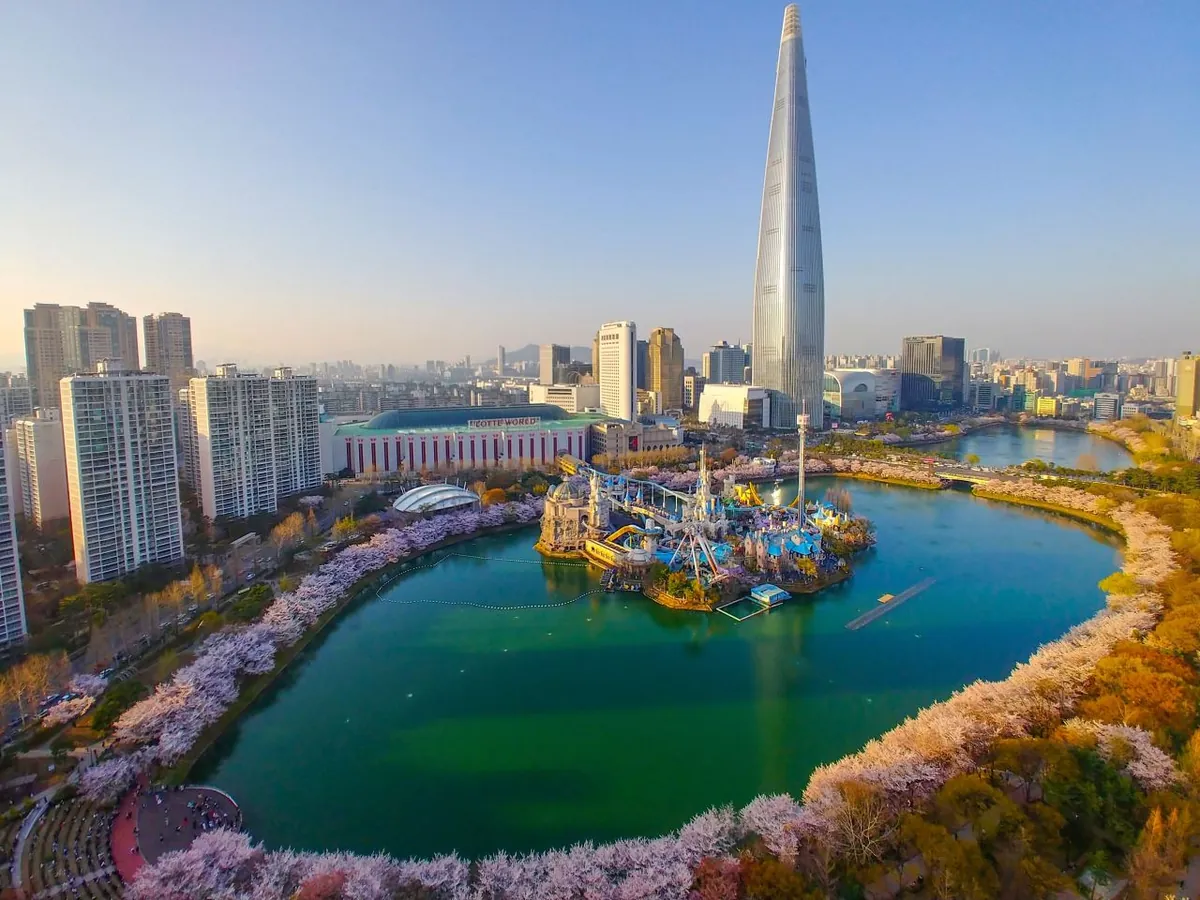
The Shilla Seoul: a calmer Namsan-adjacent option
The Shilla Seoul is a useful comparison point for travelers who want a more self-contained luxury setting near Namsan and Jangchung-dong rather than a hotel embedded directly in a shopping street. Its location can suit a restful stay, but the final walk and local transport arrangement deserve more attention than at a hotel beside a major downtown station. Consider it if the property experience is part of the trip, not simply a place to sleep between packed sightseeing days. Confirm current transport support, room conditions, and whether the hotel’s position fits the attractions you plan to visit most.
Mid-range hotels: the strongest value is usually location
L7 Myeongdong and similar central city hotels
A hotel such as L7 Myeongdong represents the kind of mid-range option many first-time visitors should compare: a city hotel near a useful station, within easy reach of shopping and restaurants, and practical for central sightseeing. The property is not automatically the answer for every date or travel style, but the Myeongdong model is powerful for short stays. You can arrive, eat nearby, reach Namsan or City Hall without a long ride, and build one day around Jongno or Dongdaemun. Search it against other central hotels for the exact room size and cancellation terms you need rather than assuming a familiar brand will always be the best live rate.
Nine Tree Premier Hotel Insadong and historic-core alternatives
Nine Tree Premier Hotel Insadong is an example of the historic-core hotel type: a stay to consider when palaces, Insadong, Bukchon, museums, and Jongno food stops matter more than nightlife outside the door. This style of base can make early palace visits feel easy and lets you return to central Seoul without a lengthy ride. Compare it with properties around Euljiro and City Hall if you want more direct interchange access, or with Myeongdong if shopping and late restaurant choice are higher priorities. As always, inspect the actual walking route to the subway because historic districts can have smaller, less obvious streets than a broad booking-map pin suggests.
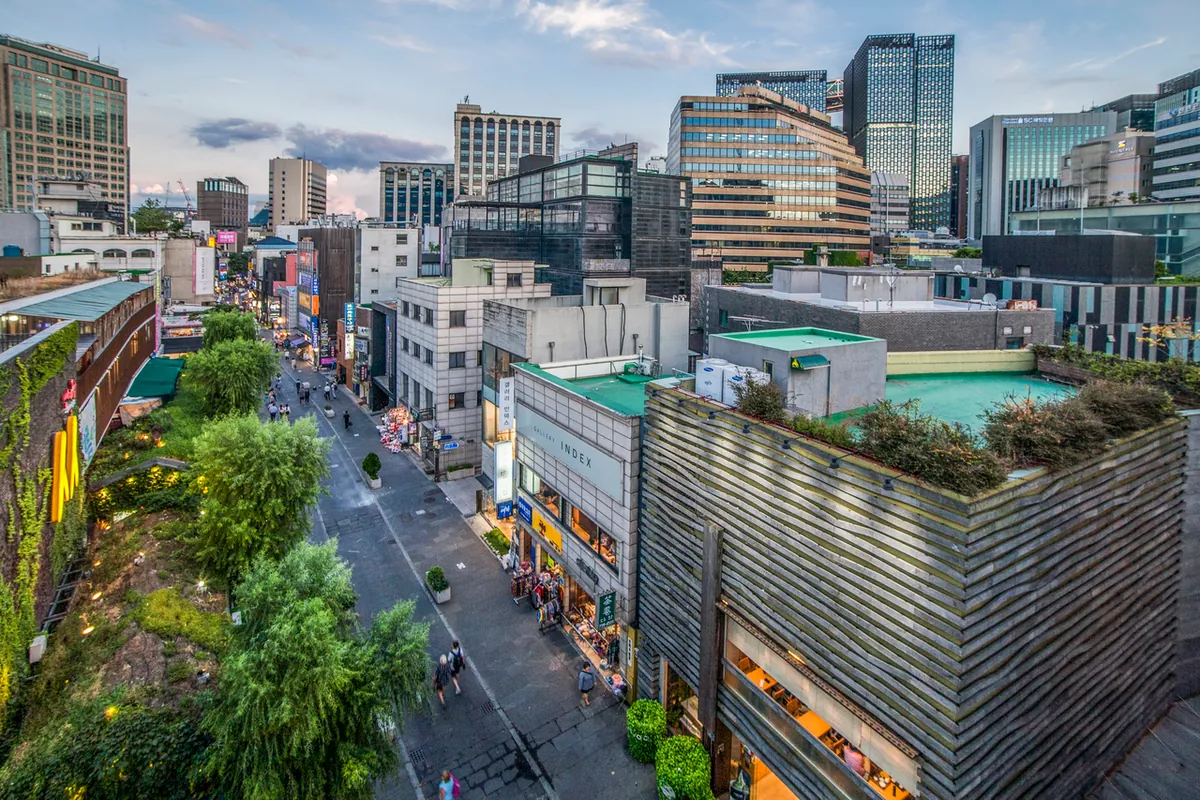
RYSE, Autograph Collection and the Hongdae hotel style
RYSE, Autograph Collection is a recognizable Hongdae comparison for travelers who want a design-forward hotel in the middle of cafe, dining, shopping, and nightlife energy. Its value is the ability to make the neighborhood part of the stay: you can have an unplanned evening nearby rather than commuting back to a hotel district that goes quiet. The trade-off is that Hongdae’s busiest area is not ideal for every traveler. Look at current reviews for street noise and room orientation, and compare it with hotels near Hongik University or Gongdeok stations if direct all-stop AREX access is the main reason you are staying west.
GLAD Mapo and Gongdeok: efficient rather than flashy
GLAD Mapo is a practical Gongdeok-area hotel: its official directions place it by Gongdeok Station exits 8 and 9, with the Airport Railroad at exit 9. Gongdeok can work well for direct all-stop AREX access, central subway connections, local meals, and a business-and-leisure trip. It is especially worth checking after a late arrival or before an early departure, provided the specific route from the station suits your luggage. Compare it with a central hotel rather than assuming “near the airport line” always beats “near the sights”; the right choice depends on how many days you will actually spend in central Seoul.
Budget hotels and hostels: protect the essentials first
Choose small and central over large and remote
For budget travelers, Seoul’s most useful compromise is often a compact room, guesthouse, or hostel in a central or well-connected neighborhood rather than a much larger room at the edge of the city. Myeongdong, Jongno, Dongdaemun, Hongdae, and Mapo all offer budget-oriented options, but the experience varies enormously by building. A private room may be worth the extra cost if you are managing jet lag, sharing with a partner, or carrying expensive luggage; a dorm can make sense for solo travelers who value social space and low cost. The non-negotiables are clean recent reviews, a safe route back, secure luggage handling, and a station walk you understand.
Use chain and guesthouse options as live comparisons
Budget chain hotels near Dongdaemun, Myeongdong, or other transport hubs can be easier to compare than an unverified private listing because the room categories and check-in expectations are clearer. Guesthouses and hostels can deliver better local atmosphere or breakfast, but read the latest feedback closely for bathroom arrangement, heating or cooling, stairs, lockers, and noise. Do not book only from a highly rated overall score; scan recent comments from travelers with similar needs. A property that is perfect for a backpacker on a weekend may be a poor choice for a family arriving after midnight.
Avoid false savings on airport and transit time
A cheaper hotel can become expensive in time and energy if it requires repeated taxis, complicated transfers, or long walks after restaurants close. Before pressing book, test three routes: airport to hotel, hotel to your first planned attraction, and hotel to a likely evening area. If all three look manageable, the budget option is genuinely competitive. If they do not, compare a better-located room after accounting for transport and the value of an extra hour of sightseeing or rest. Our where to stay in Seoul guide helps identify the neighborhoods before you start that comparison.
Pick the hotel through your itinerary, not the other way around
For palaces, markets, and a first Seoul trip
Search Myeongdong, City Hall, Euljiro, Jongno, and Insadong first. A central hotel can make it easy to build a day around Gyeongbokgung, Bukchon, Insadong, Gwangjang Market, Cheonggyecheon, Myeongdong, and Namsan without constantly crossing the river. Use our first-time Seoul trip-planning guide to see how that rhythm works. If one luxury property is too expensive on your dates, a simpler but well-located hotel may protect the actual experiences you came to Seoul for.
For nightlife, cafes, and airport-rail access
Search Hongdae, Mapo, and Gongdeok first. Hongdae gives you the most restaurant and nightlife energy; Mapo and Gongdeok often provide a quieter transport-oriented base. Compare the final airport route, the nearest station exit, and noise feedback for each property. This group of neighborhoods is especially convenient when you would rather spend an unplanned evening walking to dinner than navigating back from central Seoul late at night. It is also a useful base for a longer visit when you will explore western Seoul as well as the traditional center.
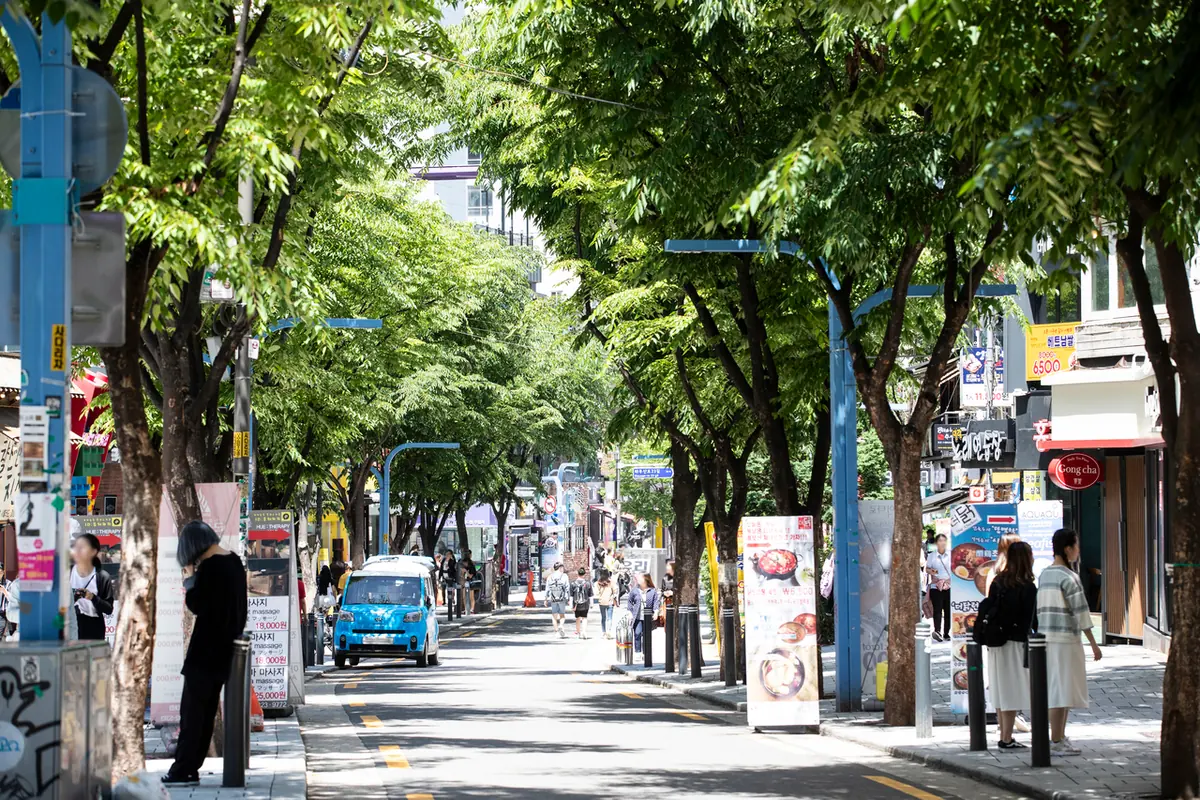
For south-side events, shopping, and family attractions
Search Gangnam, COEX-area hotels, and Jamsil when they match actual plans: a concert, sports event, exhibition, business meeting, south-side shopping, or a family attraction. These locations are not lesser choices; they simply serve a different Seoul itinerary. If only one evening is south of the river, staying central is usually simpler. If multiple days are south or east, a local hotel can make the whole trip calmer. Test the route to the airport as well as the route to your event, because a late finish can make a hotel’s surrounding transport options important.
Compare live options before you commit
Once you know the neighborhood and property type, compare the same room across Agoda and Trip.com using the affiliated options attached to this guide. Compare the complete price, cancellation deadline, breakfast, taxes and fees, bed configuration, and any difference between room labels that sound similar. Use the hotel’s own current information to confirm facilities or policies that matter to you. This final comparison takes a few minutes and is more reliable than chasing a static “from” price copied into a guide months earlier.
The best Seoul hotel is not necessarily the tallest tower, the most photographed lobby, or the lowest headline rate. It is the property in the right part of the city, with a room you will be comfortable using, a route you can manage with luggage, and terms you understand. Make that decision early, then let the rest of your Seoul itinerary grow around a base that helps rather than hinders it.
Жиі қойылатын сұрақтар
What area has the best hotels for a first visit to Seoul?
Myeongdong, City Hall, Euljiro, Jongno, and Insadong are strong places to start because they make central sights, shopping, dining, and subway travel easier. The best individual hotel depends on your room needs and travel dates.
Are Seoul hotel prices the same across booking sites?
They can differ. Compare the same dates, occupancy, room type, taxes and fees, breakfast, payment timing, and cancellation deadline across platforms, then confirm any essential facility or policy on the hotel’s official site before booking.
Should I stay in a luxury hotel or a central mid-range hotel in Seoul?
Choose luxury when the hotel experience, service, or special setting is an important part of the trip. Choose a central mid-range hotel when you would rather maximize easy access to palaces, markets, shopping, and restaurants.
What should budget travelers check before booking in Seoul?
Check the walk from the station, recent cleanliness and noise reviews, room or dorm layout, bathroom arrangement, luggage storage, late check-in process, and the real route from Incheon Airport.
Соңғы тексеру: 2026 M08 · TipsKorea редакциясы


