
The right card depends on where you will travel, how often you expect to tap, and whether you also need a Korean prepaid payment method. Start with your itinerary, then choose the least complicated option that covers it.
Quick comparison
| Сонголт | Best for | Where it works | What to check |
|---|---|---|---|
| T-money | Pay-as-you-go, multi-city travel | Broad public-transport use | Cash top-ups and refund rules |
| WOWPASS | Visitors who also want prepaid spending | Transit through its T-money function | Separate payment and transit balances |
| Climate Card | Heavy use of eligible Seoul routes | Eligible Seoul-area routes | Coverage map, pass length, and sales rules |
Check the operator’s current rules before departure: coverage, payment methods, and purchase locations can change.
T-money vs WOWPASS vs Climate Card is a route-and-payment choice: compare service coverage, separate balances and top-up rules before buying.
Key takeaways
Use T-money for pay-as-you-go trips on participating transport and at merchants showing its logo; acceptance is not universal.
Climate Card short-term passes can suit Seoul-focused trips; check current city coverage and prices against your route.
WOWPASS combines a Korean prepaid payment balance with a separate T-money transit balance.
Choose by itinerary: a Seoul-only stay has different needs from trips including Busan, Jeju or regional transport.
Planning a trip to South Korea and wondering how you will pay for subways, buses and taxis? A foreign-issued bank card is not a universal open-loop fare card for Korean gates and bus readers. Use the fare medium required by the operator: a prepaid transit card, a single-journey ticket, or an eligible pass. Seoul's new vending machines can accept international cards for specific purchases, but that does not mean the same bank card can be tapped at every gate.
Korean subway turnstiles and city bus readers use supported local fare media such as T-money. Single-journey subway tickets remain useful for an occasional rail ride. Since March 17, 2026, Seoul says 440 new vending machines at 273 stations on Lines 1–8 accept international credit and debit cards and supported mobile payments for single-journey tickets, physical Climate Cards and short-term Climate Card recharges; Seoul lists an average 3.7% payment fee. The purchase happens at the machine, not by tapping the foreign card at a gate.
In 2026, foreign visitors have three primary transit card options: the traditional pay-as-you-go T-money Card, the tourist-focused WOWPASS Card, and the Seoul Climate Card short-term tourist pass. This comprehensive guide breaks down pricing, coverage, pros, cons, and exact recommendations for your trip.
Do you actually need a dedicated transit card in South Korea?
Not for every journey. You can buy a single-journey subway ticket, and eligible Android users can consider mobile fare products, including a mobile Climate Card. A reloadable physical card is still practical for visitors using buses, transfers or several cities because it reduces repeated ticket purchases. Match the card to the actual route rather than treating it as a legal requirement.
Without a transit card, you may need to buy individual subway tickets and will not have the same convenience for buses or transfer-based routes. A physical card is especially useful when you arrive at Incheon International Airport (ICN) or Gimpo Airport (GMP) and want to continue into Seoul without solving a new payment question at every connection.
Quick comparison: T-money vs WOWPASS vs Climate Card
Start with your itinerary, not the card design
To help you decide quickly, here is how the three cards compare on key criteria:
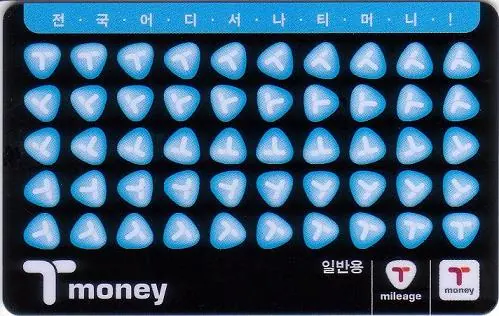
Standard T-money is a pay-as-you-go card. The Korea Tourism Organization lists it for public transport and affiliated locations displaying the T-money logo, with general cards priced at KRW 3,000–5,000. Its May 2026 transportation guide says ordinary prepaid-card purchases and recharges at the listed convenience stores and station machines use Korean-won cash and do not accept foreign cards. Seoul's adult subway card base fare is KRW 1,550 as of June 28, 2025; distance charges can apply beyond the base range.
WOWPASS combines a Korean prepaid payment balance with a separate T-money transport balance. Its official site says the payment balance can be topped up with supported international cards, e-wallets or cash in 16 currencies, while the integrated T-money balance is used for transit. Current card price, exchange rate, top-up fee and pickup option are shown during the official reservation or machine flow, so compare the live terms instead of relying on an older issuance price or a promise of no exchange cost.
Seoul Climate Card is an unlimited transit pass issued by the Seoul Metropolitan Government. Short-term tourist options cost KRW 5,000 for 1 day, KRW 8,000 for 2 days, KRW 10,000 for 3 days, KRW 15,000 for 5 days, and KRW 20,000 for 7 days. It covers eligible Seoul-area subway and bus routes, not a nationwide network, so check the official coverage map against your exact airport and day-trip plans.
What is the T-money Card?
The simple choice for pay-as-you-go travel
The T-money Card is a reloadable public-transport smart card with broad use in Korea. The Korea Tourism Organization describes acceptance on participating public transport and at affiliated stores displaying the T-money logo. That is substantial coverage, but it is not evidence that every private route, regional operator or payment terminal accepts T-money.
How it works: Buy a general card for the currently listed KRW 3,000–5,000, load Korean won, and tap when boarding and leaving each supported mode. Seoul's integrated-fare rules apply the highest base fare among the modes used, allow up to five transfers and may add distance charges; they do not make every transfer or journey completely free. The normal transfer window is 30 minutes after getting off, extended to 60 minutes from 9 PM to 7 AM, and both boarding and exit taps are required.
Broad, not universal, use: look for T-money acceptance on the transport operator or merchant.
General physical cards do not require a Korean bank account, but age-based fare discounts require registration.
The Korea Tourism Organization lists nationwide convenience stores and Seoul subway information centers as sales locations; stock and service vary.
Retail use is limited to affiliated locations displaying the T-money logo.
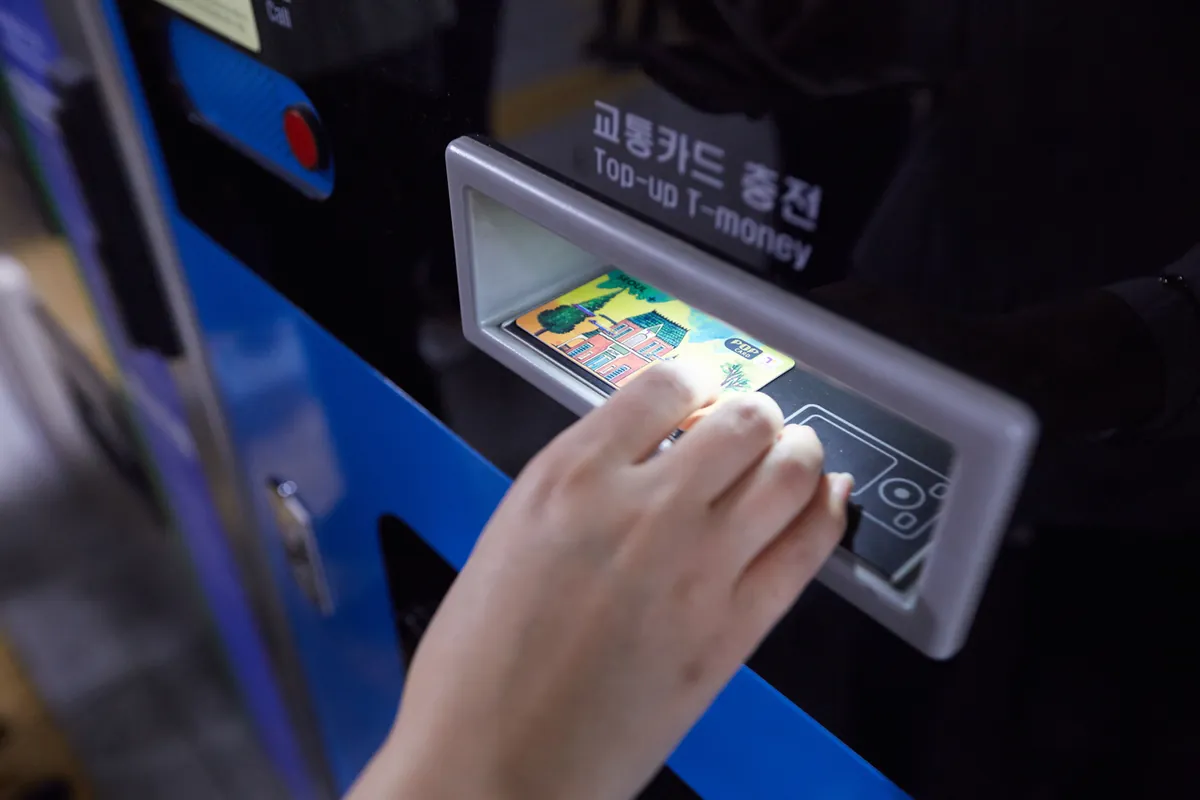
The main disadvantage of T-money is that ordinary top-ups typically require physical Korean won. Do not assume an overseas credit card will work for a T-money reload just because newer Seoul vending machines accept international cards for short-term Climate Card passes and single-journey tickets; carry a modest cash backup for your transit balance.
What is WOWPASS?
WOWPASS is a prepaid card and app for international visitors. One physical card carries a WOWPASS payment function and an integrated T-money transit function, but the balances and their operating rules remain separate.
How it works: the WOWPASS payment balance is used by inserting the card's IC chip at offline merchants that accept local credit or debit cards; the T-money balance is tapped on supported public transport. The official reservation page currently directs travelers to about 429 self-service machines nationwide, including locations at hotels, convenience stores, subway stations and tourist spots. Use its live machine finder because the count and individual locations can change.
The official WOWPASS site says cash top-up supports 16 currencies and mobile top-up supports international cards and e-wallets, including the card networks shown on its current page. Exchange rates and any fees are dynamic, so inspect the amount of Korean won displayed before confirming. Follow the language, identity and collection instructions shown by the selected machine or reservation product.
Local prepaid spending: WOWPASS says its payment balance works at offline merchants that accept local credit or debit card payment; merchant and terminal exceptions can still exist.
Multiple top-up methods: the official site currently advertises cash in 16 currencies plus supported international cards and e-wallets.
App controls: the app shows payment activity and can pause a registered card; current rewards must be checked in the app.
Integrated T-money: transit acceptance follows T-money rules, not the WOWPASS retail-balance rules.
Important note: the WOWPASS payment balance and T-money transit balance are separate. The official guide expressly says the T-money balance must be topped up separately from the WOWPASS balance. Use the app or the provider's current T-money top-up instructions; do not assume that money loaded for shopping automatically becomes transit credit or that every kiosk supports the same action.
What is the Seoul Climate Card?
The Seoul Metropolitan Government's Climate Card provides unlimited rides during the selected period only on its eligible network. The short-term 1-, 2-, 3-, 5- and 7-day products continue in 2026 even as Seoul retires the 30-day products later in the year. Visitors should compare the short-term pass, not assume every Climate Card product or route has the same rules.
Pricing breakdown for 2026 Tourist Passes:
1-Day Pass: KRW 5,000
2-Day Pass: KRW 8,000
3-Day Pass: KRW 10,000
5-Day Pass: KRW 15,000
7-Day Pass: KRW 20,000
A physical Climate Card costs KRW 3,000 before the pass charge and is sold at the locations listed on Seoul's official page. A short-term pass starts on the day it is charged and cannot be charged in advance. Since March 17, 2026, Seoul's 440 new vending machines at 273 stations on Lines 1–8 accept international credit and debit cards and supported mobile payments for physical Climate Card purchases and short-term recharges; Seoul lists an average 3.7% fee for these transactions.
Potential value: Seoul's adult subway card base fare is KRW 1,550. Four eligible base-fare rides per day over three days would total KRW 18,600 pay-as-you-go versus KRW 10,000 for a 3-day pass; actual value depends on routes and travel frequency.
Eligible network only: the pass covers the Seoul-area subway sections and Seoul-licensed buses listed by the city, not every line or regional service.
No bike inclusion on short-term passes: Seoul's official page says the 1- to 7-day passes exclude Ttareungyi and the Hangang Bus.
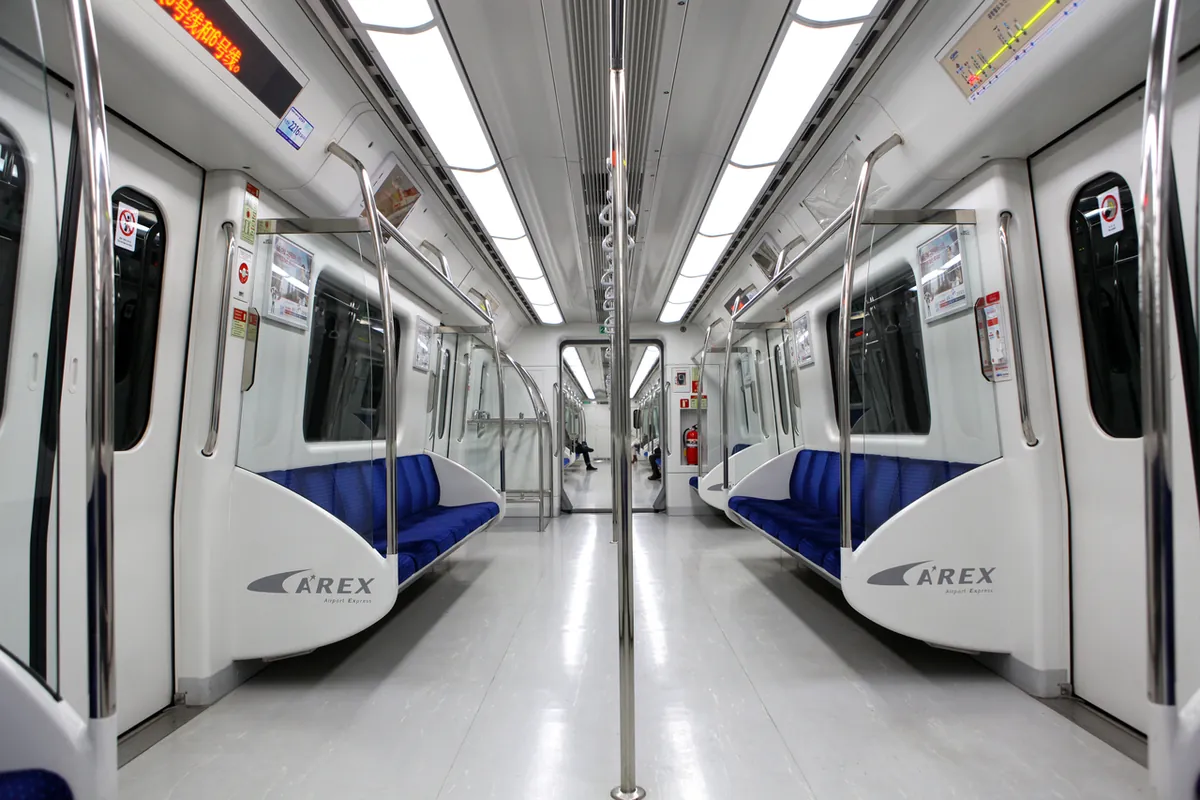
Coverage restrictions: the official page excludes the Sinbundang Line, non-Seoul-licensed buses, intercity and airport buses, and subway sections outside the listed service area. On AREX, coverage is Seoul Station–Gimpo International Airport. A Climate Card user may exit at Incheon Airport Terminal 1 or 2 after boarding within the eligible area, but cannot board at either airport terminal with the pass; the AREX Express is not included. Keep another valid fare method for uncovered travel.
Head-to-head scenario analysis: Which card wins for your trip?
To make your decision foolproof, match your itinerary to these common traveler scenarios:
Scenario A: 4 Days Exploring Seoul (Hongdae, Myeongdong, Gangnam, Bukchon)
Consider the Seoul Climate Card if every planned ride is eligible. A 5-day pass costs KRW 15,000, so compare it with the current KRW 1,550 adult subway base fare and your expected bus or distance fares. It is not automatically the cheapest choice: fewer rides, uncovered routes or an airport boarding point can make pay-as-you-go better.
Scenario B: Multi-City Korea Tour (Seoul 3 Days + KTX to Busan 3 Days + Jeju 2 Days)
Consider T-money or the T-money function in WOWPASS. Climate Card is not a nationwide pass. WOWPASS can be useful if you also want its separate Korean prepaid payment balance, but the transport function still follows T-money acceptance and needs its own balance. Confirm each regional route rather than treating either card as a guarantee of universal coverage.
Scenario C: Budget Backpacker Visiting Seoul and Gyeongju
Consider a standard T-money card for simple pay-as-you-go travel. The Korea Tourism Organization lists general cards at KRW 3,000–5,000, not a guaranteed KRW 3,000 everywhere, and acceptance is limited to participating transport and affiliated merchants. Confirm the regional bus or route you plan to use.
A two-card setup can make sense only when the functions do not duplicate your needs. For example, a WOWPASS payment balance can cover eligible retail spending while a Climate Card covers several eligible Seoul transit days. Remember that WOWPASS's T-money balance, its payment balance and a Climate Card pass are three separate value stores to fund or refund.
How to buy and set up your card at Incheon Airport
Follow these step-by-step instructions upon landing at Incheon Airport T1 or T2:
Step 1: If choosing WOWPASS, use its official reservation and pickup flow or live machine finder; do not rely on an old kiosk count or location list.
Step 2: Keep Korean-won cash for an ordinary prepaid T-money purchase or recharge. International-card Climate Card and single-ticket purchases are available at Seoul's designated new machines, not necessarily at the airport.
Step 3: For the AREX All-Stop Train from Incheon Airport, use an accepted transit card or ticket. A Climate Card cannot be used to board at Incheon Airport Terminal 1 or 2. The AREX Express requires its own Express Train ticket.
Түгээмэл асуулт
Can I use foreign Apple Pay or credit cards on Seoul subways?
A foreign bank card is not a universal tap-to-ride fare card. Seoul's 440 new vending machines at 273 stations on Lines 1–8 accept international credit and debit cards and supported mobile payments for single-journey tickets, physical Climate Cards and short-term pass recharges. Use the resulting ticket or card at the gate; the foreign payment card itself is not the fare medium.
Can multiple people share one transit card?
No for subways. Each passenger must tap their own card when entering and exiting subway gates.
Does the Climate Card cover the AREX train to Incheon Airport?
The AREX Express is not covered. On the All-Stop service, Climate Card coverage is Seoul Station–Gimpo International Airport. You may exit at Incheon Airport Terminal 1 or 2 after boarding within the eligible area, but you cannot board at either airport terminal with the Climate Card.
How do I get a refund on unused card balance?
Treat each balance separately. The Korea Tourism Organization says T-money balances over KRW 50,000 are refunded only at Tmoney Town in Seoul Station. WOWPASS provides separate official instructions for withdrawing the payment balance and refunding the T-money balance. For Climate Card, request a refund before expiry; Seoul deducts used transit value and a KRW 500 fee, and directs visitors without a Korean bank account to Tmoney headquarters.
Can I pre-order my card online before arriving in Korea?
WOWPASS has an official reservation page that recommends a pickup method by arrival point and lists current machine pickup options. There is no single official pre-order rule covering every standard T-money design or Climate Card, so use the issuing provider's current sales page rather than assuming a third-party airport pickup is available.
Сүүлд шалгасан: August 2026 · TipsKorea редакц


