
The phrase DMZ tour covers several different products. The most common Seoul departure visits the Paju corridor, while Panmunjom/JSA access is a separate question. This guide explains what to verify before paying.
A DMZ Tour from Seoul is a controlled visit, not an ordinary hop-on day trip.
Key takeaways
Confirm whether the product is the Paju DMZ route, Panmunjom/JSA, or only Imjingak-area attractions.
Carry the original ID specified by the tour and official access rules.
Expect itinerary changes when military, weather or operational conditions require them.
Read the cancellation, nationality, mobility and pickup terms before paying.
The Korean Demilitarized Zone is a restricted border area, while the wider tourism label also includes public parks, museums and observatories outside or beside controlled zones. That distinction explains why two products with DMZ in the name can offer very different access.
For most first-time visitors departing Seoul, the clearest comparison is between a guided Paju route, an independent visit limited to public Imjingak facilities, and a Panmunjom/JSA product if official visits are operating. The best day trips from Seoul helps decide whether this history-heavy, condition-dependent day is the right excursion for your short itinerary.
What does a standard Paju DMZ tour include?
The standard route usually starts from or passes through Imjingak and enters the controlled circuit for sites such as the Third Tunnel and Dora Observatory. VISITKOREA states that individual access to Dora Observatory is not allowed and that it is reached through the DMZ Peace Tour after reservation. Exact stops can be replaced or omitted under current conditions.
Imjingak is the gateway, not the whole DMZ
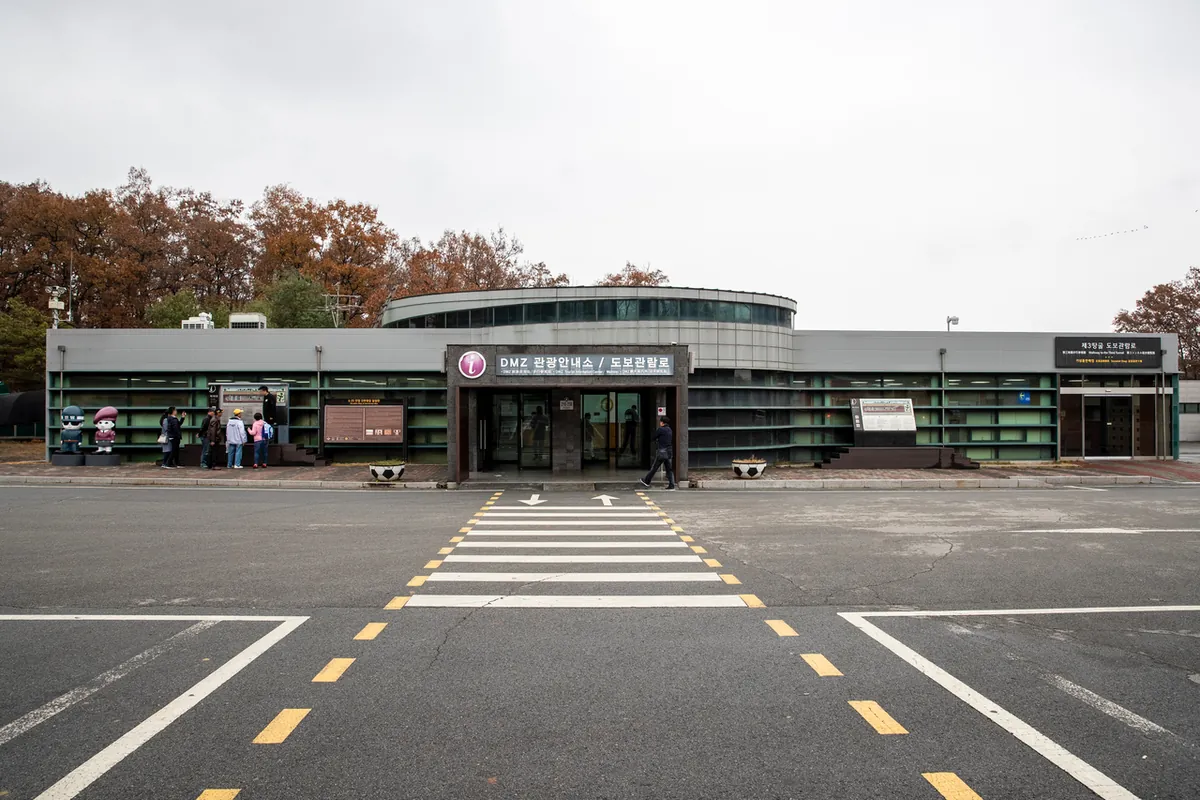
Imjingak National Tourist Area contains public monuments, exhibitions and separate attractions. It can be visited without claiming that you entered every controlled site. Official regional guidance identifies the Ecological Peace Tourism Information Center as the location associated with the DMZ ticket booth and visitor functions.
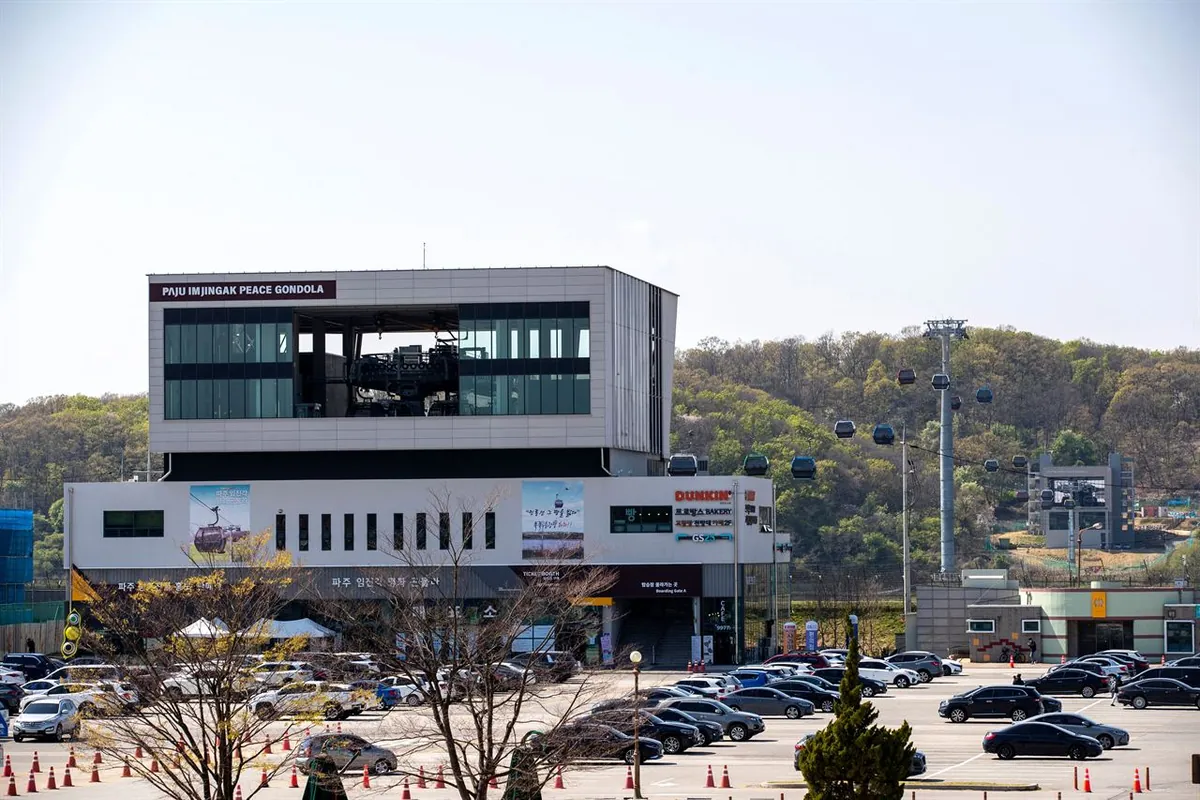
The Peace Gondola crosses the river into an area north of the Civilian Control Line, but it is not automatically part of every Seoul tour and it is not the same experience as the Third Tunnel bus circuit. Compare inclusions carefully rather than assuming that a photograph in a product listing represents a guaranteed stop.
The Third Tunnel is physically demanding
VISITKOREA describes the Third Tunnel as a reservation-based stop on the DMZ Peace Tour and requires identification. The underground visit involves a steep descent and ascent, confined sections and walking. Travelers with mobility, heart, respiratory or claustrophobia concerns should read the current operator rules and consider whether the surface exhibits are a better choice.
Dora Observatory depends on controlled access
Dora Observatory offers views toward areas across the border when visibility permits. Weather can limit what you see, and access depends on the controlled tour. A hazy view does not mean the tour failed; the site's historical and geopolitical context is the central value. Binocular availability and photography restrictions should be followed as posted.
Is Panmunjom or the JSA included?
No—never infer JSA access from a generic DMZ title. Panmunjom and the Joint Security Area use separate approval and operating arrangements. VISITKOREA's Panmunjom page, updated October 30, 2025, states that general tours are suspended. That is the latest official KTO status we verified, but it remains time-sensitive and must be checked again for the actual travel date.
Do not pay a premium merely because a product page uses historic JSA images or phrases such as subject to availability. Require a clear statement of what happens if JSA access is not operating: cancellation, alternative route, partial refund or ordinary Paju substitution. Terms belong in writing before payment.
Entry eligibility can also differ by nationality, age and documentation. An operator's ability to sell a booking is not proof that final controlled-area approval is guaranteed. Follow the official visit rules and the operator's document deadline exactly.
Which identification do you need?
The official KTO listings for the Third Tunnel and Dora Observatory say visitors must bring identification such as a passport or Alien Registration Card. Your operator may specify the exact document and require advance passenger details. Use the same spelling and document you will carry, and bring the original rather than assuming a photo on your phone is accepted.
This tour-document rule is separate from permission to enter South Korea. Review South Korea entry requirements for immigration, but follow the controlled-tour instructions for the excursion. Never send a passport copy through an unverified channel; use the operator's documented secure process.
Guided tour or independent trip?
A guided Seoul departure is the simplest way to reach controlled Paju stops because transport, timed access and guide interpretation are coordinated. Compare pickup location, return point, language, group size, included admissions, lunch, tunnel access, replacement itinerary and cancellation policy. A low headline price can exclude several items.
An independent rail trip can reach the broader Paju area and public Imjingak attractions, but it does not create independent access to the controlled Dora Observatory or Third Tunnel circuit. The official listing says the peace tour begins from Imjingak and requires reservation. Same-day capacity, registration process and departure availability must be confirmed directly.
Choose independent travel when your priority is Imjingak's public history and you accept that controlled stops may not be available. Choose a guided tour when the Third Tunnel and Dora Observatory are essential and you want Seoul transport handled. Choose neither on a day when a rigid evening booking cannot tolerate a late return.
What should you check before booking?
Exact named stops, not only the words DMZ tour.
Whether Panmunjom/JSA is explicitly included and currently authorized.
Original ID requirements and passenger-detail deadlines.
Tunnel walking, age and mobility restrictions.
Pickup and drop-off points written in Korean and English.
Policy for military closure, weather, late return and substitute stops.
What admissions, meals, gondola or optional activities cost separately.
Use a payment method with clear documentation, save the confirmation offline and screenshot the emergency contact. Reconfirm the meeting point on the previous evening. Seoul has several similarly named hotel and station exits; arriving at the correct district but wrong pickup point can still forfeit the tour.
How should you behave at the DMZ?
Follow guide and military instructions immediately. Photography can be limited by location or direction, so ask before raising a camera. Do not cross barriers, wander from the group or treat military personnel and border infrastructure as props. The sites concern war, separation and continuing security, and the tone should reflect that history.
Dress for walking and exposure rather than for a city photo stop. Wear secure shoes for the tunnel, carry water within operator rules and bring layers because underground and surface conditions differ. Large luggage can create access problems; confirm storage before arrival.
When is the DMZ tour a poor fit?
Skip or adapt the tour if steep tunnel walking is unsafe, controlled access uncertainty would be frustrating, or young children cannot manage the long transport-and-briefing day. A public Imjingak visit or an official museum can still support serious learning without claiming identical access.
Travelers with only three days in Seoul should weigh the full-day trade. A DMZ trip can be meaningful, but it replaces a palace or neighborhood day rather than fitting invisibly around it. The route planning in first time in Seoul can help protect the remaining city time.
What historical context should you understand first?
The DMZ was created by the armistice that halted large-scale fighting in the Korean War; it is not a peace-treaty border attraction. Families remain separated, military tension continues and the landscape carries both conflict history and decades of restricted human access. A responsible tour should explain these layers rather than frame the day only as a chance to look into North Korea.
Read a short overview of the Korean War, the armistice and the two-kilometer-wide buffer on each side of the Military Demarcation Line before departure. That preparation makes monuments, tunnels and observatories more intelligible. It also helps visitors distinguish the DMZ itself, the Civilian Control Zone, public Imjingak facilities and Panmunjom—terms that commercial listings sometimes blur.
A guide's interpretation can shape the experience, so review whether the product promises historical explanation in a language you understand. Look for a route that leaves time for exhibits and questions rather than only rapid photographs. If a claim sounds sensational or politically absolute, compare it with official museum or KTO material and recognize that observation from a viewpoint has limits.
What should you pack for the day?
Bring the required original ID, booking confirmation, charged phone, portable battery, water allowed by the operator, weather layers and secure walking shoes. Use a compact day bag; controlled sites may limit luggage, tripods or other equipment. Carry any essential medicine with you, because returning to the bus or finding a pharmacy may not be possible during the circuit.
Dress neutrally and comfortably. A Paju tour can combine outdoor exposure, a steep underground section, bus travel and security checks. In winter, the observatory can feel colder than central Seoul; in summer, queues and open areas can be hot. Check the Paju forecast rather than using Seoul's temperature alone.
Frequently asked questions
Can I visit the DMZ without a tour?
You can independently visit some public attractions around Imjingak, but official listings say Dora Observatory and the Third Tunnel circuit require the controlled peace-tour process. Independent transport does not grant unrestricted access.
Do I need my passport?
Official KTO pages require accepted original identification such as a passport or Alien Registration Card for the controlled tour. Follow your operator's exact document instructions and passenger-data deadline.
Is the JSA open in 2026?
The latest official KTO Panmunjom notice we verified, updated October 30, 2025, says general tours are suspended. Status can change, so confirm directly through official channels before booking and read the substitute-tour policy.
How long should I allow?
Treat a Seoul departure as a substantial half- or full-day commitment depending on product, traffic and access. Do not schedule a tight evening connection. Use the operator's current duration and add a return buffer.
Last verified: August 30, 2026 by the TipsKorea editorial team. DMZ and JSA access is highly time-sensitive and can change for military, weather or operational reasons; reconfirm immediately before travel.
Sık Sorulan Sorular
Can tourists visit the DMZ without a guided tour?
Some public Imjingak attractions are independently accessible, but controlled stops such as Dora Observatory and the Third Tunnel require the official tour process described by KTO.
Do I need a passport for a DMZ tour from Seoul?
Official listings require accepted original identification such as a passport or Alien Registration Card. Follow the booked operator's exact document and advance-data instructions.
Are Panmunjom and JSA tours operating in 2026?
The latest KTO notice we verified says general Panmunjom tours are suspended. This is time-sensitive; check current official status and the operator's replacement policy.
Is the Third Tunnel suitable for everyone?
No. It involves a steep underground walk and confined space. Travelers with mobility, heart, respiratory or claustrophobia concerns should review current restrictions and consider surface exhibits.
Son doğrulama: Ağustos 2026 · TipsKorea Editörleri


