
Suwon works as a day trip because its main historic sights form a coherent walking district. The important transfer is not Seoul to Suwon; it is Suwon Station to the fortress area, where the actual route begins.
A Suwon Day Trip from Seoul succeeds when the fortress district—not the railway station—defines the route.
Key takeaways
Reach Suwon, then take local transport to Hwaseong Haenggung or your chosen gate.
Use the palace for context before committing to a wall section.
Combine one scenic wall segment with Haengnidan Street and a market or gate.
Treat the trolley, archery and night programs as optional, schedule-dependent extras.
Suwon Hwaseong is not a single building. It is a living city district shaped by walls, gates, military structures, a temporary royal palace, markets and newer café streets. That makes Suwon more satisfying than a photo stop, but it also means the full route can exceed the energy of an ordinary day trip.
We recommend a palace-plus-partial-wall plan for most first visits. Travelers who love long heritage walks can extend it; families and mobility-limited visitors can use shorter segments or the current visitor transport options. Compare the overall trade in best day trips from Seoul before giving up one of a short visit's Seoul days.
How do you get from Seoul to Suwon?
Rail choices vary by departure point and product, but the planning principle is stable: compare the door-to-door journey, not only the fastest train. An ordinary metro-area route may take longer but require less booking. A faster rail product can save time for some Seoul bases but may involve a separate ticket and departure station.
The missing transfer: Suwon Station to the fortress
Suwon Station is not directly beside Hwaseong Haenggung. After arriving, use a local bus or taxi to the historic area. Save the Korean name of your first stop and identify the correct bus direction or taxi drop point. If you begin walking from the station without a deliberate route, you can spend the day's best energy on ordinary city blocks.
A rechargeable transit card is useful for eligible local transport, but it does not replace every intercity or reserved ticket. The Korea transport cards and passes guide explains where stored value ends and separate rail products begin. Check current route and fare information on the responsible operator's service before travel.
Morning — Why start at Hwaseong Haenggung?
Hwaseong Haenggung was the temporary palace within the fortress complex and gives the clearest narrative foundation for the day. The Suwon Cultural Foundation currently publishes year-round daytime hours, a separate admission and seasonal night-opening information. Recheck the official page because events and special programs can change access.
Walk through the main compounds slowly enough to understand how a royal visit functioned. The palace is more legible when you notice the sequence from public ceremonial space to administrative and residential areas. Do not let a photo queue consume the entire visit; the wall landscape later in the day is the feature that differentiates Suwon from Seoul's palace district.
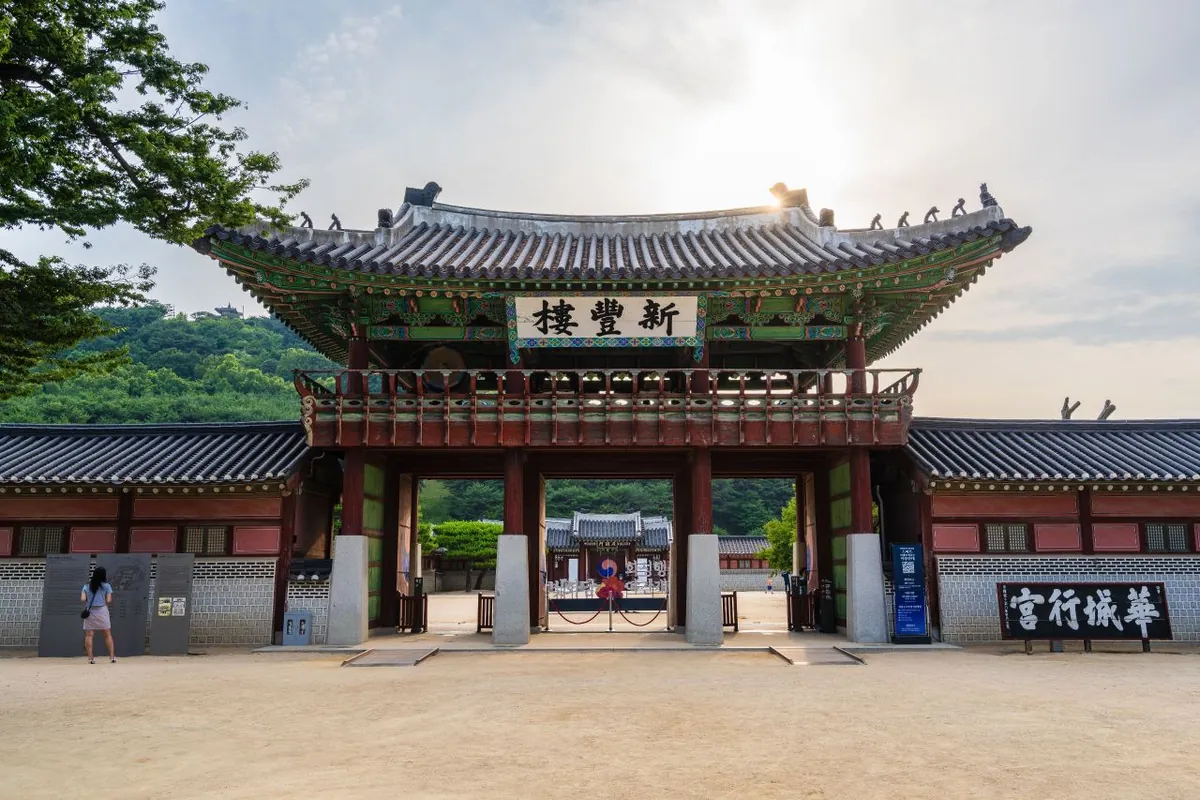
If a performance or experience matters, verify its date and reservation rules rather than assuming it runs daily. The official foundation controls current information for the trolley and cultural programs. Build the ordinary palace-and-wall day first, then add a confirmed event.
Lunch — Haengnidan Street or a traditional market?
Haengnidan Street and the lanes around the palace offer cafés and restaurants in renovated low-rise buildings. It is convenient and relaxed, but popular places can have queues. Use it when the group wants a comfortable meal and café pause before climbing.
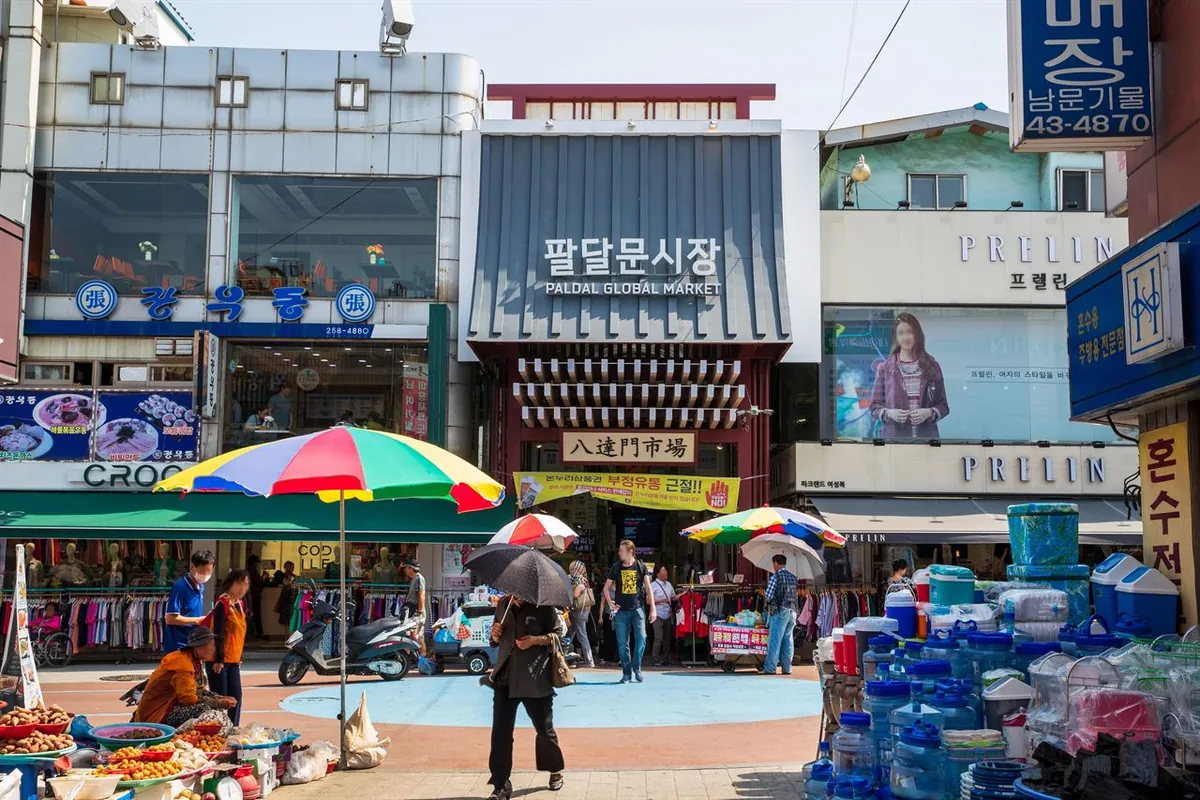
Traditional markets around Paldalmun offer a busier local-city atmosphere and easy access to the southern gate. They suit travelers who want market food and a route ending south. Do not force both a long café break and a full market crawl; choose one lunch character and preserve time for the wall.
Afternoon — Which fortress wall section should you walk?
The official KTO walking feature describes a 5.1-kilometer fortress trail taking roughly two to three hours and linking gates, a pavilion, markets, Paldalsan and the palace. That is useful context, not a minimum requirement. Hills, stairs, stops and heat can make the full experience longer.
The scenic north and northeast option
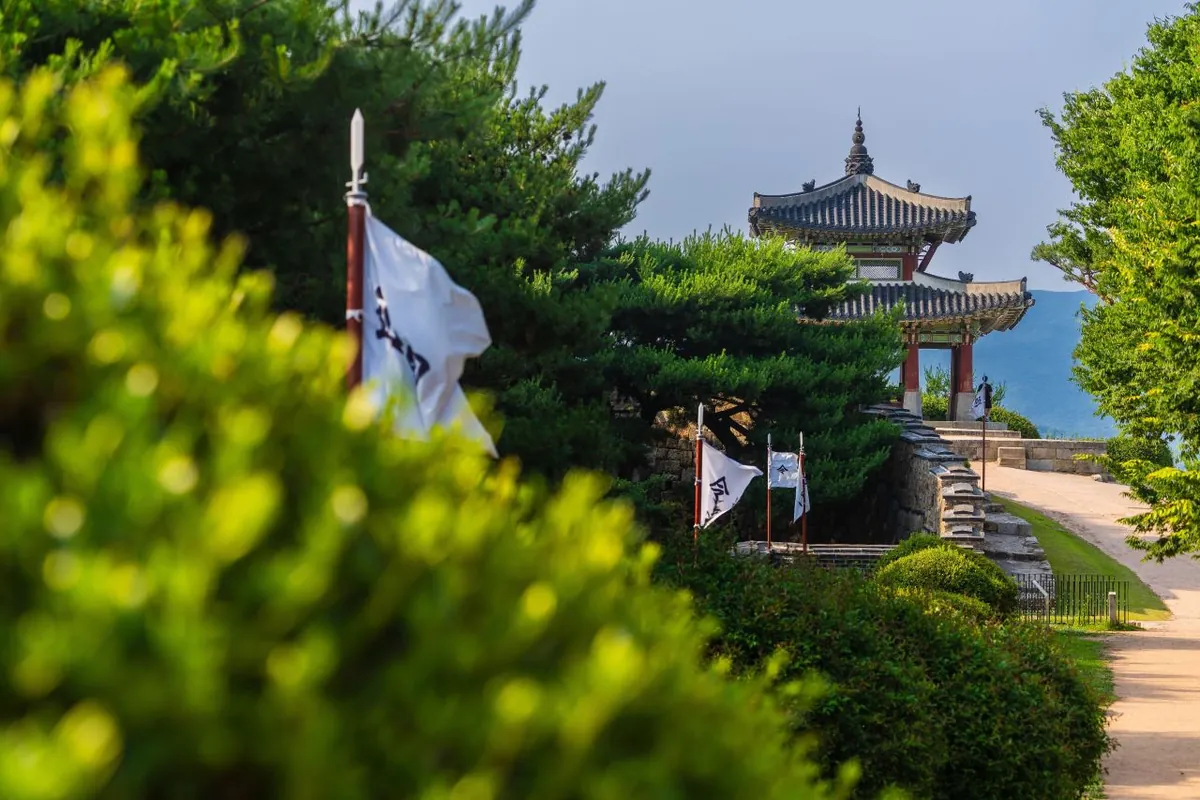
A route around Janganmun, Hwahongmun and Banghwasuryujeong gives varied architecture, water and wall views. It is a strong choice when you want scenery without immediately climbing the steeper western high point. Arrange the start and finish around a bus or taxi connection rather than automatically walking back to the palace.
The Paldalsan and Seojangdae option
The western high ground rewards effort with broad city views and a sense of the fortress terrain, but it involves climbing. Use secure shoes, carry water and allow more time in heat or wet conditions. Descending can be as demanding as ascending for knees and small children.
The gate-and-market option
Travelers who prefer a flatter cultural day can focus on the palace, Paldalmun area and selected wall structures, using local transport between them. This is not an inferior itinerary. The fortress is an urban system, and seeing how gates connect to today's streets and markets is part of its story.
Should you take the Hwaseong trolley?
The official visitor information describes sightseeing and circular trolley courses around major fortress features, with reservations and schedules controlled by the Suwon Cultural Foundation. It can reduce walking for families or visitors with limited time, but it does not enter every structure or replace the palace context.
Check the current departure point, course, seat availability, language support and service notice. Weather, maintenance and events can affect operation. Do not structure the entire day around an unconfirmed walk-up seat. If the trolley is unavailable, use a shorter wall route and local taxi or bus connections.
What is free, and what needs a ticket?
Suwon Cultural Foundation currently lists the open fortress itself as year-round and free to view, while Hwaseong Haenggung and certain museums, experiences, rides and programs have their own admissions or reservations. This distinction prevents a common misunderstanding: walking beside the wall is not the same transaction as entering every managed interior.
Prices and program bundles are time-sensitive, so check the current official table on the day you finalize plans. A hanbok benefit, night opening or integrated ticket should be treated as current only when the foundation publishes it for your date.
How do weather and seasons change the route?
In summer, arrive early, tour the palace first and avoid the steepest wall during peak afternoon heat. Use a long lunch or museum break before a shorter late-day walk. In winter, exposed wall sections can feel colder and windier than the station area, so carry layers and finish before surfaces become difficult to see.
Rain changes stone and wooden surfaces. Reduce the wall route, use the palace and museum components, and avoid rushing on steps. Sunset and seasonal night opening can be attractive, but a late finish requires checking the return from the historic district to Suwon Station and then onward to your Seoul base.
A realistic Suwon day schedule
Morning: travel from Seoul and transfer directly to Hwaseong Haenggung.
Late morning: palace visit and one confirmed program if available.
Lunch: choose Haengnidan Street or a traditional market.
Afternoon: walk either the north/northeast structures or Paldalsan, not both by default.
Early evening: café, market or seasonal night view, then local transport to Suwon Station.
Return: keep a buffer for the local transfer and the correct Seoul connection.
If Suwon sits inside a longer journey, the South Korea 7-day itinerary helps compare it with Gyeongju, Busan and other history stops. Suwon is strongest as an urban fortress day, not a substitute for every royal or ancient-capital experience.
Independent day or guided tour?
Independent travel is well suited to Suwon because the historic district is coherent and official maps identify the major gates and structures. It gives you control over lunch, wall length and weather breaks. Prepare the station-to-fortress transfer and download the official visitor map before leaving Seoul.
A guided tour earns its place when historical interpretation is the priority, when the group wants transfers handled, or when Suwon is combined with a farther attraction. Compare actual time inside Hwaseong with pickup loops and secondary stops. A long product duration does not guarantee a deeper fortress visit.
Private transport can help a multi-generational group, but cars do not follow the pedestrian wall and parking does not remove stairs. Ask how mobility needs change the route. Whichever format you choose, keep the palace and one wall section as the core; optional experiences should fit around them rather than fragment the day.
Frequently asked questions
Is Suwon an easy day trip from Seoul?
Yes when you plan the final transfer to the fortress district. Rail reaches Suwon, but the main historic sights are not directly outside the station. Allow most of a day for transport, palace, lunch and a wall section.
Can you walk the entire fortress?
A full circuit is possible for prepared walkers, but hills, stairs and stops add effort. Most first-time visitors get a better-balanced day from the palace plus one scenic wall section.
Is Suwon Hwaseong free?
The foundation currently lists the open fortress as free, while Hwaseong Haenggung, museums, rides and programs can charge separately. Check the official current table before travel.
Is a guided tour necessary?
No. The district is workable independently with an official map and route plan. A guide adds historical interpretation, while an organized Seoul departure can simplify transfers for travelers who do not want to navigate local buses.
Last verified: August 30, 2026 by the TipsKorea editorial team. Palace access, trolley schedules, admissions, programs and night opening can change; recheck Suwon Cultural Foundation before travel.
Sık Sorulan Sorular
Is Suwon an easy day trip from Seoul?
Yes, but Suwon Station is not beside the fortress. Plan a local bus or taxi to Hwaseong Haenggung or a chosen gate and allow most of a day.
How much of Suwon Hwaseong should I walk?
Most first-time visitors should combine Hwaseong Haenggung with one scenic wall section. The full circuit adds hills, stairs and substantially more time.
Is Suwon Hwaseong Fortress free to visit?
The official foundation currently lists the open fortress as free, while the palace, museums, rides and programs may have separate admission or reservations.
Do I need to book the Hwaseong trolley?
The official visitor information controls current reservations and schedules. If the trolley matters, book or confirm it; otherwise keep a partial walking route as the fallback.
Son doğrulama: Ağustos 2026 · TipsKorea Editörleri


