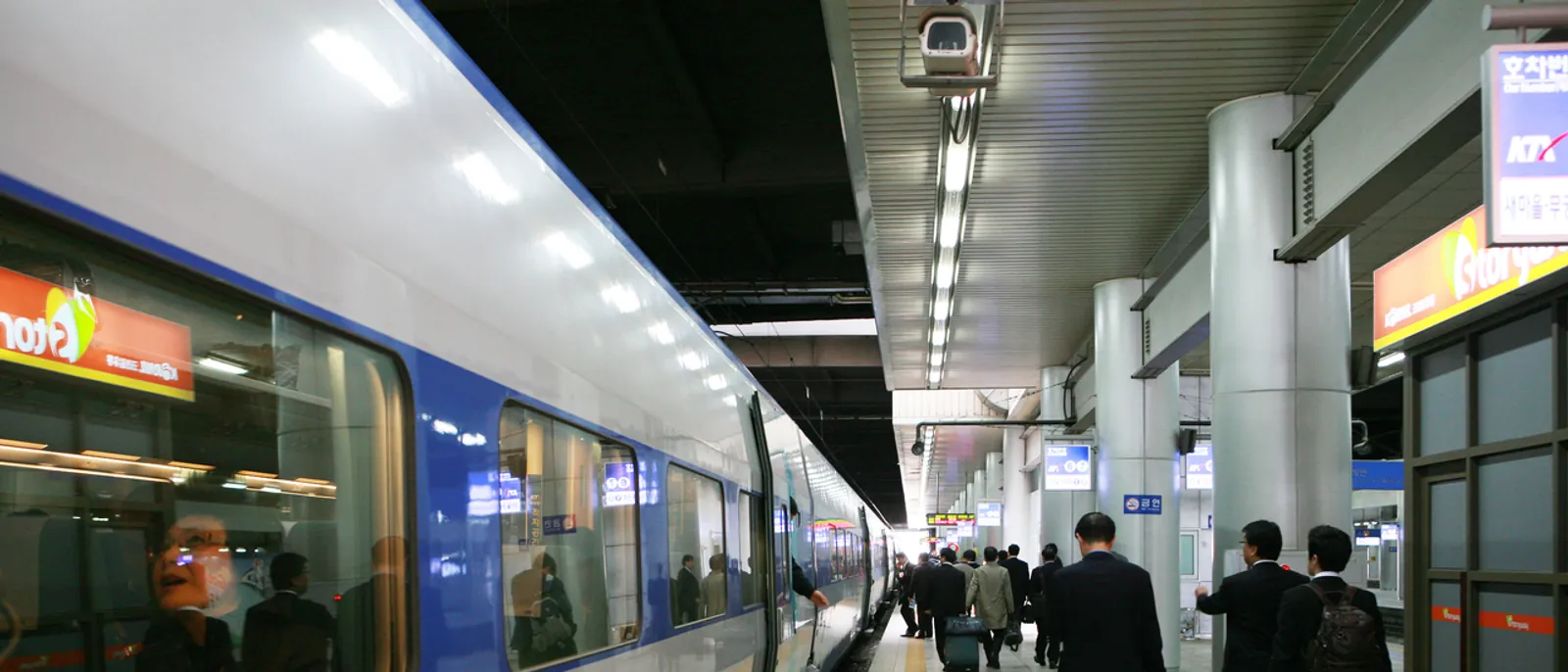
A rail pass is useful only when its eligible journeys cost more than the pass. We explain the current prices and exclusions, then give a calculation anyone can repeat.
KORAIL Pass can save money for eligible foreign visitors taking several long-distance trains, but it is not automatically cheaper than individual tickets.
Key takeaways
Only foreign visitors can use the pass; Korean nationals are not eligible.
Select Pass prices are KRW 131,000 for 2 days, KRW 186,000 for 3, KRW 234,000 for 4 and KRW 275,000 for 5.
Compare the exact individual fares for trains you will actually reserve before buying.
The pass excludes SRT, metropolitan railways and temporary tourist trains, and a seat is not guaranteed until reserved.
What is KORAIL Pass?
KORAIL Pass is a rail product for foreign visitors traveling in Korea. The official Select Pass lets the holder choose two, three, four or five travel days within a ten-day validity period. It can be useful for a route containing several KTX or other eligible KORAIL journeys, especially when those journeys occur on separate days. It is not an urban-transit card and does not replace local subway or bus payment.
Eligibility is narrow. KORAIL says the pass is unavailable to Korean nationals. Adults are defined as age 13 and older, children as age 6–12, and one child under six can accompany each adult aged 13 or older without an additional pass. Carry the passport used for purchase. Eligibility and age evidence should be confirmed before relying on the product for a family budget.
How much does KORAIL Pass cost?
Current official Select Pass prices
2-day pass: adult KRW 131,000; child KRW 66,000.
3-day pass: adult KRW 186,000; child KRW 93,000.
4-day pass: adult KRW 234,000; child KRW 117,000.
5-day pass: adult KRW 275,000; child KRW 138,000.
These are the official prices verified on August 30, 2026. Check the KORAIL page again at purchase because products and terms can change. The Select Pass days are chosen within ten days; they are not necessarily consecutive. That flexibility helps a Seoul–Gyeongju–Busan route with sightseeing days between travel, but only eligible train trips on selected dates contribute to value.
Is KORAIL Pass worth it?
Use a break-even calculation
List every intercity train you intend to take, including origin, destination, train type and travel date. Search the official KORAIL booking system for the current individual fare, then add only journeys you will genuinely reserve. Compare that sum with the pass price for the required number of travel days. If the difference is small, individual tickets may be simpler and more flexible. Do not use a fare quoted in an old blog for the calculation.
A Seoul–Busan round trip alone may or may not justify a pass depending on current fare and the product selected; check it rather than assuming. The pass becomes more plausible when several eligible long-distance journeys fall on two or three selected days. Our Seoul to Busan train guide explains that corridor, while our seven-day Korea itinerary helps identify whether your route contains enough rail movement.
What trains are excluded?
KORAIL explicitly excludes SRT, metropolitan railways and temporary tourist trains. This matters in Seoul because a train departing Suseo may be SRT, not KORAIL. It also matters for airport and local subway legs, which require other payment. Confirm the operator shown for each result. A fast train is not automatically eligible simply because it looks like KTX in a search list.
The pass can be used only within its rules and selected dates. It does not guarantee that your preferred train has seats. KORAIL allows seat reservations from one month before departure and limits reservations to two tickets per person per day. Plan popular long-distance sectors as soon as the booking window opens, but use the official reservation record as proof rather than a screenshot of the pass.
How do seat reservations work?
After buying the pass, reserve each desired seat through KORAIL's official pass reservation flow. Carry the pass and passport for travel. KORAIL states that screenshots are invalid. If a train is sold out, the official guidance says a pass holder may board standing with the pass and passport, but that is not a comfortable substitute for a reserved seat on a long journey. Follow station staff and current operating rules.
First class is not included outright. KORAIL says the holder can pay 50 percent of the first-class price for the route. Compare that supplement with availability before committing. A pass does not give priority over other passengers, and reservation limits mean it is poorly suited to speculative booking of many alternative trains. Reserve the journeys you will take and cancel unwanted seats through the official process.
What do you need to buy it?
KORAIL lists a passport and credit card as required. Use the same passport details consistently and confirm that the payment card supports the transaction. The pass is not refundable after its starting date, so verify the route and selected days first. KORAIL may limit pass sales or use on specific dates; check current notices around major Korean holidays rather than assuming normal availability.
KORAIL PASS+ adds a transit-card function for KRW 8,000 according to KTO's official information. KTO identifies kiosks at Incheon Airport, Seoul, Yongsan and Busan for this product. The add-on can simplify local transit, but it does not turn every journey into an included fare. Compare it with the urban-card options in our Korea transport cards guide.
Who should skip KORAIL Pass?
Skip it when your trip stays mostly in one city, uses one simple intercity return, depends on SRT from Suseo, or has uncertain travel days. Individual tickets may also be better when the break-even saving is small, because the pass adds eligibility and activation rules. A Jeju-heavy trip gains little rail value, and a Busan-only itinerary needs local transit rather than an intercity pass.
The pass is strongest for a deliberate multi-city rail route. Even then, calculate first. Include only official fares, choose the minimum number of travel days and reserve essential seats. The product should follow the itinerary, not force extra train rides merely to feel valuable.
What should you check before purchase?
Eligibility for every traveler and the passport spelling used for purchase.
Individual official fares for every journey in your real itinerary.
Whether each train is KORAIL, not SRT or metropolitan rail.
The number of selected travel days needed within the ten-day window.
Seat availability, the one-month reservation window and two-ticket daily limit.
Refund, date-restriction and first-class supplement rules on the current page.
KORAIL Pass is worth it when the official fare total clearly exceeds the pass and the eligible journeys fit its selected-day structure. For everyone else, individual tickets are often the cleaner choice. Make the decision with the current KORAIL cart, not a generic route count.
Last verified: August 30, 2026, by the TipsKorea editorial team against KORAIL and KTO official pages. Recheck prices, eligibility and restrictions before purchase.
資料來源與查核
我們參照官方或第一手資料查核實用資訊。預訂或出發前,請直接向相關單位確認時效性資訊。
常見問題
How much is KORAIL Pass?
Adult Select Pass prices verified on August 30, 2026 were KRW 131,000 for 2 days, KRW 186,000 for 3, KRW 234,000 for 4 and KRW 275,000 for 5.
Can Korean citizens use KORAIL Pass?
No. KORAIL states that the pass is for foreign visitors and is unavailable to Korean nationals. Travelers must carry the passport associated with purchase.
Does KORAIL Pass include SRT?
No. SRT, metropolitan railways and temporary tourist trains are excluded. Confirm the operator of every intended service before including it in your value calculation.
Does KORAIL Pass guarantee a seat?
No. Reserve seats through the official pass flow, available from one month before departure and limited to two tickets per person per day. Sold-out-train standing guidance is not equivalent to a reserved seat.
最後查核:2026年8月 · TipsKorea 編輯部


