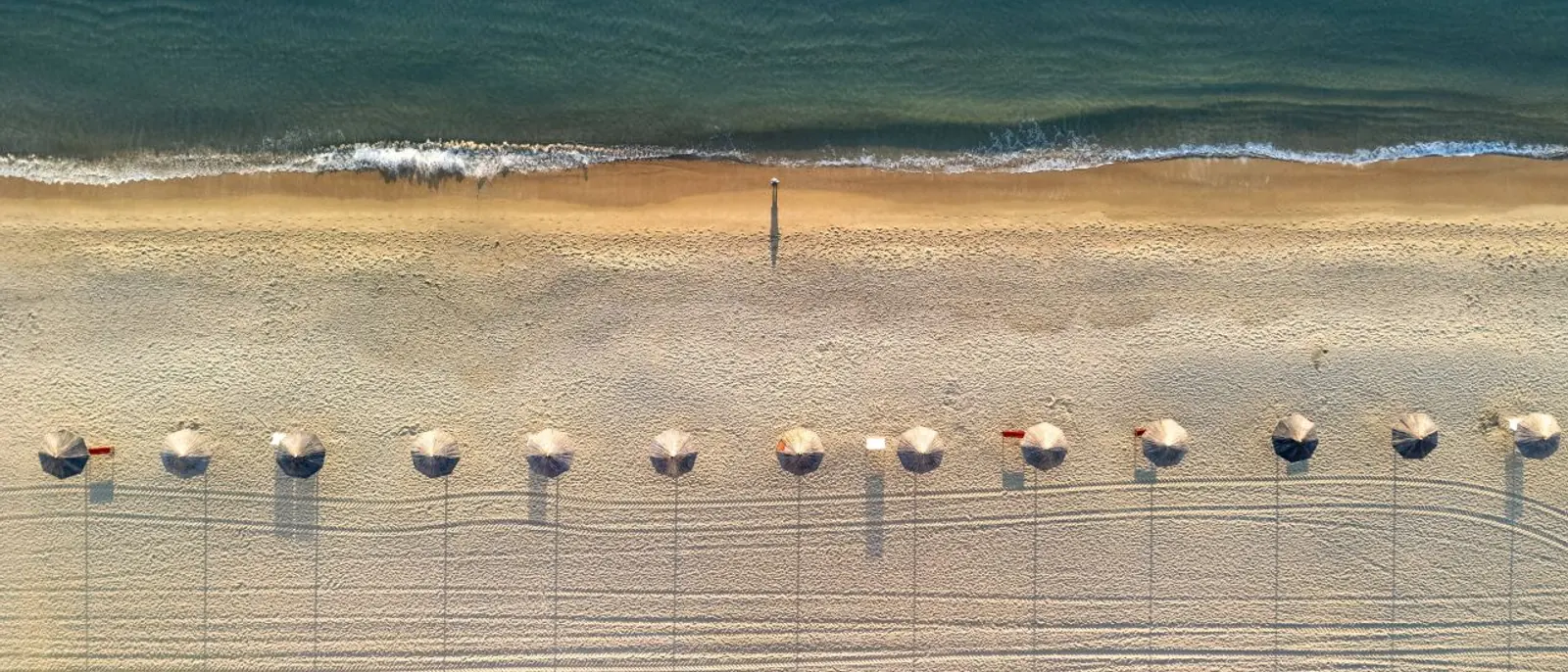
Busan does not have one best beach. Its five most useful visitor beaches solve different trip problems, from an easy resort day to a long sunset journey at the city's southwest edge.
Which Busan beach should you choose?
| Option | Best for | Pair with | Main trade-off |
|---|---|---|---|
| Haeundae | First-time beach day and resort facilities | Dongbaekseom and eastern attractions | Busy and distant from old downtown |
| Gwangalli | Bridge views and evening atmosphere | Suyeong or an east-coast day | Urban waterfront rather than a quiet escape |
| Songjeong | Surf culture and a calmer east-coast stop | Cheongsapo or nearby coastal sights | Farther east and less central |
| Songdo | Compact coast near the old port | Nampo or Yeongdo | Smaller beach and attraction-specific checks |
| Dadaepo | Tidal flats, open sky and sunset | Southwest Busan | Long journey from Haeundae |
Swimming access, equipment zones, events and weather restrictions are operational decisions. Follow current beach notices.
This Busan beaches guide helps you choose one coast that fits the day instead of collecting beaches through long transfers.
Which Busan beach is best for your trip?
The useful answer depends on what happens before and after the sand. Haeundae offers the most complete first-time visitor district. Gwangalli turns a beach into an urban evening with Gwangandaegyo Bridge in view. Songjeong feels farther from the center and is associated with surf culture. Songdo sits closer to Nampo and Yeongdo. Dadaepo opens onto a broad western horizon but asks for a longer journey from the eastern resorts.
Trying to visit all five in one day reduces each place to a photograph. Busan's urban length makes east-to-west transfers significant, and beach time is vulnerable to weather. Pick one primary beach, add a nearby headland or neighborhood, and leave a buffer for wind, rain or a slower meal. Our three-day Busan itinerary groups the coast into realistic districts rather than one giant shoreline circuit.
This comparison also separates visiting from swimming. A promenade may remain accessible outside summer while supervised water areas, rental equipment and event facilities operate seasonally. Rough sea, water-quality decisions or weather can restrict access even during a published season. Check the official city or beach notice on the day, enter only designated areas, and follow on-site instructions. No travel article can pre-authorize ocean conditions.
Why choose Haeundae Beach?
The complete first-time beach district
Haeundae is the practical default for travelers who want a beach, accommodation, dining and other visitor services in one district. The long urban shoreline is easy to combine with Gunam-ro and the Dongbaekseom coastal side. It works in every season as a walk, but the experience changes: summer emphasizes managed beach use, while cooler months reveal a quieter promenade and skyline. Check events because major installations can alter circulation even when the beach itself remains accessible.
Choose Haeundae if your hotel is nearby, this is your first Busan visit, or someone in the group wants amenities close at hand. It is also the logical beach before or after an eastern coastal attraction. Do not choose it simply because it is the most famous if your day is otherwise in Nampo. The cross-city journey can erase the convenience that makes Haeundae attractive.
A good Haeundae half-day begins with the sand or promenade, continues around the western end toward Dongbaekseom when conditions suit, and finishes with a meal in the same district. Add the coastal rail only as a planned, ticketed component; our Busan Sky Capsule guide explains the separate booking and routing decisions. Trying to attach every eastern attraction creates a rushed day.
Why choose Gwangalli Beach?
Gwangalli's defining view is urban: the beach faces Gwangandaegyo Bridge and the surrounding neighborhood stays active into the evening. Arrive in late afternoon, walk while there is daylight, then watch the waterfront change after dark. It is a stronger choice than Haeundae for travelers who prioritize a city-facing dinner and bridge view over resort infrastructure. The shore is still a public beach, so water access remains subject to seasonal operations and conditions.
Official Visit Busan information emphasizes the bridge panorama and nearby cultural setting. Treat any programmed display, drone event or festival as a separate event that requires a current check. Wind, cancellation and special control zones can change the evening. The ordinary bridge view is the dependable reason to visit; a scheduled spectacle is a bonus only after the organizer confirms it.
Gwangalli pairs naturally with Haeundae or Suyeong, but there is no need to swim at both beaches. Use Haeundae for a daytime walk and Gwangalli for dinner, or give Gwangalli the entire evening. Accommodation here suits travelers who want nightlife and a waterfront outlook; compare it with other bases in our where to stay in Busan guide.
Why choose Songjeong Beach?
Songjeong lies farther east and feels more separate from Busan's central urban beaches. It is often associated with surfing and a less formal beach rhythm. That does not mean conditions are always beginner-friendly or that equipment is always available. Book lessons or rentals with a current operator, check what is included, and obey the supervised zones. People who do not surf can still use Songjeong as a broad shoreline walk connected to an eastern coastal day.
Choose Songjeong when Cheongsapo, the coastal rail corridor or the far-east coast already appears in your plan. Skip it when you have only one short beach window from Nampo. The return journey matters, particularly in the evening. Check the live route before committing to a late meal, and retain enough phone battery to navigate the final connection.
Why choose Songdo Beach?
Songdo is the efficient coast for a day built around old downtown, Nampo or Yeongdo. It is smaller than Haeundae, but that compactness is an advantage when the beach is one part of a mixed day. The area can include over-water or cliffside attractions, yet each facility has its own admission, maintenance and weather rules. Verify the operator notice instead of assuming a beach visit guarantees every attraction will operate.
Use Songdo for a short promenade, a coast view and an easy continuation toward the west or south. It can also replace a more exposed Yeongdo walk when conditions are uncertain, although wind still matters. If swimming is your main goal, compare the current managed zones and services with Haeundae or Gwangalli rather than selecting Songdo solely for proximity.
Why choose Dadaepo Beach?
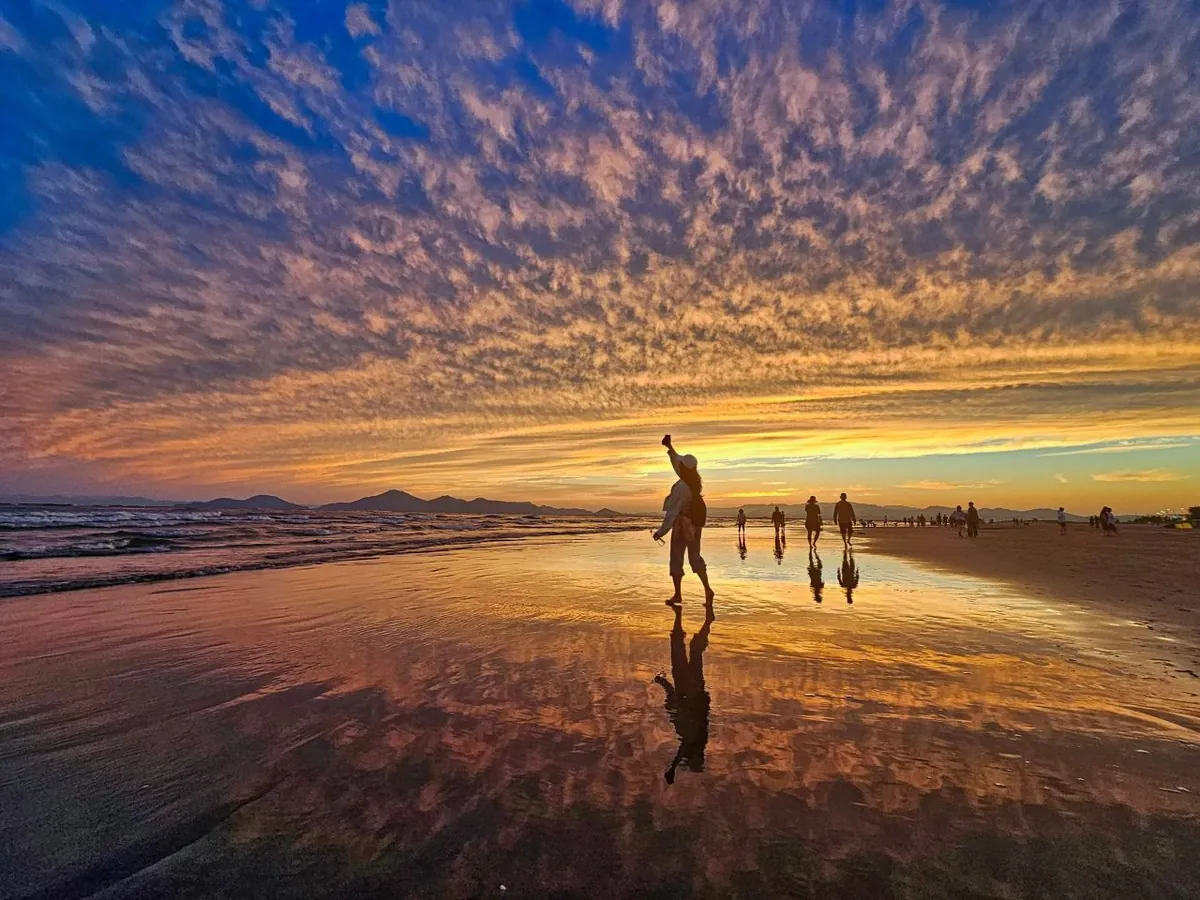
Dadaepo sits near the Nakdong River estuary at Busan's southwest edge. The broad, shallow-looking tidal landscape, open sky and western orientation make it particularly compelling near sunset. Those same tidal features require respect. Water and sand positions change, and exposed flats are not permission to walk anywhere. Remain in open public areas, follow barriers and return before access becomes unclear.
Choose Dadaepo when sunset photography, space and a slower local coast matter more than resort services. It can anchor a southwest-Busan day, but it is a poor spontaneous add-on after Haeundae. Check the live return route before sunset and note the station or stop you need. If clouds remove the expected color, the estuary landscape still justifies the trip; do not chase another beach across the city.
Seasonal fountains, festivals or installations should be treated as independent attractions. Verify their official operating notice and closure policy. The beach itself is the durable experience. Bring an extra layer because the open shore can feel cooler after the sun drops, and protect camera equipment from blown sand.
Can you swim at Busan beaches year-round?
Do not assume so. Korean urban beaches can remain physically accessible as parks and promenades while designated swimming operations run only during an announced season. Even then, daily sea state, weather, water quality and safety decisions can close or narrow the water zone. Swim only where and when on-site management permits. Flags, broadcasts, barriers and lifeguard instructions take priority over a saved webpage.
Families should agree on a meeting point before anyone enters the water. Keep children within direct reach, use appropriate flotation only as instructed, and do not rely on an inflatable toy as safety equipment. Rip currents and changing depth are not always visible. If no supervised area is operating, enjoy the shore from land instead of interpreting the absence of a barrier as approval.
How should you plan transport between the beaches?
Use rail for the long urban spine and live routing for the final bus or walk. Haeundae, Gwangalli and Dadaepo connect differently to the network; Songjeong and Songdo often require more attention to the last segment. Save each destination in Korean, verify the correct direction and choose the station exit before surfacing. A reloadable card simplifies transfers; see our Korea transport cards guide.
A sensible two-beach day pairs places on the same side: Haeundae with Gwangalli, or Songdo with a west-Busan district. Dadaepo can follow another southwest stop but should not be combined with Songjeong. Add transfer time as a range in your own plan and recheck it live. If traffic or weather expands the journey, keep the primary beach and remove the secondary one.
What should you pack for a Busan beach day?
Pack sun protection, water, footwear for hot or rough surfaces, a light wind layer and a waterproof bag for electronics. Bring swimwear only if current managed swimming and your own ability make it appropriate. Changing and shower facilities vary by beach and season, so confirm them rather than arriving dependent on one service. Dispose of rubbish correctly and avoid glass near the sand.
For sunset, add a small light or ensure your phone is charged for the route back. For winter, prioritize wind protection over a heavy bag. Accessibility also varies: a level promenade does not guarantee that every sand entry, coastal trail or attraction is step-free. Ask the official tourism information service or facility about current ramps, elevators and accessible toilets before travel.
The best Busan beach is the one that strengthens the rest of your day. Haeundae provides completeness, Gwangalli provides an urban evening, Songjeong provides eastern breathing room, Songdo provides west-side efficiency, and Dadaepo provides scale and sunset. Choose deliberately, then let conditions set the final plan.
Last verified: August 30, 2026. We checked Visit Busan's beach and coastal information; confirm current swimming controls, events and facility operations on the day.
Sources & verification
We use official or primary references to check practical details. Confirm time-sensitive information directly before you book or travel.
Frequently Asked Questions
Is Haeundae or Gwangalli Beach better?
Choose Haeundae for a complete resort district and daytime beach plan; choose Gwangalli for an urban evening and direct Gwangandaegyo Bridge view.
Which Busan beach is best for sunset?
Dadaepo has a broad western horizon and tidal landscape, while Gwangalli offers a city-and-bridge evening. Weather can remove the expected color at either.
Can I visit all five Busan beaches in one day?
It is physically possible to pass several, but it is not a useful travel day. Busan is long; choose one primary beach and at most one nearby secondary coast.
Are Busan beaches open in winter?
Promenades and shores can remain useful for walking, but supervised swimming and seasonal facilities are separate. Follow current official notices and on-site controls.
Last verified: August 2026 · TipsKorea Editorial


