
Busan is a long coastal city, so the right hotel area can remove a surprising amount of cross-city travel. This guide compares the five bases most useful to first-time visitors and explains who should choose each one.
Where to stay in Busan depends on which side of this long coastal city you want to wake up in. For most first trips, we recommend Seomyeon for balance or Haeundae for a beach-led stay.
Where to stay in Busan for a first visit?
If your itinerary is still broad, choose Seomyeon. It sits at the meeting point of Busan Metro Lines 1 and 2, the two lines most visitors use to move between Busan Station and Nampo-dong in the south and Gwangalli and Haeundae in the east. You will not wake up beside the sea, but you avoid committing every day to one end of the city. That trade is especially useful on a short first visit with mixed priorities.
Choose Haeundae instead when the coast is not just one stop but the reason for the trip. The beach, Dongbaekseom, the Mipo end of Haeundae Blueline Park and the wider eastern shoreline can shape relaxed mornings and evenings. The cost is geographic: a market morning in Nampo-dong or a Yeongdo day begins with a long cross-city ride. Our three-day Busan itinerary makes that east-west split visible before you book.
For travelers arriving by KTX, Busan Station can look like the obvious answer. It is practical for a late arrival, early departure or luggage-heavy rail trip, but it is a transport base rather than Busan's most atmospheric evening neighborhood. Nampo-dong, a few stops farther south on Line 1, is often the better compromise when traditional markets, port history and walkable food streets are the priority.
The one-question shortcut
Ask what you want to do before breakfast. A beach walk points to Haeundae or Gwangalli. A fast start in either direction points to Seomyeon. Markets and the old port point to Nampo-dong. A train with minimal luggage handling points to Busan Station. That answer is usually more reliable than choosing the district with the cheapest room on a citywide search page.
Haeundae: best for a beach-first Busan trip
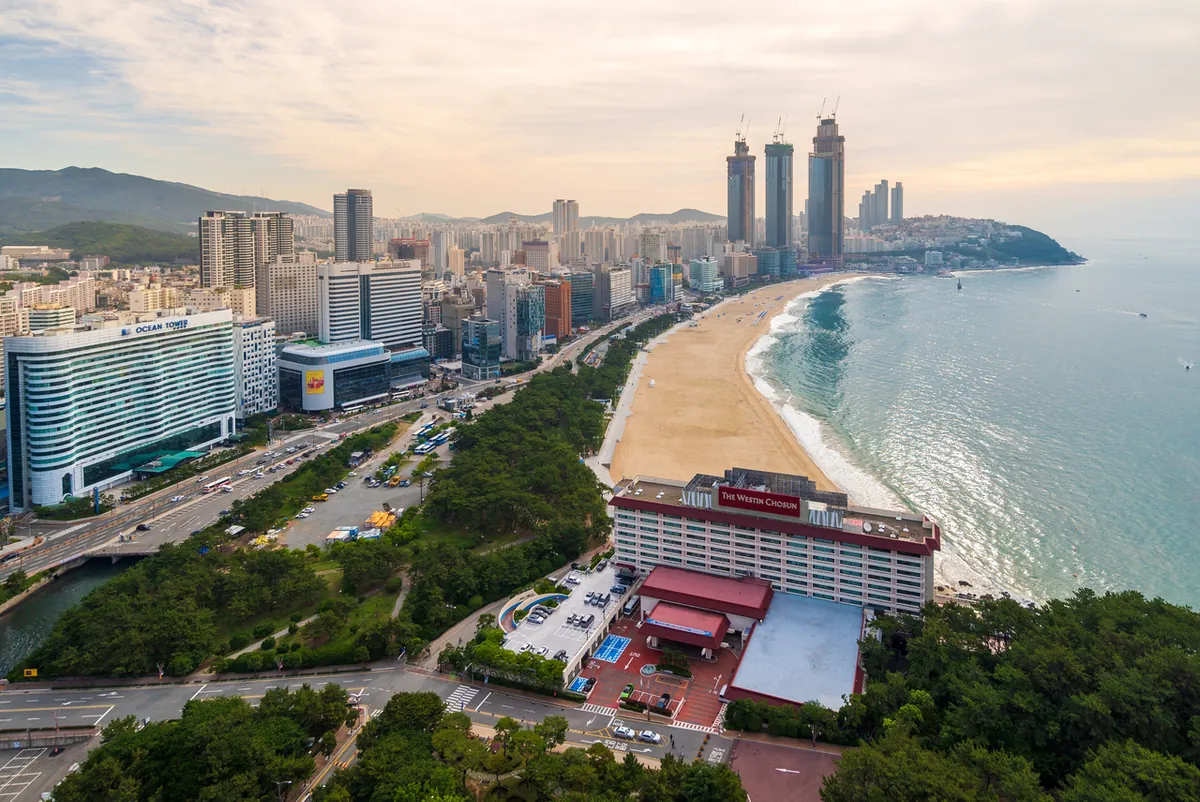
Haeundae is Busan's most established visitor district. The official city tourism guide identifies Haeundae Beach as the city's best-known beach, and the surrounding area has a deep range of hotels, restaurants and visitor services. First-time travelers who want a polished coastal base, easy evening walks and a large choice of rooms will understand the appeal immediately.
The district is bigger than a label on a booking site suggests. A room near Haeundae Station is useful for Metro Line 2, while a room toward Mipo can be better for the beach and the coastal railway attractions. Properties around Dongbaekseom and Marine City suit skyline walks but may require a different station approach. Open the route from the lobby to the station, beach and first planned sight before paying; two hotels both marketed as Haeundae can produce very different days.
Who should choose Haeundae?
Couples and families who want the beach to be part of the daily routine, not a one-time excursion.
Travelers planning Haeundae Blueline Park, Cheongsapo, Songjeong or Haedong Yonggungsa on separate days.
Visitors who prefer a large, visitor-friendly hotel district with plenty of evening dining nearby.
Anyone comfortable grouping Nampo-dong, Jagalchi and Yeongdo into one deliberately planned western day.
Haeundae is less convincing for a very short itinerary dominated by Gamcheon Culture Village, Jagalchi Market and Busan Station. It is also worth checking seasonal room conditions: summer weekends, major events and autumn festival dates can change both availability and the feel of the beachfront. For the coastal train and capsule options, read our Busan Sky Capsule guide before choosing between the beach, Mipo and Cheongsapo ends.
Seomyeon: best all-round base for transport and nightlife
Seomyeon is our default recommendation for travelers who cannot yet choose between Busan's two halves. Line 1 runs toward Busan Station and Nampo; Line 2 runs toward Gwangalli and Haeundae. The airport light rail also connects with Line 2 at Sasang, so the route from Gimhae Airport is straightforward even though it is not a single-seat metro ride.
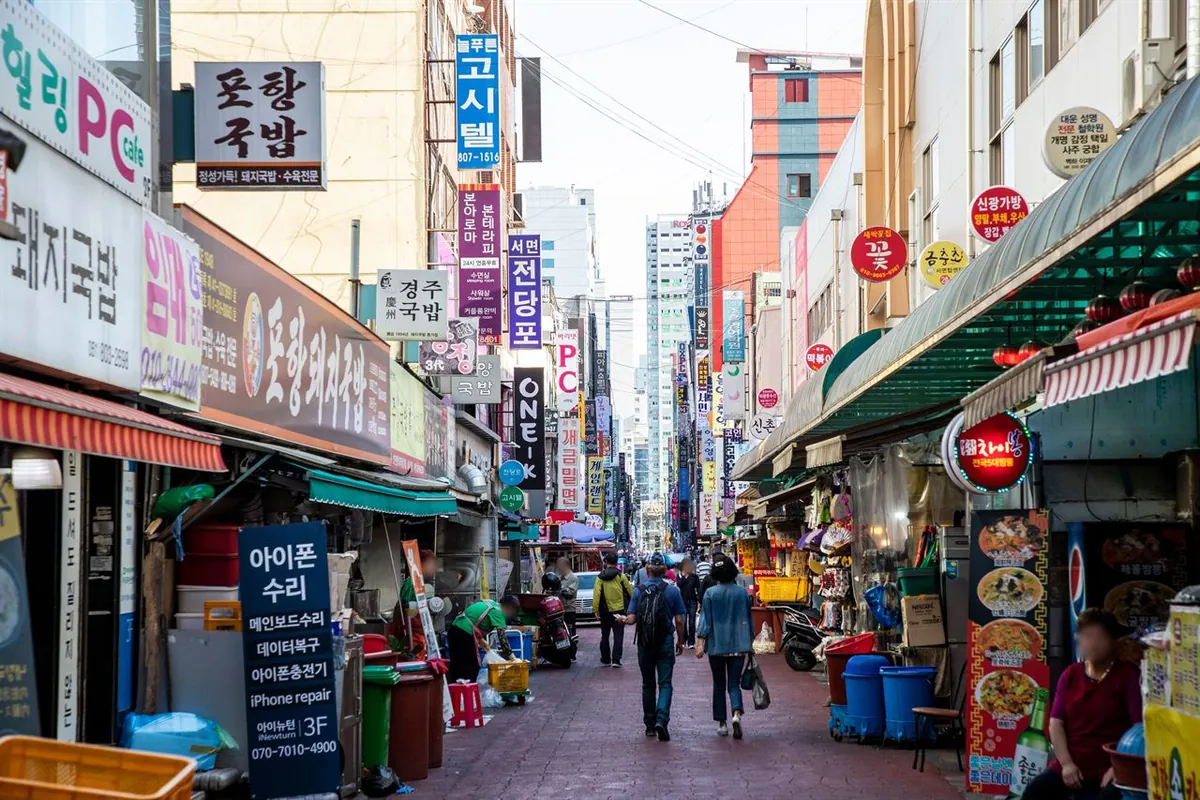
The neighborhood itself is intensely urban. Food alleys, department stores, underground shopping and late-opening businesses create a useful evening base after sightseeing. The official Visit Busan material describes Seomyeon as a downtown concentration of shopping streets, markets and popular spots. That is an advantage for travelers who want choices after returning to the hotel, but a disadvantage for anyone seeking quiet resort atmosphere or an ocean view.
Where within Seomyeon should you book?
Prioritize a short, simple walk to a Line 1 or Line 2 entrance. Large junctions can make a map distance look easier than the actual route, particularly with luggage, stairs or a late-night return. A side street can reduce noise without sacrificing access, but read recent reviews for nightclub sound, construction and the property's entrance location. Bujeon is nearby and has its own character, yet the exact transit pattern may be less convenient than a room immediately around the Seomyeon interchange.
Choose Seomyeon for two- or three-night trips that mix beaches, markets and a day beyond the city. It also keeps the route to Nopo or Sasang manageable if your onward bus leaves from one of those terminals. It is not the best choice if you know every morning will begin beside the sea; in that case, paying for Haeundae or Gwangalli saves the most meaningful journey of the day.
Nampo-dong and Busan Station: best for markets, history and rail
Nampo-dong places you near Busan's historic commercial core. Visit Busan groups Nampo-dong with nearby Gwangbok-dong and Bupyeong-dong and highlights the dense combination of traditional markets, food streets, shopping and major attractions. Jagalchi Market, BIFF Square, Gukje Market and Yongdusan Park can form a walking day, while Yeongdo and Gamcheon are sensible outward trips from this side of the city.
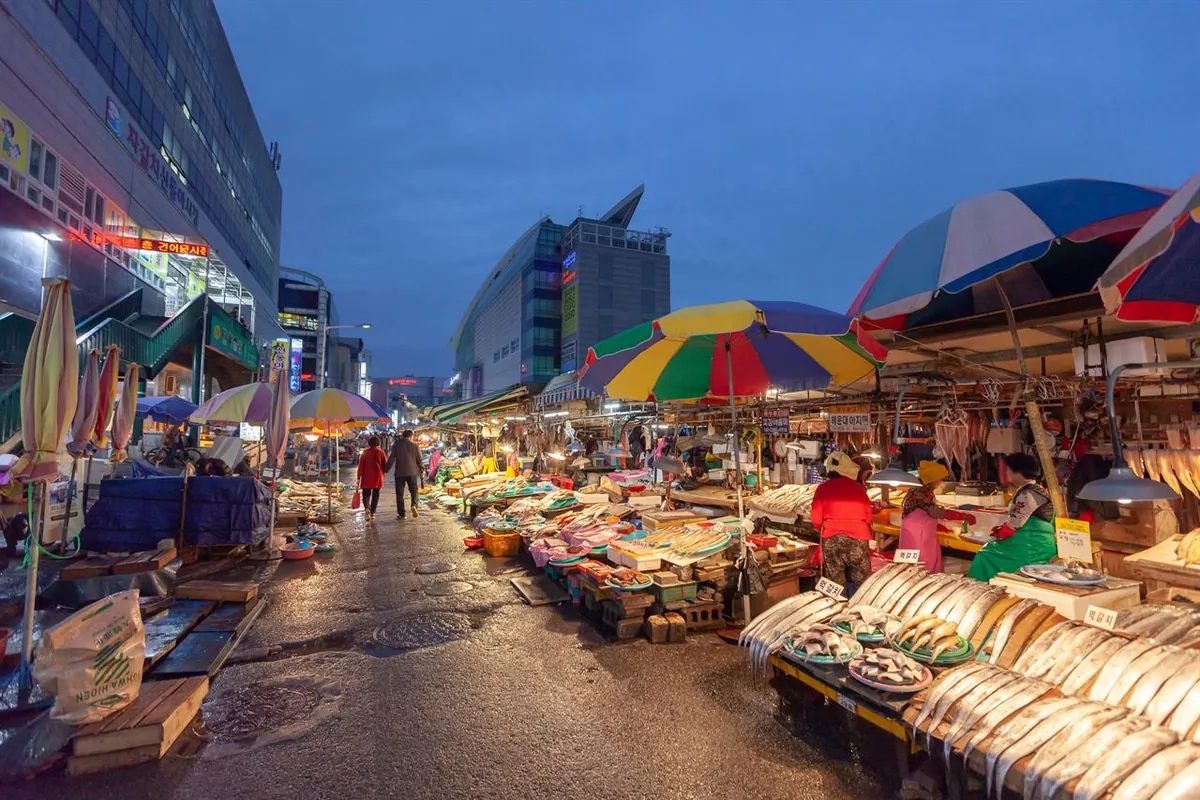
This is the strongest base for travelers who value street life and port history over a resort setting. It also works well for early market visits, when crossing the city from Haeundae would feel wasteful. The main compromise is the eastern coast: Gwangalli and Haeundae require a transfer or a longer ride, and a late return after a beach evening takes planning.
Nampo-dong or Busan Station?
Choose Nampo-dong for atmosphere and walkability; choose Busan Station for rail convenience. Busan Station is served by Line 1 and intercity rail, so it reduces friction on arrival and departure. The blocks around the station also include practical hotels and food, but they do not put you directly inside the Nampo market cluster. If you stay near the station, treat it as a connected base and use Line 1 rather than expecting every old-downtown sight to be outside the door.
A split stay can work if a longer trip has a clear eastern half and a clear historic-downtown half. For most stays of three nights or less, however, changing hotels consumes more time than the saved metro rides. We recommend one base unless you are moving anyway for an early train or have several slow beach days followed by several western days.
Gwangalli: best for bridge views and local evenings
Gwangalli balances a real beach with a more neighborhood-like evening scene. The official city guide emphasizes the view of Gwangandaegyo Bridge, beachfront cafes and the area's role as a central meeting place. The beach faces the bridge rather than open eastern horizon, so its visual identity is especially strong after sunset.
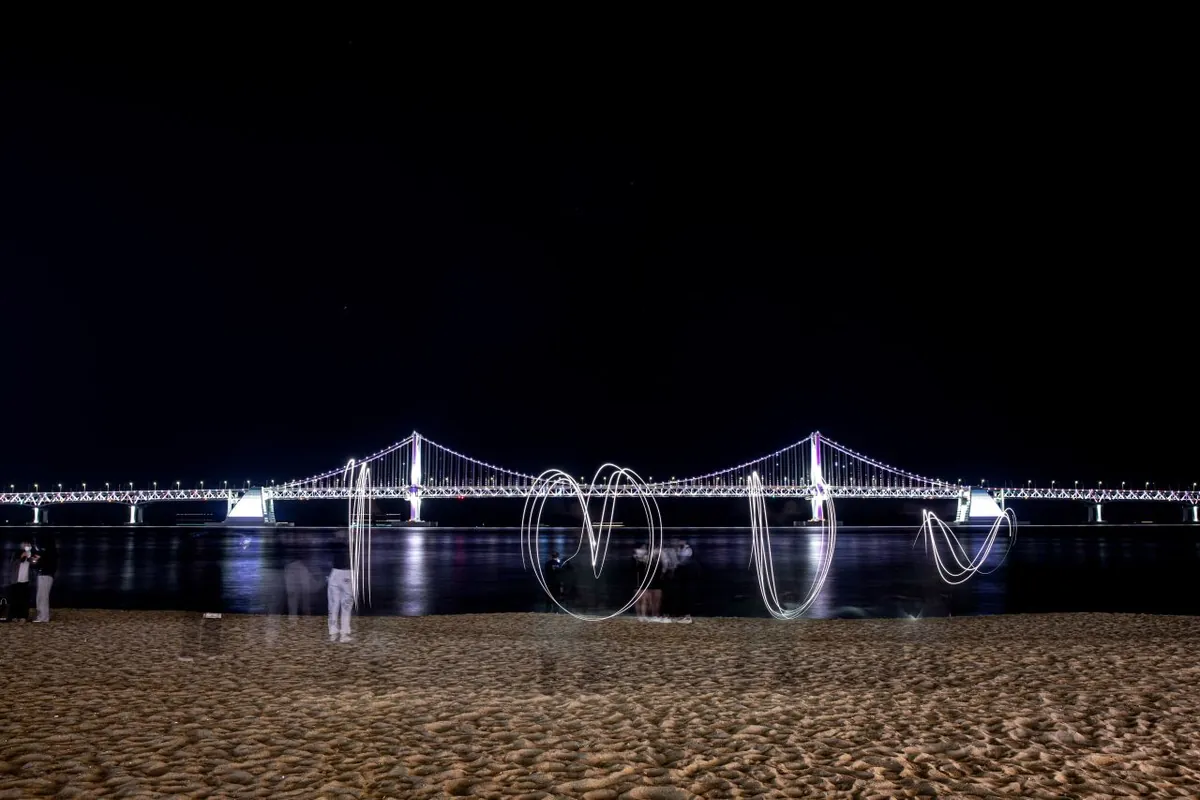
For many travelers, Gwangalli feels less resort-oriented than Haeundae and more scenic than Seomyeon. It is a good fit for couples, repeat visitors and anyone who wants dinner or a walk beside the water every night. Line 2 connects the wider area with Seomyeon and Haeundae, but the station is inland from the sand. A hotel directly on the beachfront may add a noticeable walk to the metro, while a hotel near Gwangan or Geumnyeonsan Station may sacrifice the immediate view.
Check the room orientation before paying extra for a bridge view. A property's address in Gwangalli does not guarantee that the room faces the water, and lower floors can be affected by buildings or street activity. Also check event calendars: drone shows, festivals and summer weekends can be part of the appeal, but they can also affect crowds, road access and rates.
Songjeong and Osiria: best for a slower eastern-coast stay
Songjeong and the Osiria area suit travelers who have already accepted an eastern-coast trip. Songjeong offers a smaller beach atmosphere beyond Haeundae, while Osiria groups large leisure attractions and resort-style properties. These are appealing bases for families with a specific attraction plan, surfers, repeat visitors and travelers who want quiet nights away from Busan's central districts.
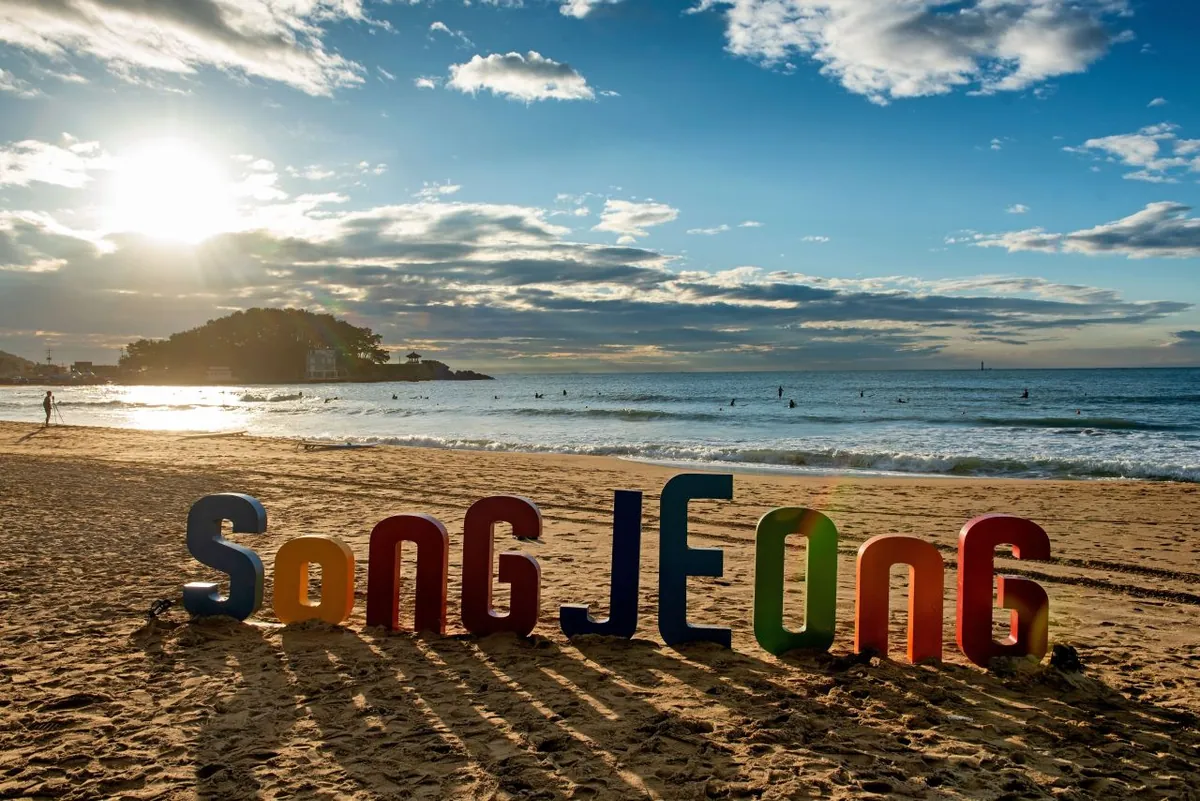
They are not our default answer for a first short visit. Reaching Nampo-dong, Jagalchi, Busan Station or the western neighborhoods takes commitment, and late returns can be less flexible than from Haeundae or Seomyeon. The Donghae rail corridor helps with some journeys, but it does not make every visitor sight direct. Choose this area only when several planned stops are already east of Haeundae.
If your shortlist includes a resort here, compare the full daily route rather than the room alone. A family may value a larger room, breakfast and access to one major attraction enough to justify the location. A first-time solo traveler trying to see the whole city may feel isolated. The same hotel can therefore be excellent or inconvenient depending on the itinerary.
Which Busan area fits your arrival and trip length?
Arriving at Gimhae International Airport
The airport is connected to the Busan-Gimhae Light Rail Transit. Visit Busan advises transferring at Sasang for Metro Line 2 or at Daejeo for Line 3, with first and last trains varying by station. Seomyeon, Gwangalli and Haeundae line up naturally after the Sasang transfer, although the ride grows longer as you continue east. Nampo-dong and Busan Station require a different city connection. Airport limousine and bus routes can change, so confirm the current stop and operating notice rather than choosing a hotel around an old route map.
Arriving by KTX
Busan Station is the friction-free choice for a late train or early departure. Nampo-dong is a short Line 1 journey away; Seomyeon is also direct on Line 1. Gwangalli and Haeundae require continuing through the network, so allow extra time with bags. If your train arrives well before hotel check-in, confirm luggage storage before assuming you can begin sightseeing immediately.
Two nights, three nights or longer
With two nights, choose the district that holds most of your must-do list and accept one longer outing. With three nights, Seomyeon is the safest mixed-itinerary base, while Haeundae works when at least half the trip is coastal. With four or more nights, Gwangalli becomes easier to enjoy at a slower pace, and a split stay can make sense if you genuinely want two different neighborhood experiences.
What should you check before booking a Busan hotel?
Map the walk from the hotel door to the exact station entrance and look for steep streets, stairs or large road crossings.
Confirm the branch name and address; similarly named hotels and multiple properties from one chain can appear in the same district.
Read recent room-specific reviews for noise, air-conditioning control, bathroom layout, renovation work and elevator waits.
Check whether the quoted rate includes taxes, breakfast and the room type or view you actually selected.
Verify luggage storage, front-desk hours and late check-in if your flight or train arrives outside a normal check-in window.
Treat a beach-view label as a room feature that needs confirmation, not as a guarantee created by the neighborhood name.
Use a flexible cancellation rate when a festival, storm or transport change could alter the best base for your plans.
Once the hotel is booked, add a transit card and offline route backup to your arrival plan. Our Korea transport cards and passes guide explains what a stored-value card does and where a separate reservation is still needed. For connectivity on arrival, compare setup options in our Korea eSIM guide.
Our bottom line
For a first visit that mixes everything, stay in Seomyeon. For a trip built around the sea, stay in Haeundae. Choose Nampo-dong for old-downtown markets and port character, Busan Station for rail convenience, and Gwangalli for bridge-lit evenings. Songjeong and Osiria are better specialist bases than universal first-time choices.
The final decision should be made at street level. Compare the walking route, station entrance, room conditions and cancellation terms for two or three real properties in the same area. That last check matters more than a broad neighborhood ranking because Busan's hills, long blocks and coast can turn a small map difference into a repeated daily inconvenience.
Last verified: August 30, 2026 by the TipsKorea editorial team. Hotel prices, airport services and event-day transport can change; confirm the conditions attached to your booking.
Frequently Asked Questions
Is Haeundae or Seomyeon better for first-time visitors?
Seomyeon is the better all-round base for a mixed itinerary because Metro Lines 1 and 2 meet there. Haeundae is better when beach time and eastern-coast sights are the main priorities.
Is it convenient to stay near Busan Station?
It is convenient for KTX arrivals, early departures and direct Line 1 access. Choose it for transport efficiency; choose nearby Nampo-dong for a more atmospheric market-and-port base.
Can I stay in one Busan neighborhood for the whole trip?
Yes. For two or three nights, one base is normally easier than changing hotels. Group attractions into eastern and western days and allow one longer cross-city journey.
Should I stay in Haeundae or Gwangalli?
Haeundae has the broader visitor infrastructure and suits eastern-coast sightseeing. Gwangalli is the stronger choice for Gwangandaegyo Bridge views, cafes and relaxed waterfront evenings.
Last verified: August 2026 · TipsKorea Editorial


