
Choose the right arrival point, group nearby stops, and decide where the bag goes before leaving the hotel. A practical overnight plan for travelers using trains, city buses and occasional taxis.
Visiting Gangneung without a car is practical with a reserved train or bus, three compact sightseeing areas and a clear luggage plan.
Can you enjoy Gangneung without a car?
Yes, especially over one night and two days. Walk within each area and use public transport between them: downtown for Jungang Market and Wolhwa Street; Gyeongpo, Chodang and Gangmun for a lake, tofu meal and beach; Anmok for coffee beside the sea. These are separate outings, not one continuous city-center walk. Keep a taxi allowance for an awkward final connection or a luggage transfer.
This guide focuses on making those transfers work. For a heritage-led alternative that includes Ojukheon and Seongyojang, use our Gangneung two-day itinerary. Adding both historic houses to the plan below would require dropping coastal time. One overnight is more useful when it buys an easy evening, rather than another list of stops.
Should you arrive by KTX or intercity bus?
Choose the station that matches your Seoul hotel
Search KORAIL for your travel date and Gangneung Station, comparing departures from Seoul Station and Cheongnyangni where offered. Read the actual departure and arrival station on the selected service. A ticket ending at Cheongnyangni gets you back to Seoul city, but still requires the onward journey to your hotel. Reserve the return before committing to a nonrefundable room, and compare the total journey from your accommodation instead of only the train time.
Compare the complete bus journey
KTO lists both Seoul Express Bus Terminal and Dong Seoul Terminal as gateways for Gangneung. Compare departures for your date through the operator or booking service linked in our Korea intercity bus guide. In Gangneung, the express and intercity terminals are distinct destinations in the same terminal area; neither is Gangneung Station. Save the exact terminal name on your ticket. For a return taxi, show that name rather than asking for the station.
Trains suit a short trip when a fixed arrival matters. A bus can be useful when seats or the Seoul departure location work better, but road traffic can reduce your first afternoon. If you arrive after lunch, shorten the coastal outing. Do not turn an unexpectedly slow journey into a rushed sequence of buses.
Day 1: start with Jungang Market and Wolhwa Street
From the station or terminal, first resolve your bag. A downtown hotel can make this straightforward if it confirms storage before check-in. If you stay at the coast, either travel to the hotel first or confirm a downtown storage provider before leaving Seoul. The KTO shopping guide identifies station and market-area luggage services, but their availability and collection deadline need a fresh check. A name in an article does not guarantee a free locker.
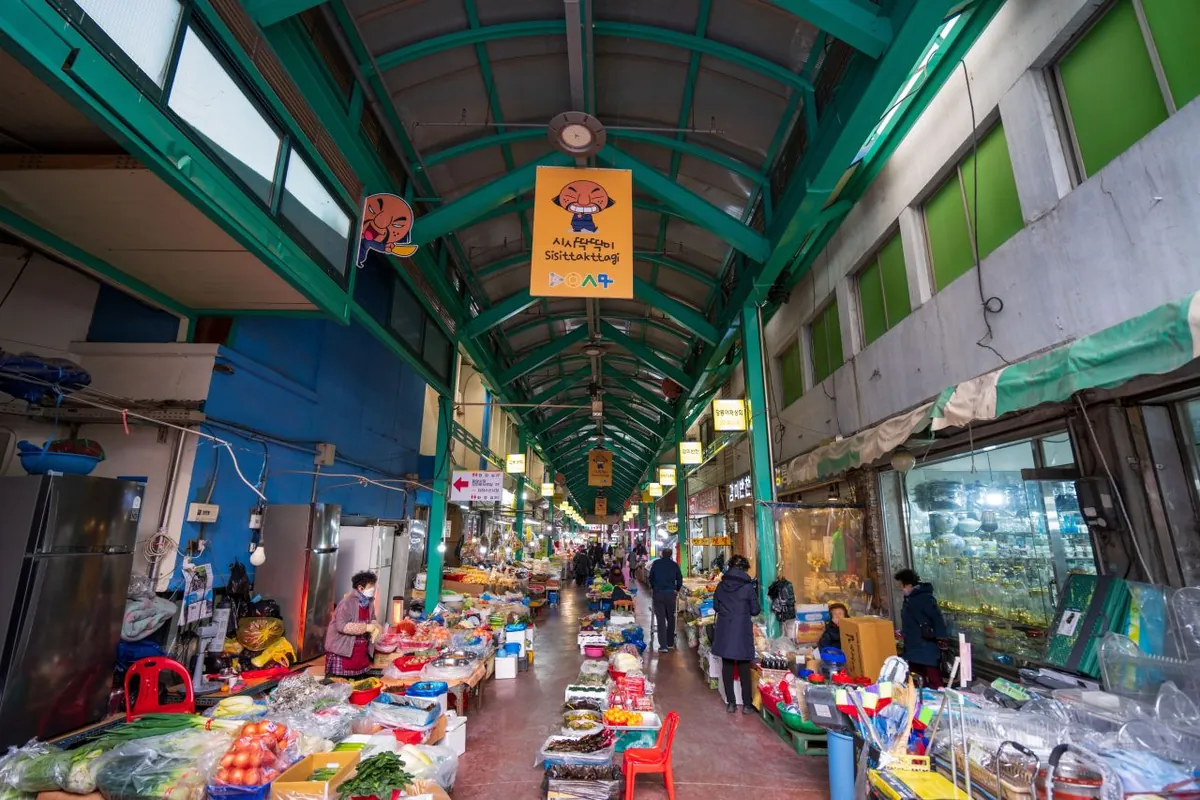
Use the market end of Wolhwa Street as your downtown anchor. KTO describes Wolhwa as a former railway corridor through the center, with Jungang Market alongside it. Browse the covered market lanes, choose lunch or a few snacks, and walk the neighboring shops without trying to follow the entire old railway alignment. Budget roughly ninety minutes to two hours for this block as a planning allowance, including food; it is not an official tour duration.
Individual stalls keep different hours. Choose somewhere currently serving rather than saving all your appetite for a counter that may be closed. Wolhwa is worthwhile during the day; do not assume a night market operates every evening. If you want a particular event, check the dated city announcement separately.
How to use local buses without guessing a route
Check the stop, direction and next arrival
Open Gangneung Bus Information System, usually called BIS, and use Realtime Search for the actual boarding stop. Its English home screen also links to schedules and notices, although some detail screens remain Korean. A mapping app helps connect your exact starting point to the stop; BIS checks the city bus itself. Compare the stop location on both sides of the road and confirm that the destination appears farther along the route before boarding.
Save the accommodation address and destination pin before leaving Wi-Fi. Use the complete place name, not just “beach.”
At the stop, match the posted stop name or ID to the live result and check the direction of travel.
Refresh arrivals and notices before committing to a wait. A timetable departure from the route terminus is not your stop time.
Before boarding, identify the stop where you will leave the bus and the walk from there to your destination.
Keep a transport card and a taxi fallback
Gangneung BIS lists T-money among its accepted prepaid cards. Carry a topped-up card and tap when boarding and alighting; consult the current fare and transfer rules on BIS rather than assuming every Seoul discount applies. Our transport-card guide explains the options. For taxis, use a designated pickup location and the exact address; our Korea taxi guide covers booking and payment. Waiting time belongs in the comparison: a cheap ride that removes your whole afternoon is a poor fit for a short stay.
Day 1 afternoon: Gyeongpo, Chodang and Gangmun
Enter the coastal area at the place you most want to see
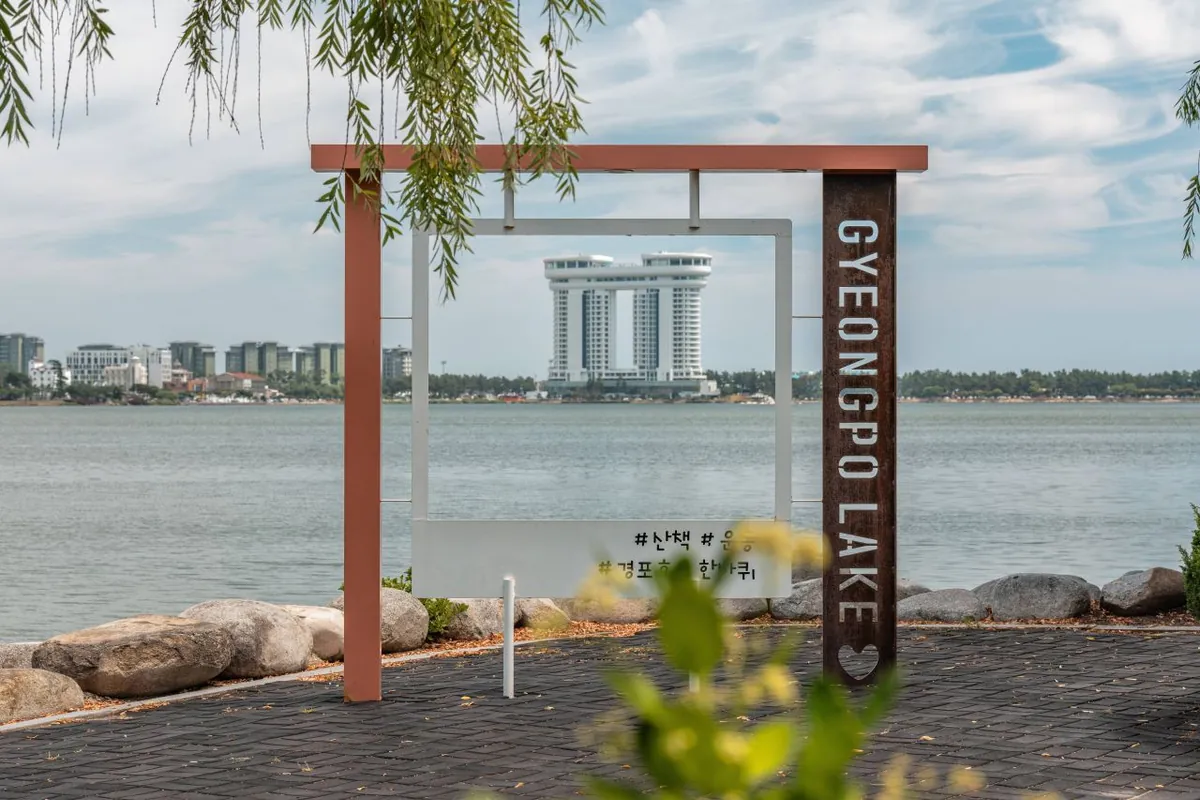
After lunch, check the journey to your chosen point on Gyeongpo Lake or to your coastal hotel. Do not simply select “Gyeongpo” and assume every lake entrance and beach is adjacent. Choose a short lakeside segment, then continue toward Chodang and Gangmun using a walking route that shows the actual roads and crossings. These places form a useful sightseeing group, but the group is larger than one pedestrian square.
Allow about three to four hours for the afternoon as an editorial planning block, including the transfer, a modest walk and a meal or cafe break. If the first bus wait becomes long, take a taxi to the first meaningful stop. Once there, walking makes sense for the sections you actually want to experience. You do not need to circle the lake, walk the full shoreline and reach every cafe to have completed a good afternoon.
Use Chodang for a meal and Gangmun for the sea
Chodang Dubu Village lies south of Gyeongpo Beach and is known for soft tofu. If you already ate well at the market, move the tofu meal to dinner instead of ordering a second lunch. Check the chosen restaurant’s break time and last order before walking inland. Tofu on a menu does not guarantee vegetarian broth or side dishes; ask about ingredients if that affects your choice.
Finish with the portion of Gangmun’s waterfront that suits the weather and your hotel. For a route between Gangmun and Gyeongpo Beach, check the current walking directions and posted crossing notices; do not build the day around one particular footbridge being open. If you are staying downtown, find the return stop or taxi pickup before settling down for dinner. An appealing sea view is easier to enjoy when the way home is already clear.
Where should you stay for this car-free route?
Gangneung Tourist Hotel: choose a downtown base
Gangneung Tourist Hotel at 62 Geumseong-ro is the practical candidate when Jungang Market, Wolhwa Street and easy evening meals matter most. KTO’s accommodation record places the market and Wolhwa within a short walk and lists luggage storage. Ask the hotel to confirm storage for your specific arrival and departure day. Its downtown position does not make it a station-front hotel: plan the station or terminal transfer separately.
Choose this base if you prefer to leave your bag centrally on Day 2, visit Anmok, then collect it on the way to departure. Compare the exact room, bed setup, cancellation deadline and breakfast inclusion on the dated rate. The hotel name identifies the property; it does not tell you whether two offers have the same conditions.
St. John’s Hotel: choose a Gangmun coastal base
St. John’s Hotel at 307 Changhae-ro is the alternative when the coastal evening is the main reason for staying overnight. The operator places it in Gangmun, making it relevant to the Chodang–Gangmun part of the route. Check the exact room-view category; a partial ocean view and a full ocean view are different purchases. Confirm any pool or breakfast entitlement in the selected package rather than assuming it comes with the room.
With this base, finish Day 1 near the hotel. On Day 2, confirm whether leaving your bag there creates an extra return trip after Anmok. For a small overnight bag, taking it along may be simpler; for large luggage, arrange storage nearer your departure point. Book the coast for the time you will spend there, while counting the extra transport in the total cost.
Day 2: make Anmok the main outing before departure
After breakfast, check out and follow the luggage plan you agreed the day before. From a downtown base, travel to Anmok Beach and Coffee Street, then return for the bag. From Gangmun, compare the current public-transport journey south with a taxi directly to Anmok; an indirect bus connection can undo the advantage of staying by the sea. Walking the whole coastal distance is an optional activity for someone with time and light luggage, not the default transfer in this plan.
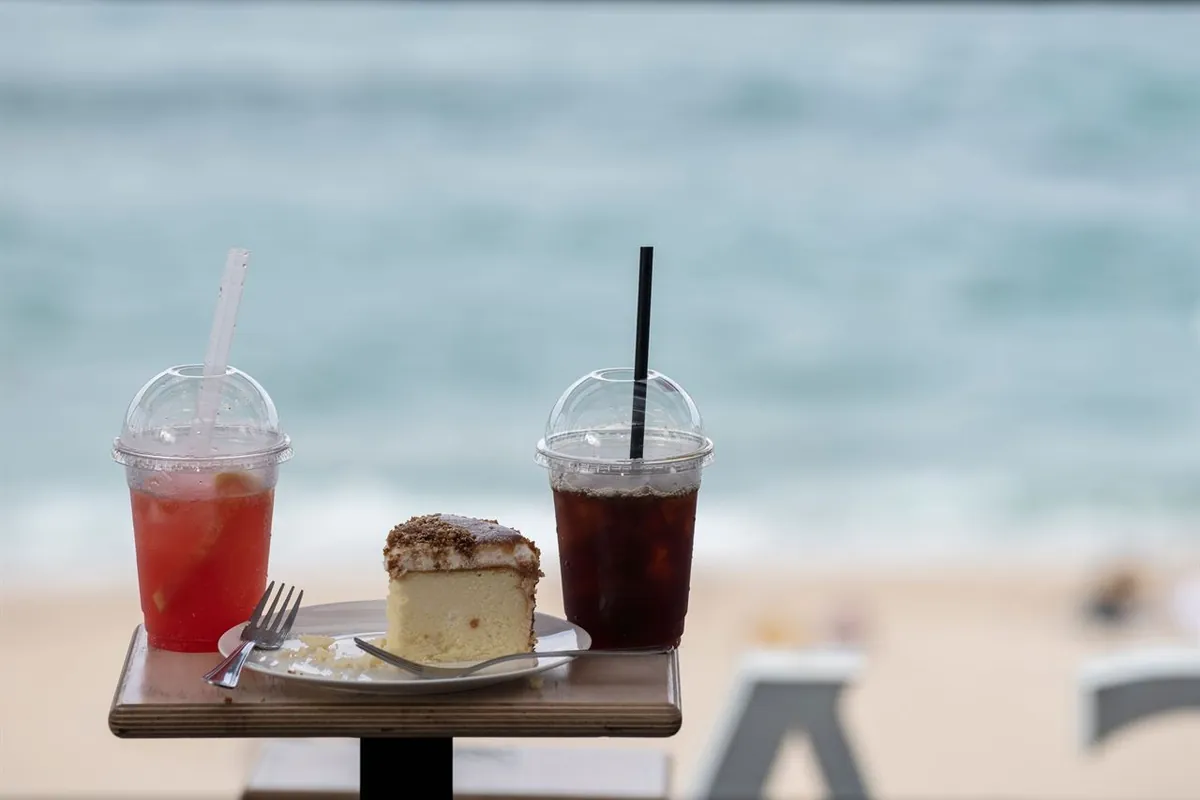
Pick one cafe for the coffee, seating or view you want, then add a beach walk if conditions are comfortable. Anmok is a good place to slow down, so allow a relaxed late morning rather than scheduling several famous cafes. Look at the menu and available seats before ordering; a sea-facing photograph on a listing does not reserve a window table. The beach and coffee street occupy the same outing, which helps keep this morning simple.
If you stayed by the coast and skipped downtown on arrival, you can place the market block after Anmok only when your booked return leaves ample room. Otherwise choose one: another meal near the market, or a longer coffee stop. The useful itinerary is the one that still works when a bus is delayed.
How do you avoid missing the return to Seoul?
Use the departure on your issued ticket, not a generic “last train” statement. Open KORAIL for your exact return date and inspect Gangneung departures to the Seoul station you can use. General route pages, cached search results and old timetable PDFs can describe a different date or service pattern. This guide deliberately does not publish a fixed last departure; no live seat availability is promised here.
Work backward through four tasks: reaching the station or terminal, collecting luggage, traveling from the coast, and allowing for a missed bus or slower traffic. A practical target is to reach the departure building around thirty minutes before the booked service, with the local-journey delay allowance added before that. This is our planning margin, not an operator check-in rule. Give yourself more time if you need counter assistance or are unfamiliar with the terminal.
Set the leave-Anmok alarm before ordering your final drink. When it rings, check the live route once and leave. If the bus plan is no longer workable, use the taxi allowance immediately rather than waiting until a taxi also becomes risky. If you travel back by coach, confirm the exact Gangneung terminal and Seoul arrival terminal again; neither follows automatically from the outward trip.
What should change for rain, a late arrival or a small budget?
In rain or strong wind, shorten the exposed lake and beach walks and keep the covered market, a meal and a cafe. Check access before selecting an indoor venue: a cafe may have stairs or limited seating, and the market’s sheltered lanes do not make the entire outing step-free. Travelers who need low-floor buses or an accessible room should confirm the specific journey and property, not assume the city-wide label answers those questions.
For a late arrival, do downtown and dinner on Day 1, then choose either Gyeongpo–Chodang–Gangmun or Anmok on Day 2. For a tighter budget, stay centrally, use buses between areas and keep fewer stops. Price the trip as return intercity transport plus one room, food and local travel. A slightly cheaper coastal room can cost more overall if it repeatedly requires taxis.
For wider destination choices, see the Gangneung city guide. Keep Jumunjin, Jeongdongjin and distant countryside attractions for a different route unless you replace one of these main blocks. Their place names may all say Gangneung, but that does not make them convenient additions to a short car-free stay.
Before you book
Confirm both intercity services, the exact Seoul stations or terminals, and the final price and cancellation conditions.
Choose downtown or Gangmun for the experience you want, then confirm luggage storage and the actual hotel entrance.
Save the three destination clusters and refresh BIS notices and live arrivals on each travel day.
Keep a taxi allowance, a charged phone and enough departure margin to absorb one disrupted local journey.
Last verified: October 21, 2026. Transport guidance, destination geography and the named accommodation locations were checked against official tourism, city bus and operator information. Train seats, individual bus arrivals and hotel rates must be checked for your date.
Frequently Asked Questions
Is Gangneung easy to visit without renting a car?
Yes, if you group stops by area and check city buses live. An overnight lets you combine downtown, Gyeongpo–Chodang–Gangmun and Anmok with fewer rushed transfers. Keep a taxi option for luggage or an awkward connection.
Is Gangneung Station the same place as the bus terminal?
No. Gangneung Station is the rail arrival point. The express and intercity bus terminals are separate named destinations in the terminal area. Match the destination to the ticket when choosing a bus or taxi.
Which hotel location works best without a car?
Downtown suits market visits, evening meals and a central luggage pickup. Gangmun suits a coastal evening and nearby Chodang sightseeing. Compare the exact entrance, stop and storage arrangement before booking.
What time is the last train from Gangneung to Seoul?
Check KORAIL for your actual date and acceptable Seoul arrival station, then book the service you intend to use. This guide does not rely on a fixed last-train time because timetables and available seats can change.
Last verified: October 2026 · TipsKorea Editorial


