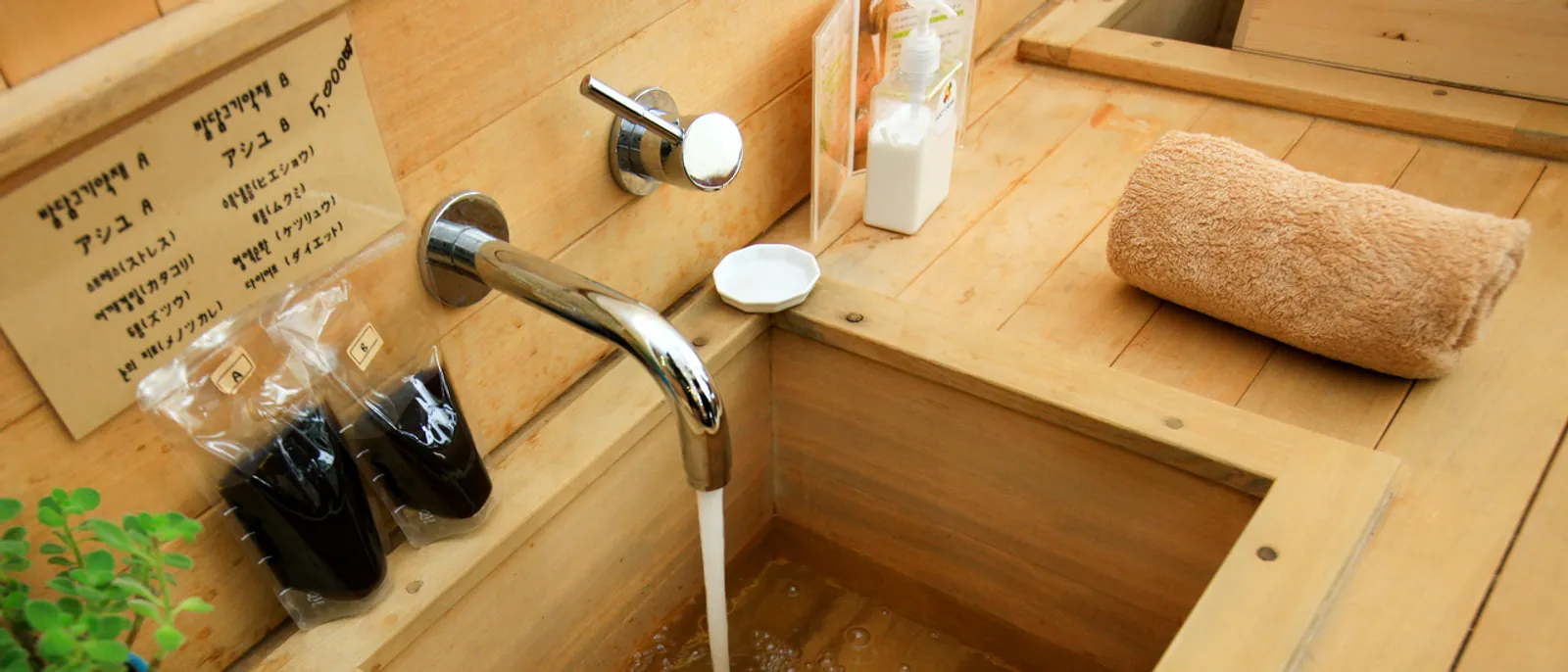
The useful question is not which jjimjilbang is universally best, but which currently listed facility matches your location, group and comfort level. We compare five distinct use cases and explain the etiquette that matters before entry.
The Best Jjimjilbangs in Seoul are different for a solo bath, a women-only visit, a family afternoon and a modern spa day.
Jjimjilbang is often translated as Korean sauna, but a venue can combine several experiences: gender-separated bathing, heated rooms, shared rest space, food or entertainment. Some Seoul listings use the term for a full complex, while others are closer to a neighborhood public bath with a smaller communal area. Read the facility description, not only the category label.
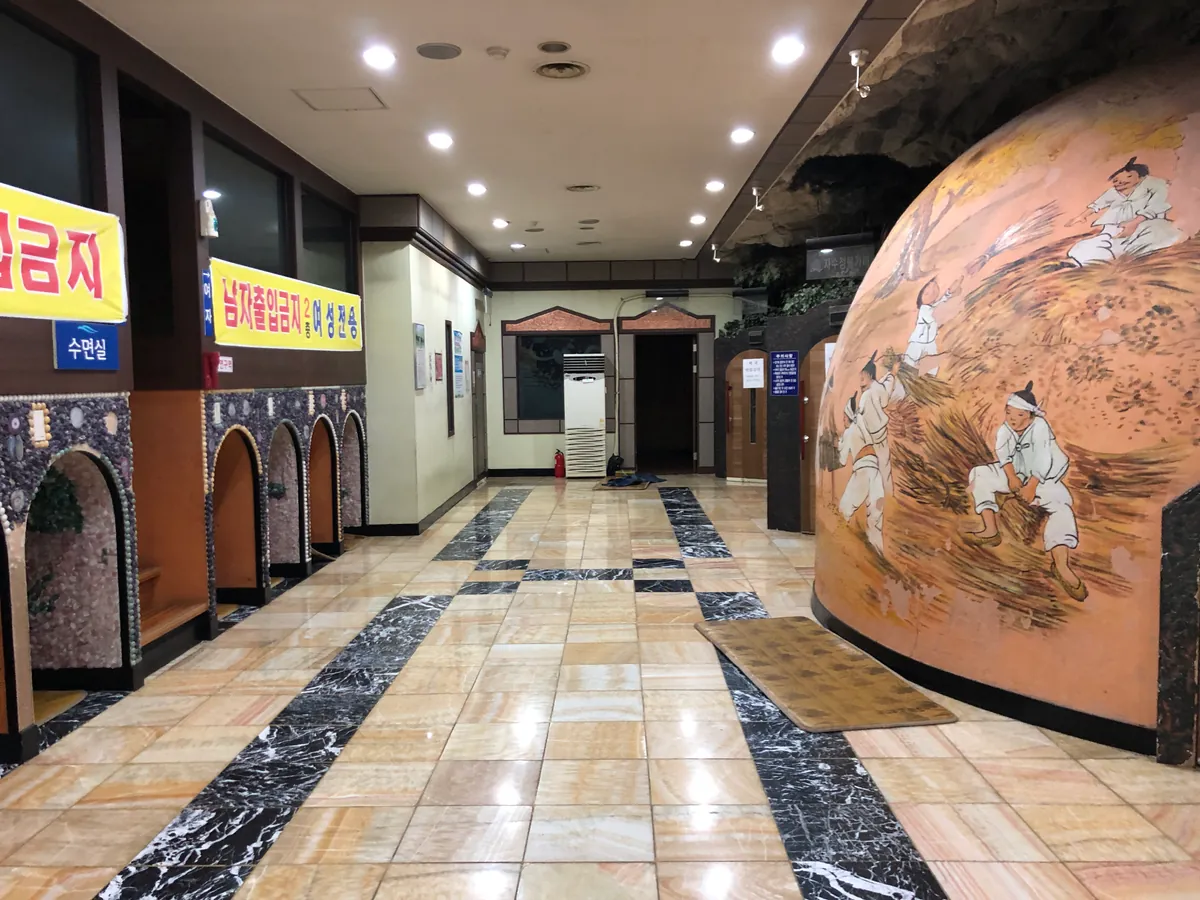
Our five selections are not an unsupported claim that one business is objectively better than every competitor. They are distinct, currently documented use cases drawn from official VISITKOREA and Visit Seoul listings. Facilities can close, renovate or change access, so the day-of verification step is part of every recommendation.
Which Seoul jjimjilbang fits your trip?
1. Riverside Spa Land: a traditional all-purpose option
Riverside Spa Land in Gwangjin-gu is the strongest fit in this list for travelers seeking a conventional bath-and-jjim experience rather than a luxury wellness brand or water park. VISITKOREA's official listing describes bathing, sauna and relaxation facilities and currently presents extended access. Its eastern-Seoul location can work naturally after a day around Konkuk University, Seongsu or the Gangbyeon area.
Choose it for the classic sequence: store shoes, change, wash and bathe in the gender-separated area, then use the shared clothed spaces that are open with your admission. Do not infer that every room or service operates continuously. Confirm the entry category, maintenance schedule and whether rest areas remain available for the entire period you plan to stay.
2. Spa Lei: the women-only choice
Spa Lei is an officially listed women-only spa in Seocho-gu. It fits women who prefer a facility designed specifically for women and travelers staying in southern central Seoul. The official VISITKOREA page lists its spa and jjimjilbang services, but visitors should still verify the current admission scope and any treatment that requires separate booking or payment.
Women-only does not remove the normal public-bath routine or guarantee privacy outside the available facility design. If a first bathhouse visit causes anxiety, contact the venue about changing layout, towel provision and luggage before arrival. A companion can make the sequence easier, but every guest should understand where clothing is and is not worn.
3. Park Habio Water Kingdom: a family-complex option
Park Habio Water Kingdom in Songpa-gu combines water-park, sauna and jjim facilities within a larger complex. That makes it more suitable for a planned family or leisure visit than a quick neighborhood bath. Visit Seoul publishes distinct operating information for different parts of the complex, which is a warning not to assume one ticket or one timetable covers every area.
Before going, confirm which facilities are open on your date, what the chosen ticket includes, last admission, swimwear requirements and the current rule for children. A water-park component adds packing, changing and supervision needs that do not apply to a simple public bath. Families should plan the visit as an attraction, not as an improvised stop between distant sights.
4. Sibeom Sauna: a neighborhood Yeouido alternative
Visit Seoul lists Sibeom Sauna in Yeouido as a long-running neighborhood bathhouse with a jjim area of limited capacity. It is a practical option for travelers already based in Yeouido who value proximity over a destination-scale spa. The modest format also means it should not be approached with expectations of a large entertainment complex.
The official page currently presents long bathhouse hours, but capacity and availability can affect the shared jjim space. Call or check the listing on the day, particularly if the communal area is the main reason for going. If only the bath is available, decide in advance whether that still meets your goal.
5. Aquafield Goyang: a modern option outside Seoul city
Aquafield Goyang is in Goyang, Gyeonggi-do, not within Seoul's administrative boundary. We include it as a metro-area alternative for travelers who specifically want a modern, larger-scale spa and can justify the extra transit. VISITKOREA's official listing describes its sauna and spa facilities inside the Starfield Goyang complex.
Do not select it simply because it looks close on a regional map. Calculate the complete route from your accommodation, the return after bathing and the time needed inside a large complex. Confirm current admission products and restrictions because different zones may not be bundled. For most short Seoul trips, a city facility is more efficient.
What happens when you enter a jjimjilbang?
The exact order varies, but a common first visit begins at the desk. Choose the available admission type, pay, receive a locker key or wristband and, where included, collect towels and a lounge outfit. Store shoes in the designated shoe locker rather than carrying them into the changing space. Keep the key or wristband secure because it may identify your locker and record purchases.
The wet bathing area is normally separated by gender and used without clothing. Remove clothes in the locker room, secure valuables and wash thoroughly at a seated or standing shower before entering a communal bath. Do not put a towel, phone or unwashed body into the water. Follow posted temperature, health and facility notices instead of copying another guest.
After bathing and drying, put on the provided shirt and shorts before entering shared jjim rooms or rest areas. Heated rooms may have different temperatures and materials, and not every room is appropriate for every person. Enter briefly, notice how you feel and leave immediately if you become dizzy, unwell or uncomfortable.
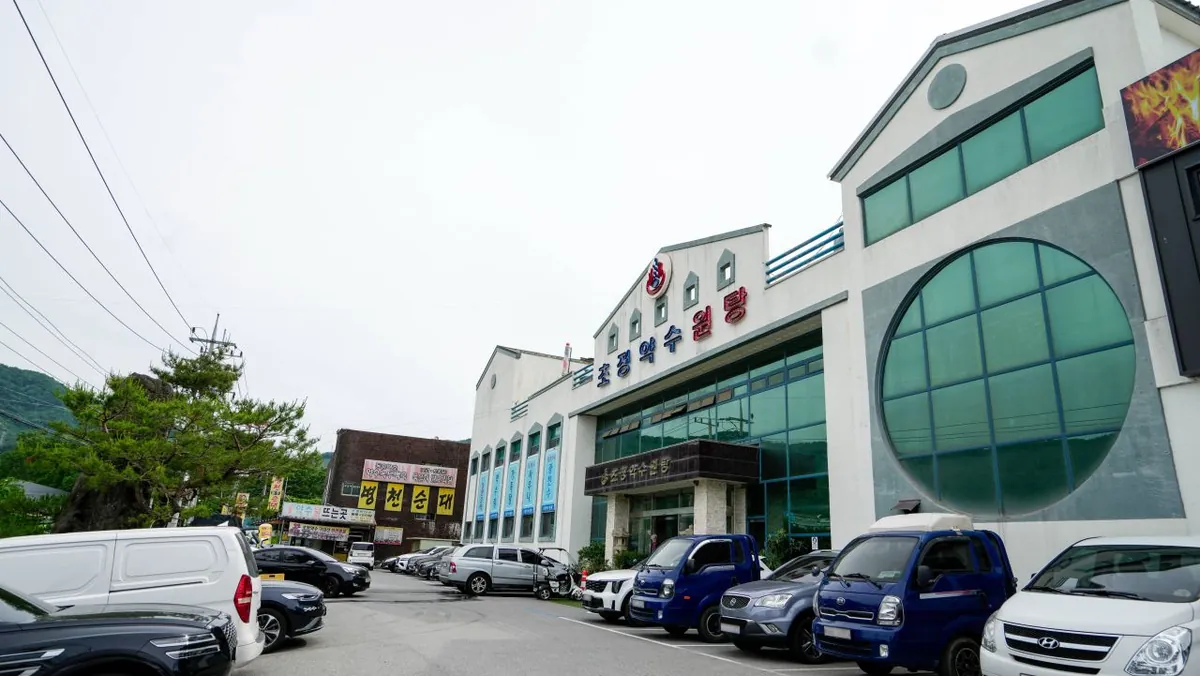
The exterior image above documents a public bathhouse in Cheongju rather than a featured Seoul business. It is included to help visitors recognize the broad bathhouse category without implying that the photographed facility is available on a Seoul itinerary.
How do you finish the visit?
Return to the appropriate changing area, shower again if desired, dry before walking onto the locker-room floor and dress. Settle any wristband purchases according to the venue's system, return issued items and collect shoes. Check that your phone, jewelry and transit card have not remained in a small locker compartment.
What etiquette should first-time visitors know?
Wash fully before entering a shared bath.
Keep hair, towels and personal items out of bath water.
Speak quietly in rest areas and silence phone audio.
Do not photograph or video in changing or bathing areas.
Use the issued clothing in coed or shared jjim spaces.
Follow room-specific temperature, age and health notices.
Keep children within reach and follow the venue's current supervision rule.
Leave a heated room as soon as you feel unwell.
Photography deserves a strict rule: do not use a camera in any space where people change, bathe or expect bodily privacy. Even a photograph aimed at an empty wall can capture someone entering the frame. Keep the phone stored until you reach an area where the venue explicitly permits photography, then avoid including other guests without consent.
Tattoos, gender and accessibility
There is no useful one-sentence promise that every Seoul bathhouse handles tattoos, gender identity, mobility equipment or personal assistance the same way. Ask the specific venue before paying. Describe what accommodation you need without assuming that an official tourism listing answers it. If the response does not give you a safe and respectful plan, choose a different activity.
Wet floors, steps, low seating and temperature changes can create barriers. Travelers with mobility, circulation, pregnancy or other health considerations should follow qualified medical advice and ask the facility about physical access. This guide cannot determine whether heated rooms or hot baths are appropriate for an individual.
Can you sleep overnight at a Seoul jjimjilbang?
Never build an accommodation plan from the phrase 'open 24 hours' alone. A venue can keep part of its operation open while closing, cleaning or restricting a rest area. It may impose time limits, age rules, capacity controls, extra overnight charges or luggage restrictions. An official listing is a starting point, not a bed reservation.
Keep a booked room or other legal accommodation for the night, especially on arrival day. Immigration, accommodation registration, baggage security and reliable sleep are separate needs that a bathhouse visit does not automatically meet. The where to stay in Seoul guide compares practical bases, while the Korea travel essentials guide covers arrival preparation.
What should late-night visitors verify?
Whether new admission is accepted at your arrival time
Which baths, rooms and food services remain open
Whether staying past a stated time is permitted
Whether large luggage can be stored
Whether a child may remain during late hours
How to leave if the building or mall has separate access controls
What transit is available after departure
If any answer is unclear, visit earlier or choose a different venue. A late-night sauna should be an optional activity, not the only barrier between you and being stranded with luggage.
What should you bring?
Bring only what you can secure: a payment method, small toiletries if desired, clean underwear, a hair tie and any medically necessary item that the facility permits. Many venues issue basic towels or clothing with some admission types, but the quantity and inclusions vary. Confirm rather than packing on an assumption.
Leave expensive jewelry and a large camera at your accommodation. Waterproof does not mean appropriate for a communal bath, and a smart watch may still compromise another guest's privacy. Use glasses carefully on wet floors; if you remove contact lenses, bring a clean case and follow appropriate hygiene.
Food, water and heat
Some complexes sell meals, drinks or familiar sauna snacks, but services and payment systems differ. Hydrate normally and take breaks between hot rooms. Alcohol and intense heat are a poor planning combination; follow the venue's restrictions and individual health advice. Do not copy endurance challenges from entertainment content.
How should families plan a jjimjilbang visit?
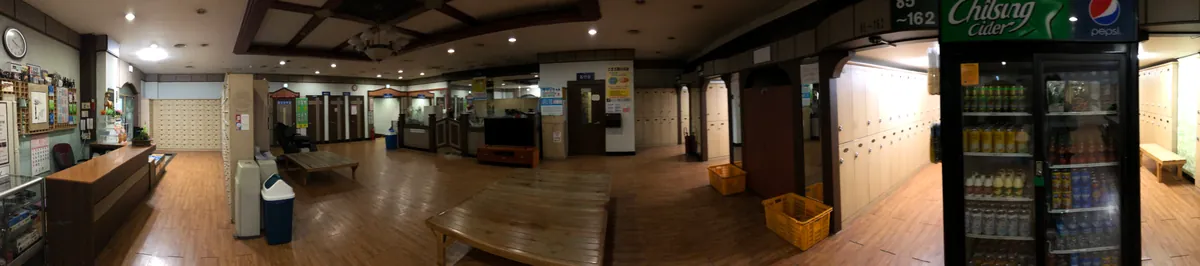
Ask the venue for its current age, height, gender-area and guardian rules before promising the activity to a child. These policies can affect which changing and bathing area a family uses. Shared lounge access does not eliminate the separation of wet areas, so adults need a clear supervision and reunion plan.
Choose a meeting point in the shared area, keep the visit short enough for the youngest traveler and bring dry clothes that are easy to identify. Park Habio may suit a family seeking a full leisure complex, but it requires closer review of water-park rules. A simple bathhouse may suit an older child comfortable with the routine, subject to the facility's rules.
A first-visit decision checklist
Choose a venue by neighborhood, group type and desired facilities.
Open the current official listing and the venue's own current notice if available.
Verify the operating day, last admission, maintenance closure and included zones.
Ask about children, tattoos, accessibility, luggage and overnight access when relevant.
Keep separate accommodation and a return-transit plan.
At entry, understand the key, towel, clothing and payment system.
Wash before bathing and follow privacy rules without exception.
Use heat conservatively and leave any room if you feel unwell.
Collect every issued item and personal belonging before checkout.
For broader cultural and transport basics, read first time in Seoul before the visit. A jjimjilbang becomes much easier when payment, mapping and the route back to your accommodation are already solved.
Frequently asked questions
What is the best jjimjilbang in Seoul for first-timers?
Riverside Spa Land is the most conventional all-purpose option in this official-source shortlist. Spa Lei suits women seeking a women-only facility, while Park Habio is a larger family-complex choice. Verify the current operation before travel.
Do you wear clothes in a jjimjilbang?
Gender-separated wet bathing areas are normally used unclothed after washing. Shared jjim and rest areas generally require the shirt and shorts issued by the venue. Follow local signs and staff instructions.
Are Seoul jjimjilbangs open all night?
Some official listings show long or round-the-clock hours, but that does not guarantee every room, overnight rest or admission at every hour. Confirm the exact facility and date, and keep separate accommodation.
Can families visit a jjimjilbang together?
Families can use suitable facilities, but wet areas are separated and child access rules vary. Confirm age, height, guardian and facility-zone policies directly, then establish a meeting point in the shared area.
Last verified: August 30, 2026 by the TipsKorea editorial team. Hours, prices, admission zones, child rules, overnight access and maintenance closures are time-sensitive; confirm them directly with the venue before travel.
Frequently Asked Questions
Which Seoul jjimjilbang is best for a first visit?
Riverside Spa Land is the most conventional all-purpose option in this official-source shortlist. Choose Spa Lei for a women-only facility or Park Habio for a larger family complex, after current verification.
Do visitors wear clothes inside a Korean jjimjilbang?
Wet bathing areas are normally gender-separated and unclothed after washing. Shared heated rooms and rest areas generally use the shirt and shorts issued by the venue.
Can you sleep overnight at a Seoul jjimjilbang?
Do not assume so from long opening hours. Overnight rest, room access, luggage, age rules and extra charges can change. Confirm directly and maintain separate legal accommodation.
Can children visit a jjimjilbang in Seoul?
Many facilities accept families, but age, height, guardian, wet-area and late-night rules vary. Ask the chosen venue before travel and make a supervision and reunion plan.
Last verified: August 2026 · TipsKorea Editorial


