
BIFF has confirmed its ten-day 2026 run and several program strands, but the full screening grid and ticket details arrive later. We separate official facts from items that still need a release-day check.
Busan International Film Festival 2026 runs October 6–15. This guide explains the confirmed dates, the smartest venue base and what to verify after the full program appears.
When is Busan International Film Festival 2026?
The confirmed festival window
The 31st Busan International Film Festival is officially scheduled from October 6 to October 15, 2026. Those dates come from BIFF itself, not an event aggregator or a copied prior-year calendar. The ten-day span is the safe framework for flights and accommodation; it is not yet a screening schedule. A festival day can include morning activity, afternoon films, evening premieres and conversations, and the balance changes after the final program appears. Choose which portion suits your priorities rather than assuming every day is interchangeable.
BIFF says its opening press conference will be held September 1 and that the full selection and overall program will be introduced there. As of our August 30 verification, this is the important checkpoint for film titles, screening times and the shape of the event. The opening film is already confirmed as Kim Jong-kwan's The Table: Day and Night, but one announced title is not a substitute for the complete grid. Do not book a nonrefundable excursion around a schedule copied from 2025.
Where does BIFF take place?
Use Busan Cinema Center as the main anchor
Busan Cinema Center in Centum City is the festival's practical center and the most useful landmark for a first visit. Its theaters, architecture and concentration of activity reduce friction between screenings. Centum City also has subway access, meals and indoor options for long gaps. Staying nearby is convenient for travelers who expect several screenings daily, but it is not mandatory. A hotel elsewhere on Line 2 can work when you leave generous transfer time and accept that returning between sessions may be inefficient.
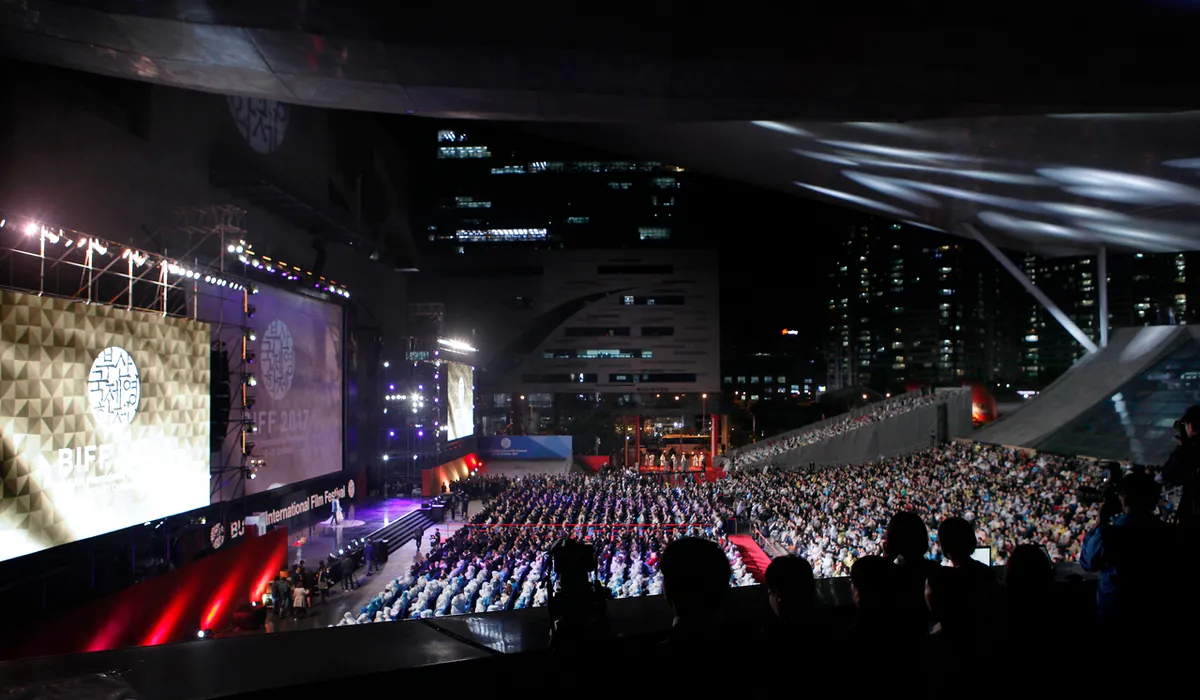
BIFF uses multiple venues across Busan, including the Centum City and Haeundae area, while community programming extends to Nampo in the old downtown. These districts are not next door. A map may show a simple rail line, yet station walks, ticket collection, security and queues add time. Group same-area screenings whenever the final grid allows. If two attractive films sit in different districts with a narrow gap, choose one rather than treating a subway estimate as a guaranteed door-to-seat connection.
Treat Nampo as a separate festival day
Community BIFF is officially scheduled October 8–11 in Nampo. It connects the festival with the district where its early identity developed and puts viewers near BIFF Square, Jagalchi and the old port. That creates a strong half-day combination, but Nampo should not be squeezed between tightly timed Centum screenings. Our three-day Busan itinerary explains why Nampo works naturally with nearby markets, while the eastern beaches form a different geographic cluster.
How should you choose festival dates?
Opening days versus the middle weekend
Opening-night travelers prioritize the ceremony, first premieres and the clearest sense of arrival. The trade-off is demand: nearby rooms can tighten, entry rules may be more formal and popular moments are concentrated. The middle period offers a broad choice of regular screenings and overlaps with Community BIFF. The Asian Contents & Film Market is scheduled October 10–13; it is an industry event rather than a promise of public access, but its timing increases professional activity around the main festival.
Later days can suit viewers who care more about films than ceremonies. Repeat screenings may be available, discussions can feel less compressed and the city outside the hub may be easier to navigate. The exact advantage depends on the final schedule. Use a decision hierarchy: identify must-see films, cluster them by venue, then compare available dates. Do not begin with a rigid tourist itinerary and force screenings into its smallest gaps. The festival should be the anchor, with sightseeing filling genuinely open blocks.
How will BIFF tickets work?
Wait for the current official ticket notice
As of August 30, BIFF had not supplied the complete 2026 public screening grid and final ticket instructions in the official material we reviewed. That status matters. Old prices, purchase limits, cancellation windows and account requirements should not be presented as current facts. Watch the official English BIFF website after the September 1 announcement, and read the ticket notice from beginning to end before sales open. A social post or resale listing is not a substitute for the festival's own purchase channel.
Prepare without inventing details. Create any required account only through BIFF's current site, confirm that your name and payment method work, convert sales times to Korea Standard Time and shortlist more films than you can attend. Rank them, note alternate screenings and keep venue codes beside each title. If an international card fails, use remedies published by BIFF or confirmed by its help desk. Never send money to an informal seller merely because a popular session appears sold out.
Leave a real buffer between screenings
A sensible same-building buffer covers the previous film running long, audience exit, restrooms, food, ticket checks and finding the next auditorium. A cross-district transfer needs much more room. Film runtimes alone do not capture introductions, guest talks or the time required to leave a crowded venue. If a filmmaker conversation matters, protect the period after the screening instead of booking another film immediately. Two memorable sessions with room to think can be a better festival day than four rushed entries and a missed start.
What has BIFF announced so far?
BIFF has confirmed The Table: Day and Night as its 2026 opening film. It has also announced a 23-film Vision section, divided between 12 Korean and 11 Asian films, ahead of the full selection. These announcements show the festival's continuing focus on new work from Korea and across Asia. They do not prove which titles will carry English subtitles, which guests will attend or when individual films will screen. Check every official film entry once published instead of extrapolating from country or section.
BIFF Everywhere is scheduled from October 3–15, beginning three days before the main festival, while Community BIFF occupies October 8–11 in Nampo. These programs can give visitors ways to experience festival culture outside a standard auditorium. Still, “everywhere” does not mean unlimited access across the city. Use the current program for exact locations, capacity, weather policy and reservation requirements. Outdoor events are particularly condition-dependent, and a photograph from an earlier edition cannot prove that the identical setup will return in 2026.
Where should you stay for BIFF?
Centum City, Haeundae or Seomyeon
Choose Centum City when screenings are the trip's main purpose. It minimizes late-night returns and makes short gaps usable. Haeundae offers a fuller beach-neighborhood experience and remains on the eastern corridor, but the final station and walk still matter. Seomyeon is the compromise for travelers mixing BIFF with the rest of Busan; it sits between east and west, though festival nights end with a longer ride. Nampo is best for Community BIFF and old-downtown atmosphere, not repeated daily returns to the main hub.
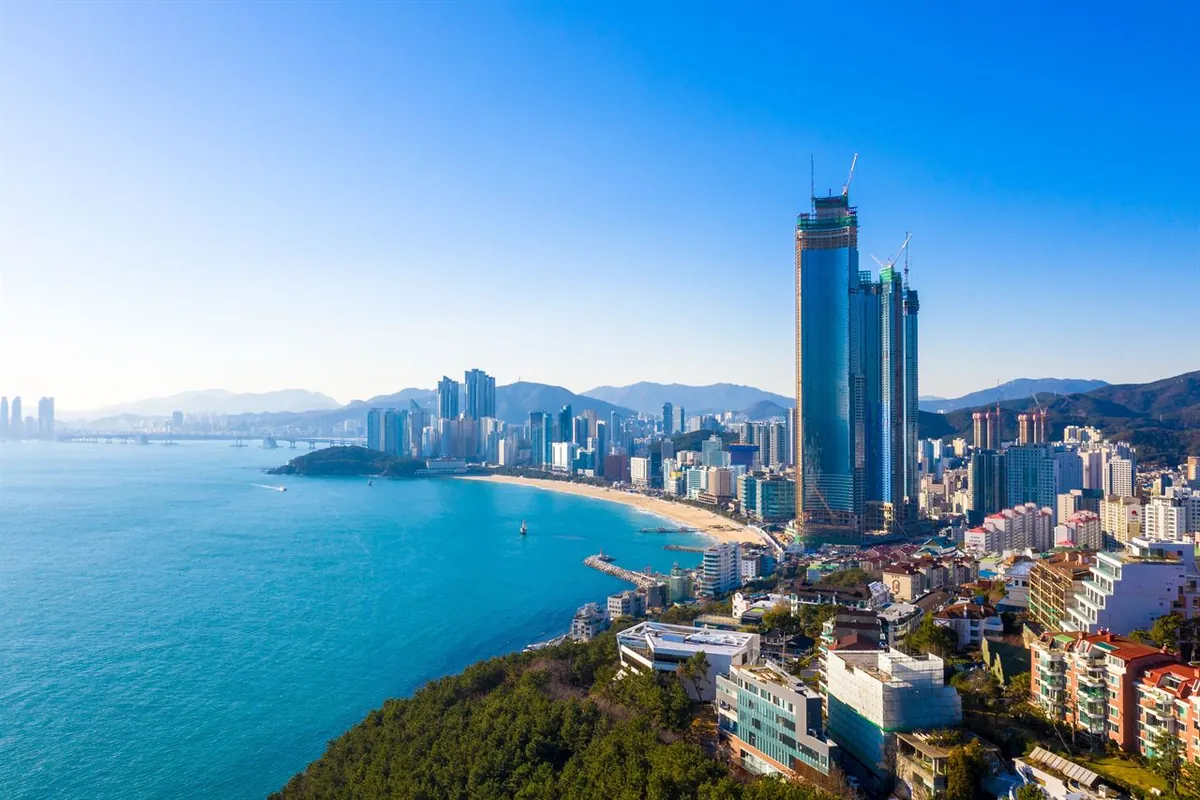
Check a hotel against an actual route to Busan Cinema Center, not a marketing label such as “near Haeundae.” The eastern districts cover a broad area, and a beach property can require a bus or long walk to Line 2. Our where to stay in Busan guide compares these bases. Reserve a flexible rate when possible until the screening grid is public, then retain the hotel that protects your latest confirmed finish and earliest confirmed start.
How should you combine BIFF with Busan?
Keep sightseeing local to the day's venue. Around Centum, Haeundae Beach, Dongbaekseom or Gwangalli can fill a long daytime gap, but select one and monitor the return. Around Nampo, BIFF Square, Jagalchi and nearby markets form a coherent walk. Do not attempt Gamcheon, a Centum premiere and a Gwangalli evening in one compressed chain. If the festival occupies only part of a wider trip, add a separate sightseeing day before or after instead of turning every screening gap into a cross-city excursion.
Travelers arriving from Seoul should reserve the intercity segment through the current official rail channel and leave room between station arrival and the first film. Our Seoul to Busan train guide covers the normal KTX planning sequence. Festival dates can increase demand, but we do not claim a specific sell-out pattern before inventory opens. Avoid placing a long-distance train, hotel check-in and must-see screening in one narrow window. One disruption should not erase the reason you came.
What should first-time BIFF visitors bring?
A charged phone, compact power bank and offline copies of tickets or confirmation pages allowed by current rules.
A light layer for air-conditioned theaters and a rain shell for outdoor walks between venues.
Korean and English venue names, auditorium details and a route saved before each departure.
A realistic meal plan that does not depend on eating during a ten-minute transfer.
Passport or other identification only when the current ticket or accreditation notice requires it.
Respect for photography restrictions: never record a film, and follow staff guidance during guest events.
A strong BIFF trip is built from verified layers: the October 6–15 window, September 1 program release, current ticket instructions and a district-based Busan plan. The festival rewards flexibility because the most valuable discovery may be a film you had not heard of before arrival. Protect that possibility by leaving room around priorities rather than filling every hour in advance.
Last verified: August 30, 2026, by the TipsKorea editorial team against official BIFF announcements. Recheck the program, ticket notice and venue rules after the September 1 release and again before travel.
Frequently Asked Questions
What are the Busan International Film Festival 2026 dates?
The 31st BIFF is officially scheduled for October 6–15, 2026. The complete selection and overall program are due at the September 1 opening press conference.
Where is BIFF held in Busan?
Busan Cinema Center in Centum City is the main practical hub, with activity across participating Busan venues. Community BIFF is scheduled in Nampo from October 8–11.
Are 2026 BIFF tickets on sale?
The complete screening grid and final ticket instructions were not available in the official material reviewed on August 30. Use the current BIFF website after the September 1 announcement.
How many days should a first-time visitor spend at BIFF?
Two or three festival days allow a useful mix of screenings and Busan neighborhoods. Choose dates after the program appears, cluster films by venue and add separate sightseeing time if the city is also a priority.
Last verified: August 2026 · TipsKorea Editorial


