
Busan is easier to understand as a chain of coastal and hillside districts than as one compact center. We divide the city into west, east and Yeongdo days so that each transfer has a purpose and every evening ends somewhere worth lingering.
Three days at a glance
| Option | Morning | Afternoon | Evening |
|---|---|---|---|
| Day 1 | Gamcheon Culture Village | Gukje Market, BIFF Square and Jagalchi | Nampo or harbor views |
| Day 2 | Haeundae Beach | Dongbaek Coastal Trail | Gwangalli and Gwangandaegyo Bridge |
| Day 3 | Huinnyeoul Culture Village | Taejongdae or maritime alternative | Final meal near your departure route |
Opening days, event access and individual transport services change. Confirm official notices and live routes before each day.
This plan for 3 days in Busan groups the coast, markets and hillside neighborhoods into three realistic, low-backtracking days.
How should you plan 3 days in Busan?
Busan's signature places sit along a long coastline, separated by hills, bridges and distinct urban centers. A map can make Haeundae, Gamcheon and Taejongdae look like neighboring waterfront stops; linking all three in one day creates more transport than travel. Visit Busan's recommended routes group eastern beaches together and connect the old downtown with the southern coast. We follow that geography but slow the sequence down, giving each district time for a walk and a meal.
The route gives Day 1 to the port history and markets of the west, Day 2 to the polished eastern beaches, and Day 3 to Yeongdo's cliffs and neighborhoods. That contrast is the point. Gamcheon and Nampo explain the city's hillside settlement and commercial energy; Haeundae and Gwangalli show its contemporary seaside identity; Huinnyeoul and Taejongdae return you to a rougher edge where homes, roads and paths meet the water. Three days will not cover every temple, beach and mountain, but it can reveal why Busan feels unlike any other Korean city.
We also avoid rigid promises about exact journey times. Busan Metropolitan City operates a broad Metro, light-rail, rail and bus network, but travel time changes with traffic, transfers and the final uphill walk. Use the official transport information for network orientation and a live Korea-compatible map on the day. If one connection becomes awkward, remove the optional stop rather than shortening every visit that follows. A reliable itinerary contains deliberate space, not just destinations.
Before Day 1: choose the right base and transport setup
Pick one hotel for all three nights
For a first visit, Seomyeon is the practical transport compromise because major Metro lines meet there and both the eastern and western districts remain reachable. Nampo is better if markets, harbor atmosphere and shorter Day 1 and Day 3 trips matter most. Haeundae is the emotional choice for travelers who want morning beach walks and lively evenings, but it lengthens the journeys to Gamcheon and Yeongdo. Choose the base that protects your most important mornings, then check the actual walk from the station exit to the hotel. Busan's slopes can make a short map distance feel much longer with luggage.
Set up payment and navigation
A reloadable transport card simplifies buses and Metro journeys. Busan's official transportation guide notes that paying bus fares by card also enables transfer discounts that cash riders do not receive. Our Korea transport cards guide covers the main visitor options. Keep some Korean won available for reloads and small purchases, and confirm which exit your route uses before leaving a station. Large interchanges can add an unexpected walk if you emerge on the wrong side of a broad road.
Reliable mobile data is especially useful for hillside buses, where the destination may not be visible from the stop. Set up connectivity before the first morning; our best Korea eSIM guide explains what to check. Save each destination in Korean and English, but rely on live routing for the final bus number and departure. Bring shoes with grip, a compact rain layer and a light day bag. The preparation list in our Korea travel essentials guide applies nationwide, while Busan adds stairs, sea wind and more elevation than many first-time visitors expect.
Day 1: Gamcheon, Nampo and the old port
Start above the city at Gamcheon Culture Village
Go to Gamcheon Culture Village first, while your energy is high and the lanes are easier to appreciate at a patient pace. Visit Busan explains that the hillside settlement grew from Busan's wartime refugee history and was reshaped through a community art project beginning in 2009. That history deserves more attention than a single famous photo point. Follow the marked visitor routes, step aside on narrow lanes and remember that people still live here. Cafes and workshops keep their own schedules even though the neighborhood itself is accessible more broadly, so verify any specific experience before building the morning around it.
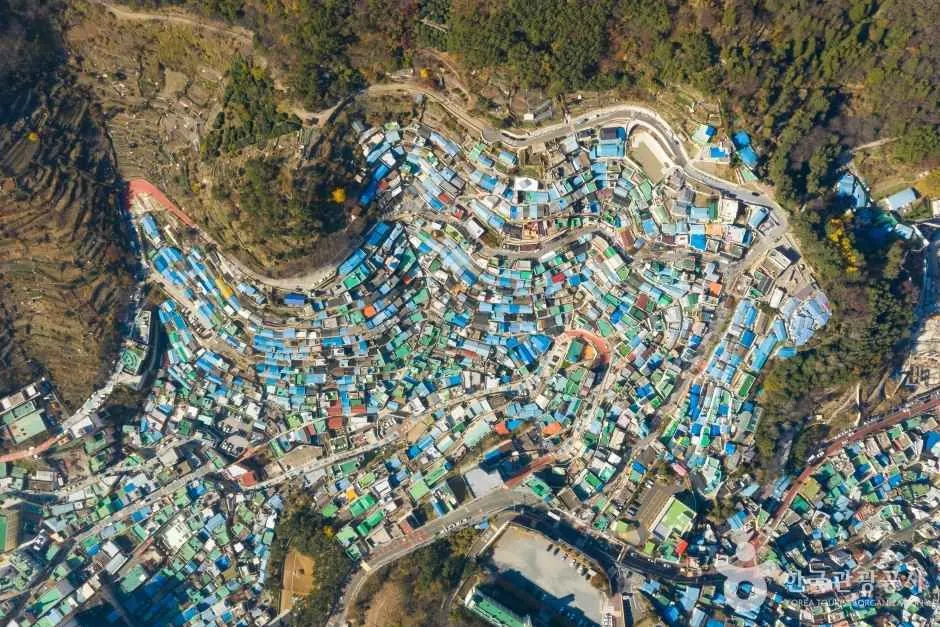
Official directions commonly connect Gamcheon with a short village-bus ride from a Line 1 station, followed by a walk. Check the live route and board in the correct direction; the hillside roads curve enough that intuition is unreliable. Spend time at viewpoints near the main route instead of hunting every mural. The lanes include stairs and uneven slopes, and backtracking can consume the morning. Once you have seen the village from above and understood its relationship to the port, descend toward the old downtown rather than adding another distant hill.
Continue through Gukje Market, BIFF Square and Jagalchi
The afternoon becomes largely walkable. Start around Gukje Market and Bupyeong Kkangtong Market, continue through BIFF Square, then finish at Jagalchi and the waterfront. These are separate places with different rhythms, not one giant food court. Gukje grew as an important commercial district after the Korean War, while Jagalchi remains Busan's representative fish market. Individual stores and market sections observe different hours and closing days. Visit Busan currently lists scheduled closing days for some major markets, so confirm the official page if a particular indoor hall or meal is essential.
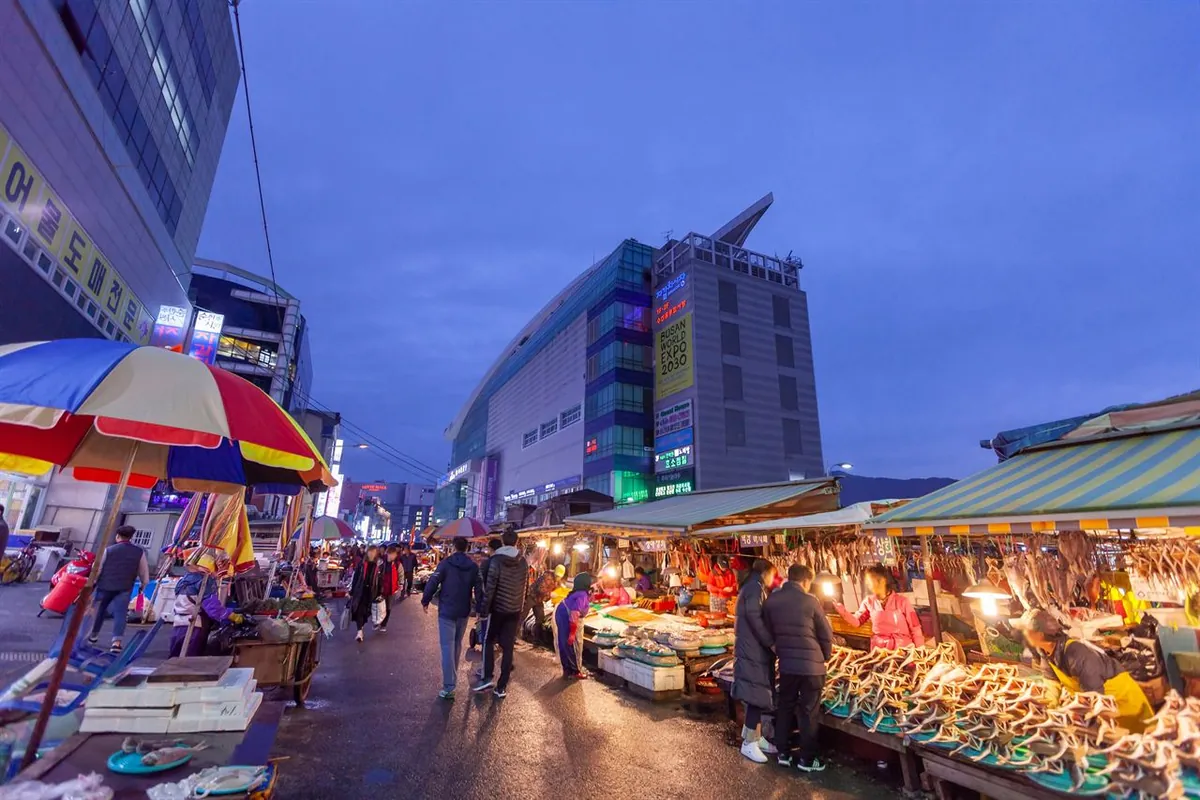
Eat selectively. One street snack, one market dish and one seated meal will tell you more than ordering every popular item within an hour. At a seafood restaurant, ask how the item is priced and what is included before agreeing. Travelers who do not eat seafood still have abundant noodles, pork soup, dumplings and market snacks nearby. End around Nampo, Yongdusan Park or the harbor depending on weather and energy. The purpose of the evening is to feel the old center after day-trippers leave, not to race east for a second skyline.
Day 2: Haeundae, Dongbaekseom and Gwangalli
Build the morning around Haeundae Beach
Travel east and begin at Haeundae Beach before the day becomes crowded or hot. Walk the sand, the promenade and Gunam-ro according to the season rather than assuming this is a swimming stop. Beach operations, water access and events are seasonal, while the shore remains a worthwhile urban landscape throughout the year. If you want to add Haedong Yonggungsa or the coastal rail attractions beyond Haeundae, treat either as a replacement for part of this plan. Both add travel or timed-ticket complexity and should not be squeezed into an already complete beach day.
Continue toward Dongbaekseom at the western end of Haeundae. Visit Busan describes a coastal trail of roughly one kilometer around the former island, with forest, sea views and Nurimaru APEC House along the route. The path gives you a natural transition from beach to headland without another vehicle. Take the loop only if surfaces and weather are suitable; otherwise use the shorter waterfront sections and spend more time near Haeundae. Check any building access separately, because a public path and an indoor venue do not necessarily share the same hours.
Save the bridge view for Gwangalli
After a late lunch, move toward Gwangalli Beach. The two beaches are not interchangeable: Haeundae faces an open resort skyline, while Gwangalli looks directly toward Gwangandaegyo Bridge and works especially well as an evening neighborhood. Arrive before sunset if the sky is clear, walk the promenade and then choose dinner on the surrounding streets. Do not schedule your whole trip around an exact sunset color or a rumored light show. Visibility, events and bridge lighting can change, and the beach remains enjoyable as a city-facing waterfront even when conditions are ordinary.
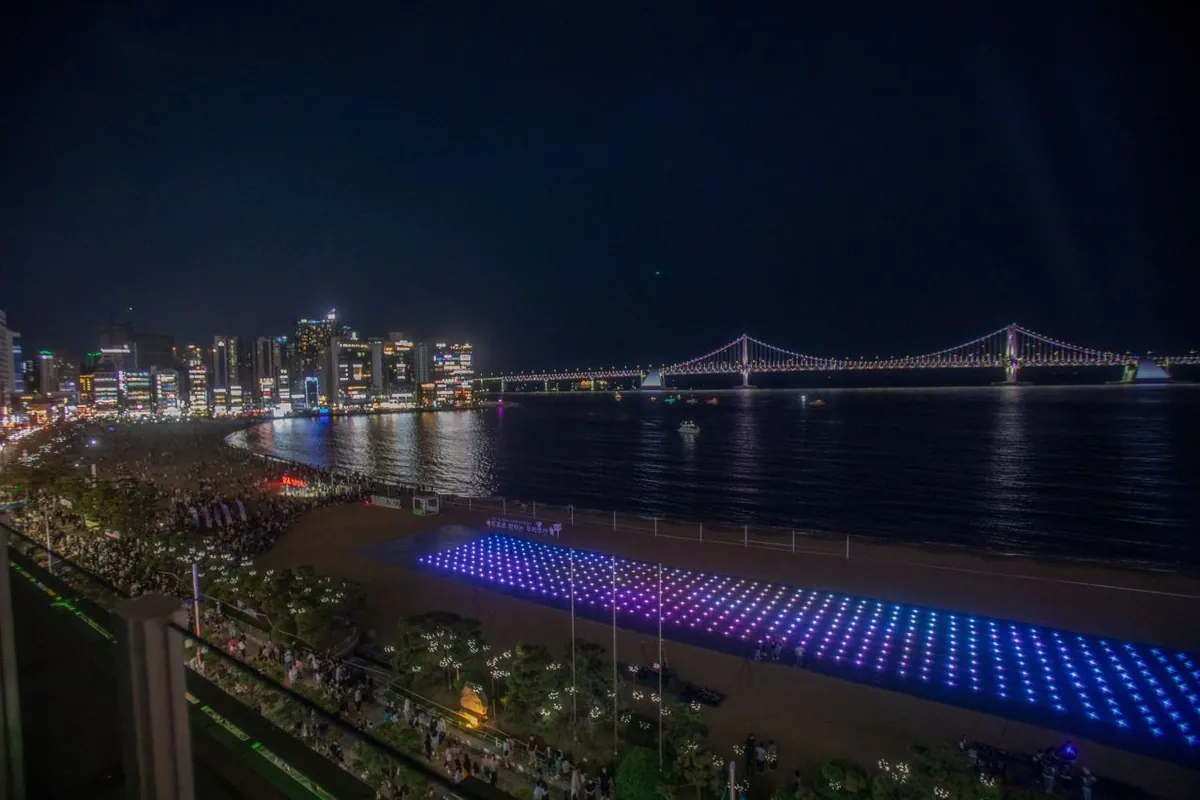
If rain is persistent, shorten both outdoor walks and use one indoor attraction near Haeundae or Centum City, then keep Gwangalli only if the evening improves. Avoid replacing poor weather with a long cross-city detour. The geographic logic of Day 2 is its strength: every stop remains on the eastern side, and the return to Seomyeon or your hotel is straightforward compared with an improvised trip to Gamcheon. Eat near the beach you finish at so that dinner does not create another transfer.
Day 3: Huinnyeoul and the edge of Yeongdo
Walk Huinnyeoul with respect for the neighborhood
Begin Day 3 at Huinnyeoul Culture Village on Yeongdo. Visit Busan's southern itinerary pairs the village with Taejongdae and other coastal districts, reflecting their shared geography. Huinnyeoul's narrow hillside lanes and ocean-facing path are visually striking, but they are also residential. Keep voices low, follow posted access guidance and do not treat doorways or rooftops as sets. The route involves stairs, and the lower coastal path may be uncomfortable in rough weather. Start from the access point that matches your mobility and check the return climb before descending.
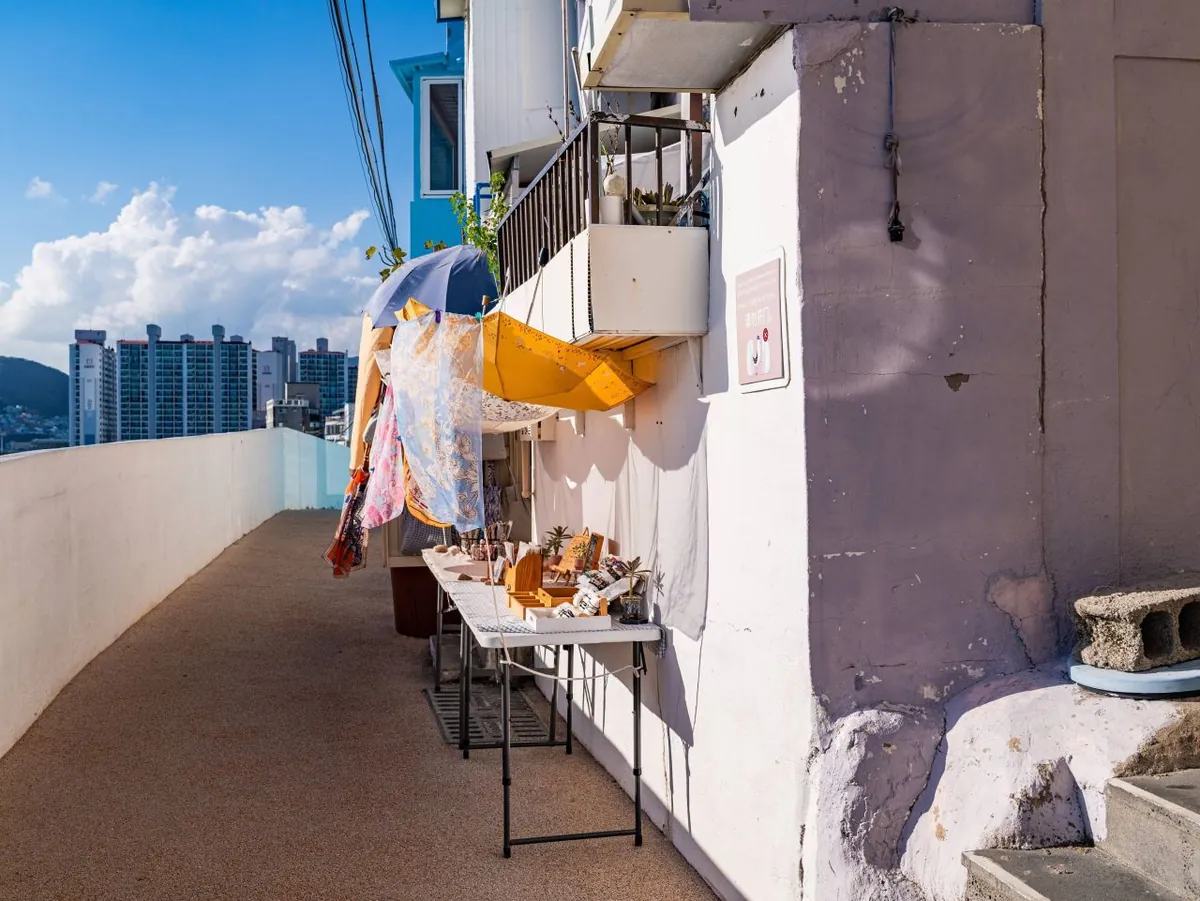
Give the village time for one unhurried walk and a cafe stop rather than moving constantly between photo queues. The best perspective comes from seeing how the houses sit above the working coast and how the path frames passing ships. If your legs are tired after two full days, turn Huinnyeoul into the main event and follow it with the Korea National Maritime Museum or an easier harbor stop. A flexible final day is useful because it can absorb anything weather forced you to remove earlier.
Choose Taejongdae only when conditions and energy agree
Continue to Taejongdae when visibility is good and your group is comfortable with more walking. The park occupies Yeongdo's southern end and is known for forested cliffs and open-sea viewpoints. Internal transport, path access and facilities can change, so check the official notice instead of assuming a sightseeing train or specific route will operate. This is also where three-day itineraries often become too ambitious: reaching the park is only the beginning, and viewpoints take time. Set a firm turnaround based on daylight and your departure plans.
If you skip Taejongdae, choose one coherent alternative: the maritime museum, a harbor district or a return to Nampo for something missed on Day 1. Do not substitute a far eastern temple simply because it is famous. The final afternoon should move you gradually toward your luggage and onward transport. For an evening train, collect bags early and eat near Busan Station. For another night in the city, finish with a local meal near your hotel and let the third day remain quieter than the first two.
What should you eat during three days in Busan?
Match food to geography instead of maintaining a separate restaurant checklist. Day 1 naturally supports market snacks, fish cake, noodles and seafood around Nampo and Jagalchi. Day 2 suits an unhurried beach-area lunch and dinner around Gwangalli. Day 3 is a good time for dwaeji gukbap, milmyeon or another everyday Busan specialty near a transport hub. Restaurant quality and queues change faster than neighborhood logic, so choose a small shortlist, inspect current closing information and keep a nearby backup. A famous shop is not worth crossing the city twice.
Visitors with allergies, vegetarian diets or seafood restrictions should carry a clearly translated explanation and ask about broths and side dishes, not only the visible main ingredient. Markets are rewarding but can be difficult places for detailed substitutions during busy periods. A seated restaurant outside the peak rush may provide clearer communication. Prices vary by portion, catch and venue; confirm them before ordering rather than relying on a travel article's old figure. We recommend using this itinerary to choose the district, then making the final restaurant decision with current local information.
How should you adjust this route for weather or mobility?
For heavy rain, keep the same side of the city and replace exposed paths with nearby indoor stops. On Day 1, shorten Gamcheon and spend more time in covered market areas or museums. On Day 2, use an indoor Haeundae or Centum attraction and reassess Gwangalli later. On Day 3, favor the maritime museum over cliff paths. Strong wind can matter even without rain, particularly on headlands and lower coastal walks. Follow closures and barriers; a famous viewpoint is never worth ignoring local safety guidance.
Travelers with limited mobility should investigate gradients as carefully as transit. Gamcheon and Huinnyeoul are hillside neighborhoods with stairs, while parts of Dongbaekseom and Taejongdae involve extended walking. You can still experience the wider districts through selected viewpoints, waterfront roads and accessible venues, but the standard photo route may not be appropriate. Ask the Busan Travel Hotline or attraction directly about current access, elevators and internal transport. Replace one demanding village with a flatter market or beach day rather than exhausting the group early.
Arrival and departure choices that protect the itinerary
If you arrive by KTX, Busan Station connects naturally to Nampo and the Line 1 corridor, but do not begin Gamcheon with luggage. Store bags or check in first. From Gimhae International Airport, the light rail connects into the wider urban network; the best transfer depends on your hotel. Confirm the live route, especially after a late flight. Three full sightseeing days means arriving the previous evening or leaving on the morning after Day 3. If your travel days consume half the schedule, remove an outer stop rather than pretending the same itinerary still fits.
The result is a first Busan trip with a clear narrative: the refugee-era hills and markets of the west, the contemporary beaches of the east, and Yeongdo's neighborhood coast. It leaves out Haedong Yonggungsa, Songdo, Dadaepo, Oryukdo and the mountains because three days reward focus. Save them for a longer stay. A strong itinerary should make Busan understandable while leaving you curious about what lies beyond the route.
Last verified: August 16, 2026. We checked this route against Busan City and current Visit Busan listings; reconfirm live transit, closures and admission notices before travel.
Frequently Asked Questions
Are three days enough for Busan?
Three full days are enough for a strong first visit covering the old port districts, eastern beaches and Yeongdo. Add another day if you want temples, hiking or more distant coastal areas.
Where should first-time visitors stay in Busan?
Seomyeon is the most balanced transport base, Nampo favors markets and old downtown, and Haeundae suits travelers who prioritize beach mornings over shorter west-Busan journeys.
Can I follow this Busan itinerary using public transport?
Yes. The route uses Metro for long urban movement and buses for hillside or coastal connections. Confirm the final stop, direction and departure live because routes and traffic can change.
Should I visit Haedong Yonggungsa during a three-day trip?
Visit it if the temple is a top priority, but replace part of the Haeundae day rather than adding it to the full route. The additional travel can make the east-coast schedule rushed.
Last verified: August 2026 · TipsKorea Editorial


