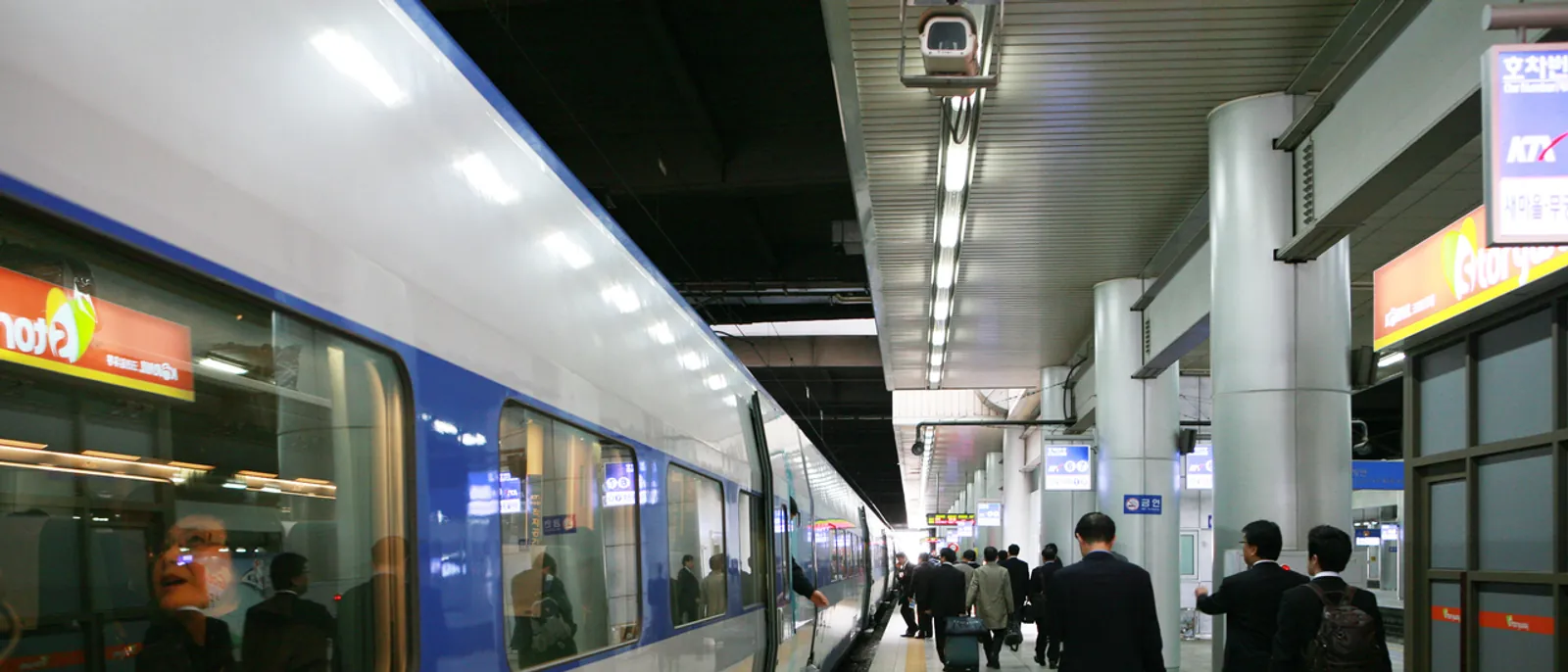
Korea's long-distance coach network is useful beyond the railway map, but the key decision is the exact service type and terminal rather than the word bus alone.
Which regional transport search should you start with?
| Option | Best starting point | Main advantage | Verify |
|---|---|---|---|
| Express bus | KOBUS | Direct long-distance city pairs | Terminal, class and ticket format |
| Intercity bus | TxBus and BusTago | More regional cities and intermediate-stop routes | Exact stop pattern and arrival terminal |
| Train | Official rail operator | Useful when rail location and schedule fit | Station transfers and total door-to-door time |
Run a live search for the travel date. Route ownership, departure times, classes and sales channels can change.
This Korea Intercity Bus Guide explains how to choose the service, verify both terminals, secure the right ticket and board with a practical buffer.
What is the difference between express and intercity buses?
Korea Tourism Organization divides long-distance coaches into express and intercity services. Express buses use expressways for long-distance travel and do not make intermediate city stops. Intercity buses can use expressways and national highways while stopping at other cities on the way. The word express therefore describes the service pattern, not a guarantee that every express trip beats every intercity trip door to door.
Choose by route, not by the English label
An express bus is often a clean match between major cities. An intercity bus can be better for a smaller regional destination, a direct cross-country link or a place without a convenient rail station. Some terminals handle both categories, while others separate them. Search both the service type and exact terminal before planning accommodation or a connection.
Seat classes also vary. A listing may offer standard, excellent, premium, luxury or late-night service depending on the system's translation and the operator. Compare the seat map, departure time and displayed fare for the exact run. Do not infer that a higher class changes the route, includes a restroom or guarantees a meal stop. The live listing is the useful description.
How do you search for the right bus?
Start with the official channel for the service. KOBUS handles express-bus searches. TxBus and BusTago handle intercity-bus searches. Enter the travel date, origin terminal and destination terminal rather than broad attraction names. When a city has more than one terminal, test the realistic candidates and compare their local connections. If one intercity platform has no result, check the other or the terminal's official information before concluding that no bus exists.
Search in both directions when planning a return. A route sold outbound is not proof that the same terminal has a useful return at your desired time. The return could use a different stop, have fewer departures or require an in-person purchase. Save the operator, departure time, class, terminal names and any intermediate stops shown in the live result.
Do not build a trip from a screenshot of a timetable posted months ago. Routes, sales windows and terminal assignments change. Run the official search for the actual date, then recheck close to travel. If the date is not yet open, note the system's current sales window without assuming last year's release pattern will repeat.
Which terminal should you choose?
The correct terminal is the one printed in the live itinerary, not simply the largest terminal in the city. Seoul alone has Seoul Express Bus Terminal, Central City, Seoul Nambu and Dong Seoul among its major long-distance facilities, and they are not interchangeable. Other cities may separate express and intercity terminals or operate a combined terminal called a jonghap terminal.
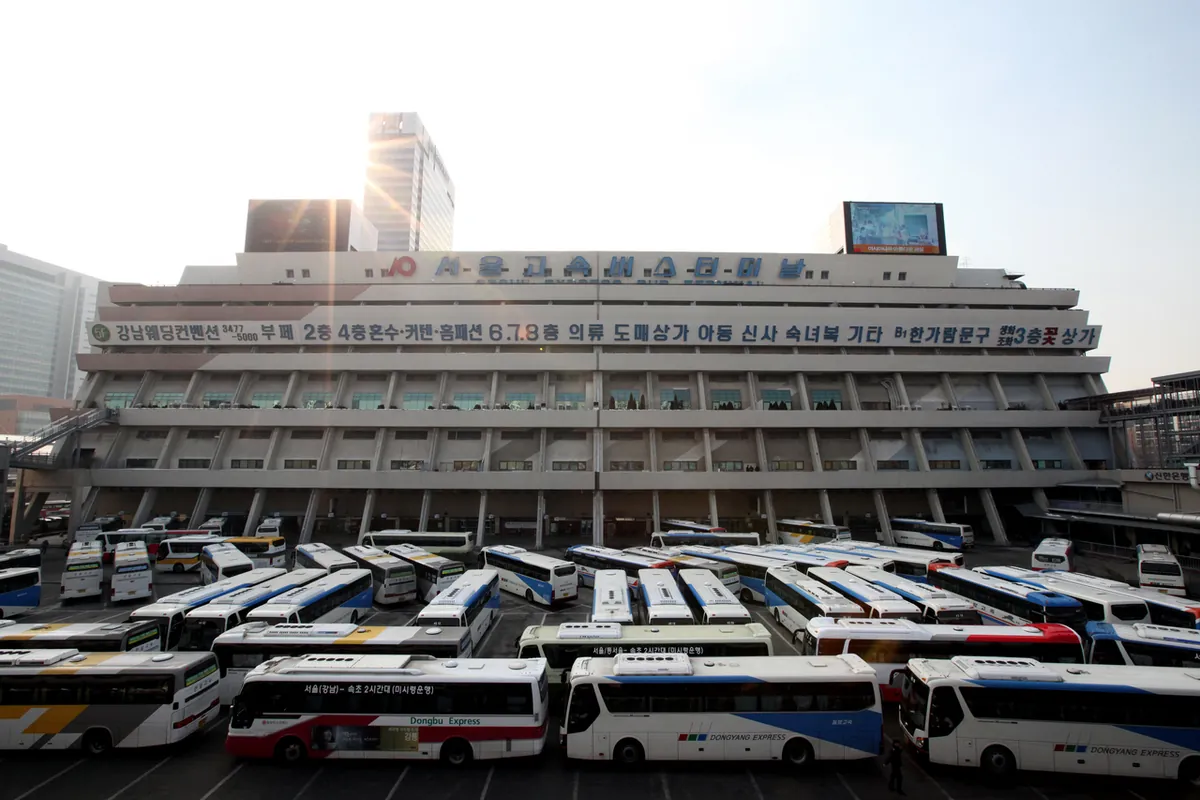
Save each terminal's Korean name, street address and map pin. Similar English translations can hide different facilities, and searching only the destination city may lead to the wrong side of town. Confirm whether your arrival is the final terminal or an intermediate stop. Then price the subway, local bus, taxi or walk from that exact point to the accommodation.
Terminal choice changes the true travel time. A slightly later coach from a nearby terminal can beat an earlier departure that requires crossing Seoul. The same applies on arrival: a bus terminal near the old town may be more useful than a rail station outside it. Use our Korea transport cards and passes guide for the local connection, but keep the long-distance ticket separate from assumptions about ordinary city-bus payment.
Korea Intercity Bus Guide: how do you book a ticket?
On the official system, select one-way or round trip, exact terminals, date, passenger category, departure and seat when available. Read the class and stop pattern before paying. Some terminals or routes support internet reservation while others require terminal purchase; BusTago explicitly marks reservable and non-reservable terminals. An empty online result can therefore mean several things, not automatically a canceled route.
Payment behavior varies by platform, card issuer, browser and current service status. Do not promise yourself that any foreign-issued card will work until the transaction completes and the booking appears in the official lookup. Keep a second card and enough KRW for an in-person terminal purchase. If you use a traveler-facing reseller, compare its terminal names, cancellation terms and ticket-issuance instructions with the operating route.
Verify the reservation after payment
TxBus tells customers to check the View, Modify or Cancel area after payment because a browser or payment interruption can leave the result unclear. Save the reservation number, passenger details and charged amount. A bank authorization alone is not a boarding ticket. If the reservation cannot be found, resolve it through the booking channel rather than buying repeatedly and hoping the duplicate disappears.
Confirm the ticket format. Depending on route and method, you may receive a mobile boarding credential, a home ticket or a reservation that must be issued at a terminal kiosk or counter. Bring the identification and payment card named in that channel's instructions. Save a screenshot for reference, but do not assume a screenshot replaces a valid barcode or printed ticket.
What should you do at the terminal?
Arrive with enough time to find the building, issue a ticket if required, use the restroom and locate the platform. At an unfamiliar complex, the words terminal and station can refer to connected but separate halls. Show staff the Korean departure terminal, destination, time and booking record if the signs are unclear. Do not wait beside a city-bus stop merely because it shares the terminal name.
Check the departure monitor for destination, time, platform and any delay or gate change. Match the bus display or windshield sign before loading luggage. A vehicle at the right platform a few minutes earlier may be another departure. Korea Tourism Organization advises checking the monitor and notes that boarding commonly begins shortly before departure, so stay near the gate rather than shopping until the exact minute.
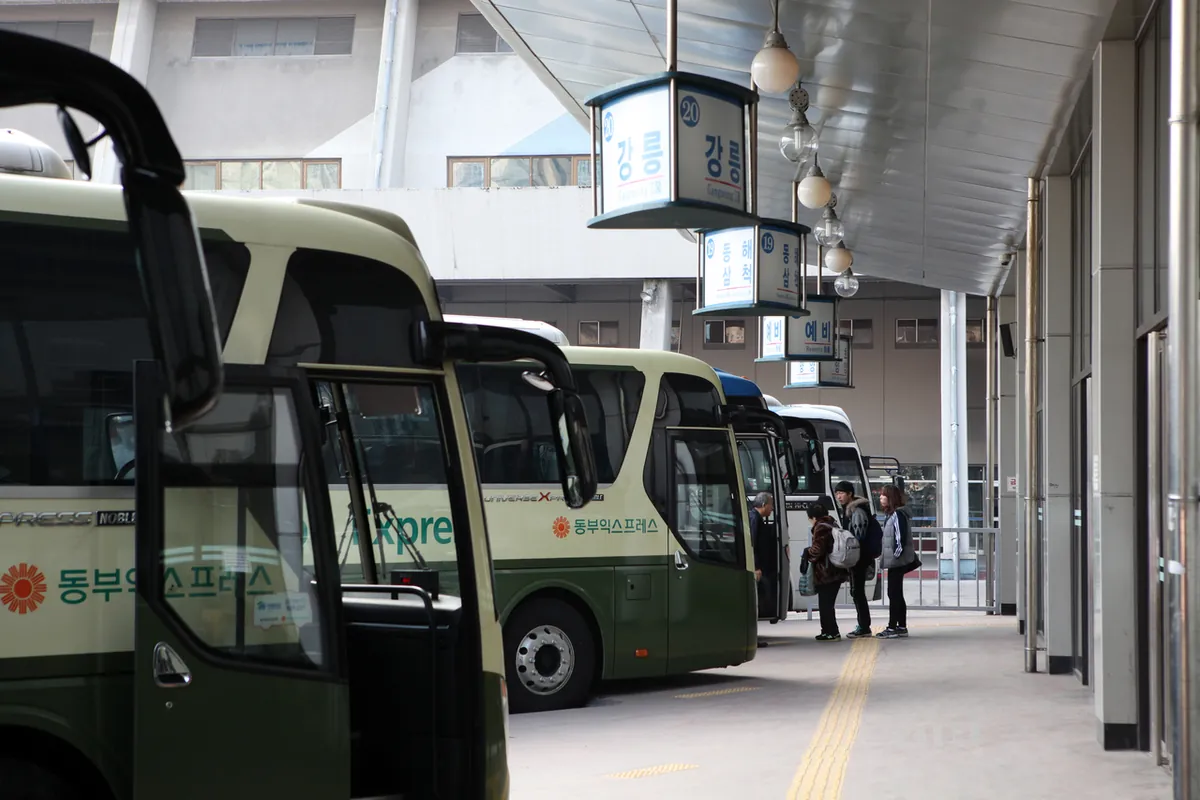
Keep the ticket, phone, passport, medicine, money and fragile electronics in a small bag at your seat. Put only appropriate luggage in the lower compartment and label it with a reachable contact. If the bus serves intermediate cities, show the driver or attendant your destination before loading a suitcase so it can be placed where practical. Ask the operator in advance about bicycles, oversized sports equipment, animals or unusual baggage; acceptance is not universal.
How does boarding and arrival work?
Present the valid ticket or scan the credential as directed, then take the assigned seat when one appears on the ticket. Keep aisles clear, fasten the seat belt and set calls and videos to silent. Food and drink rules can vary; choose something tidy and low-odor if permitted, and take all waste with you. The coach is shared transport, not a private lounge.
Track progress with an offline map, but do not treat the predicted arrival minute as a promise. Road traffic, weather and service-area timing affect coaches. If your ticket shows intermediate stops, listen for announcements and watch the route. Before leaving at a stop, confirm the terminal name on the screen, sign or map rather than following another passenger.
At the destination, retrieve luggage promptly and verify it before the coach leaves. Move away from the bay to orient yourself, then start the local connection from the exact terminal. Avoid booking a fixed tour, ferry or last train immediately after a long coach without a recoverable buffer. The cost of a missed connection can exceed the time saved by an aggressive itinerary.
Are there restrooms and rest stops on Korean buses?
Korea Tourism Organization states that long-distance coaches do not have onboard restrooms. Mid- and long-distance routes may make a scheduled stop at a highway service area, or hyugeso, but the existence and timing of a stop depend on the run. Use the restroom at the terminal before boarding rather than planning around a break that has not been confirmed.
At a service area, note the coach, bay and time the driver gives for departure. Photographing the license plate or bus company can help distinguish similar vehicles. Take valuables with you, move directly to the facilities and return early. The coach may continue on schedule, and another bus of the same color can park nearby.
Travelers who need frequent restroom access, step-free boarding or assistance should contact the terminal and operating company before purchase. A general booking page does not prove a particular vehicle, platform or rest stop meets an accessibility need. Describe the required transfer, mobility device and assistance precisely, and keep a rail or private-transfer alternative when the answer is uncertain.
What if you need to change or cancel?
Use the same channel that holds the booking and read its current cancellation table before payment. TxBus publishes time-dependent cancellation charges and directs customers to its View, Modify or Cancel tool. Fees can increase as departure approaches and policies differ by service and seller, so this evergreen guide does not reproduce percentages that may change. Cancel as soon as plans change and save the confirmation.
On TxBus, changing the time or class automatically cancels the original reservation; other platforms or sellers may handle changes differently. Check both the replacement ticket and the original payment rather than assuming the first booking vanished immediately. If a departure is disrupted by the operator, follow that operator or terminal's instructions; do not apply a voluntary-cancellation rule without asking how the disruption is being handled.
A missed bus is not a flexible open ticket. TxBus warns that a reserved ticket may no longer be issued after the coach departs. Go to the staffed counter or contact the booking channel, learn the remaining refund or rebooking options and buy a new departure only when necessary. Do not board another coach with the old seat assignment.
When is a bus better than a train?
Choose a bus when it reaches the destination directly, places you closer to the useful district or avoids a rail transfer. Intercity routes are particularly valuable for regional cities and towns beyond the railway network. Choose rail when the station locations, schedule, luggage plan and reliability fit better. Compare door-to-door time, not only the fastest line in a timetable.
For Seoul and Busan, high-speed rail is often the first comparison, while buses may win for a different origin, terminal location or budget. Our Seoul-to-Busan train guide explains that rail option. If several rail days are involved, review our KORAIL Pass guide before assuming a pass or individual bus tickets are automatically cheaper.
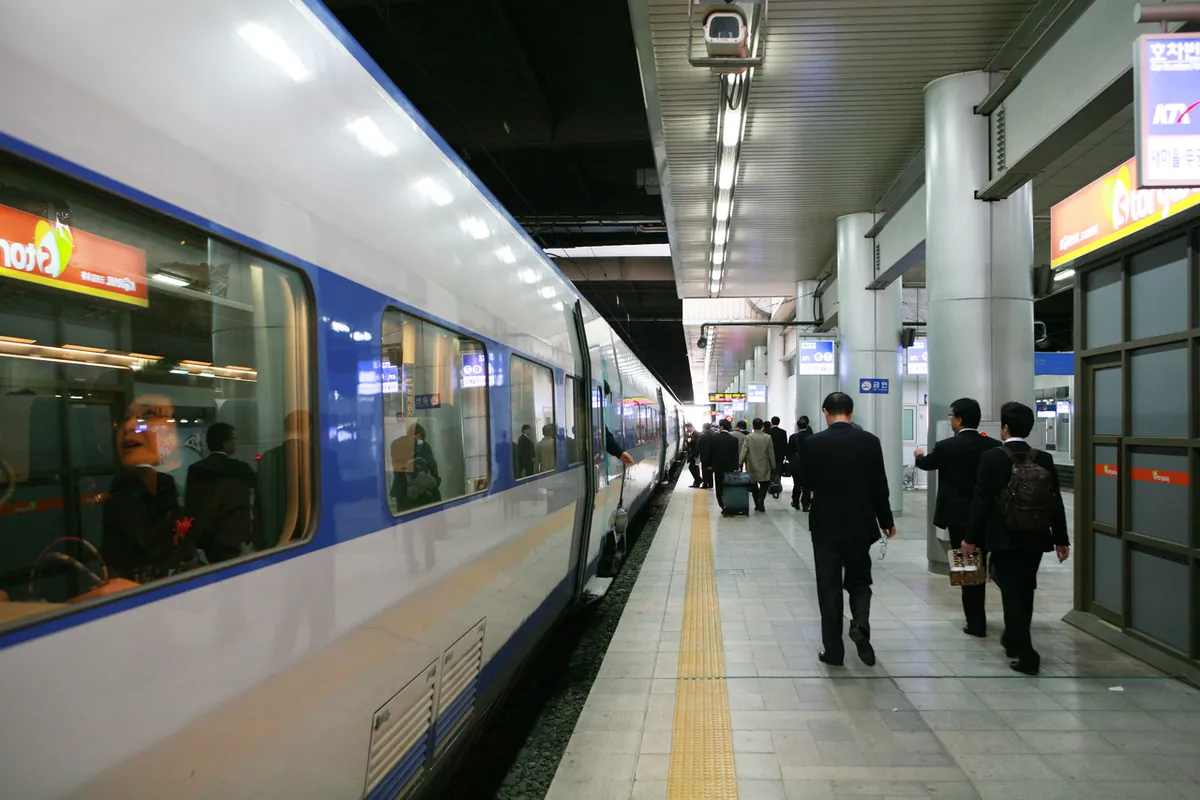
For a regional itinerary, test the actual sequence. A direct Busan-to-Gyeongju or Seoul-to-Gangneung coach can be more coherent than returning through another hub, but the best answer changes with the date and lodging. Our Gangneung two-day itinerary demonstrates why the arrival point and local route matter as much as the intercity leg.
What is the safest bus-planning checklist?
Search the live date on the correct express or intercity booking system.
Save both terminal names in Korean, their addresses and map pins.
Confirm class, stop pattern, seat, passenger type and displayed fare.
Verify that payment produced a retrievable reservation.
Check whether the booking is a mobile ticket or needs terminal issuance.
Review current change and cancellation terms before committing onward travel.
Use the restroom, watch the departure monitor and be near the correct platform early.
Keep valuables with you and allow a recoverable buffer after arrival.
The most reliable habit is matching three exact records: service, terminal and ticket. Once those agree, Korea's regional coach network becomes a practical way to reach places that are awkward by rail without relying on a fragile list of routes or departure times.
Last verified: August 31, 2026, by the TipsKorea editorial team against Korea Tourism Organization, TxBus, BusTago and KOBUS resources. Recheck the live route, terminal, ticket format and cancellation terms for your travel date.
Frequently Asked Questions
What is the difference between an express bus and an intercity bus in Korea?
Express buses run long-distance expressway services without intermediate city stops. Intercity buses can use expressways and national roads and may stop at other cities.
Where can I book Korean intercity bus tickets?
Search intercity routes on the official TxBus and BusTago systems. Use KOBUS for express routes, and verify the reservation after payment.
Do Korean intercity buses have toilets?
No. Long-distance coaches do not have onboard restrooms. Use terminal facilities and return promptly during any scheduled highway service-area stop.
Can I use a mobile ticket for every Korean bus?
No. Ticket format depends on the route and booking method. Confirm whether your reservation is valid for mobile boarding or must be issued at a kiosk or counter.
Last verified: August 2026 · TipsKorea Editorial