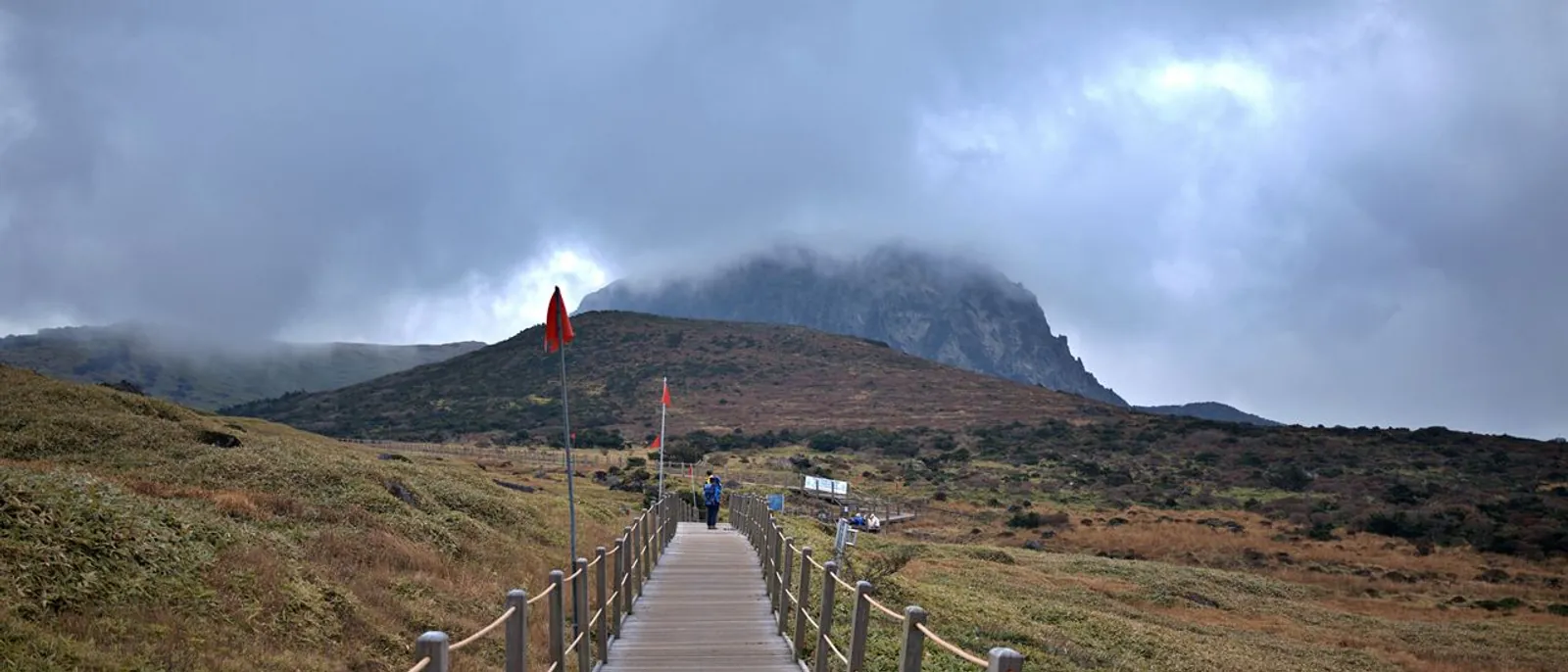
Hallasan is not one hike. Seven official trails offer different landscapes, only two reach the summit area, and current reservations, seasonal cutoffs and closures determine what is actually possible.
Hallasan trail decision
| Option | Summit access | Use it when | Verify |
|---|---|---|---|
| Seongpanak | Yes, under current reservation and controls | A summit attempt is the priority | Reservation, entry cutoff, weather and transport |
| Gwaneumsa | Normally yes; upper section closed Aug 1–Sep 30, 2026 | Official notices show the full route open | Closure map and permitted turnaround |
| Yeongsil / Eorimok | No Baengnokdam summit | Highland scenery matters more than the summit | Seasonal entry and return controls |
| Other official trails | No summit | A shorter or different landscape suits the group | Exact trail notice and access |
Never cross a closure or continue after a ranger-directed turnaround. A reservation does not guarantee safe weather or summit access.
This Hallasan hiking guide begins with the current trail decision, because a summit plan is valid only when the official system says it is.
What changed on Hallasan in 2026?
Visit Jeju's current Hallasan page states that the Gwaneumsa section between Samgakbong and Baengnokdam is closed from August 1 through September 30, 2026. The notice explains that during this period only Seongpanak can reach the summit. Do not reserve Gwaneumsa, reach the closure and attempt to improvise. Use the current reservation system and official closure map to choose a permitted plan.
The closure is a route restriction, not a challenge to find another connection. Trails and controlled areas protect hikers and the mountain environment. A path shown in an old blog, downloaded map or fitness app may not be open. Barriers, ranger directions and official notices take priority. If the summit is important during the closure window, reserve Seongpanak if available and prepare for that route. If no slot exists, choose a non-summit experience.
After September 30, do not assume Gwaneumsa automatically reopens in full. Maintenance, severe weather or another notice can extend or replace a planned schedule. Recheck immediately before hiking. The verification date in this guide records what the official pages stated on August 30, 2026; it is not a future access permit.
Which Hallasan trail should you choose?
Choose the goal before the route
Hallasan National Park has seven official trails. Only Seongpanak and Gwaneumsa reach the Baengnokdam summit area under normal operation. Eorimok, Yeongsil, Donnaeko, Eoseungsaengak and Seokguram provide different distances and landscapes without reaching the main summit. A successful Hallasan day therefore does not require Baengnokdam. Choose by fitness, current weather, transport and the scenery you value.
Seongpanak is the current summit option during the August–September 2026 Gwaneumsa upper closure. It is a long mountain day and must be approached as such, not as an ordinary city walk. Gwaneumsa is known as the other summit route, but the closure prevents using its upper section during the stated dates. Do not plan an up-one, down-the-other traverse while any connecting section is closed.
Yeongsil and Eorimok are strong alternatives for travelers who want highland scenery without a summit reservation. Their trailheads, cutoffs and permitted endpoints differ, and operations still respond to weather. The shorter official trails suit limited time or different ability levels, but shorter does not mean risk-free. Wet rock, wind, cold and poor visibility can affect any elevation.
How does the Hallasan reservation work?
Use the official Hallasan Trail Reservation System for Seongpanak and Gwaneumsa. Select the route and date shown as available, enter accurate traveler information and retain the confirmation in the form required by the system. Do not buy a reservation from an unofficial seller. A booking allocates access under the system; it does not guarantee parking, transport, good weather or permission to continue if the park changes operations.
Read the reservation conditions, cancellation method and identity requirements when booking. Names and documents should match. If you can no longer hike, cancel through the official process so the system reflects reality. Check notices again the evening before and morning of the hike. The park can restrict entry for weather, fire risk, snow, maintenance or safety even after a reservation has been issued.
Non-summit routes may not use the same reservation process, but they still have seasonal entry and turnaround controls. Do not infer that a route is unrestricted simply because it lacks a summit booking screen. Open its current trail page, identify the last permitted entry and turnaround point, and arrive with enough margin to obey both.
How should you plan trailhead transport?
Decide transport before choosing a route. A rental car is convenient only if you return to the same trailhead and legal parking remains available. If you plan to ascend one open summit route and descend another under normal future operation, the car will be left at the wrong trailhead. Arrange public transport or a current transfer method in advance and verify the final service after the hike.
Buses reduce parking concerns but require strict attention to the first and last useful connection. Save the Korean trailhead name and check the live route on the day. A taxi may be a backup, not a guaranteed remote pickup. Keep enough battery and a non-phone copy of your accommodation details. Our Korea transport cards guide explains visitor payment basics, but it does not replace a Hallasan-specific timetable check.
Arrive early enough for the official entry control without speeding or illegal parking. Never abandon a car on a road shoulder because a lot is full. If transport failure makes the cutoff unrealistic, select a shorter permitted route or postpone. The mountain will not become safer because a traveler has already paid for accommodation.
What should you pack for Hallasan?
Wear broken-in hiking footwear with grip and carry layers that protect against wind and precipitation. Pack sufficient water and food for your planned route, a charged phone, offline information, a small first-aid kit and any personal medication. Sun protection matters even in cool air. In winter or icy conditions, use the equipment required by current official guidance and do not assume ordinary trainers are acceptable.
Avoid cotton-only clothing that stays wet and chills the body. Keep a dry layer and electronics in waterproof protection. Bring all waste back down. Trekking poles can help some hikers, but they do not compensate for inadequate fitness or unsafe surfaces. The general checklist in our Korea travel essentials guide is a starting point; Hallasan demands mountain-specific preparation.
When should you turn around?
Turn around at the official cutoff, whenever a ranger instructs you, when visibility or footing deteriorates, or when your pace no longer leaves a safe return margin. Summit ambition does not change these triggers. Agree before starting that the slowest hiker controls the group pace. Separate only if everyone has a safe, explicit plan and the park permits it; otherwise stay together.
Watch for cold stress, heat stress, dehydration, dizziness, pain that changes gait and unusual fatigue. Do not diagnose a serious symptom through a travel guide. Stop, seek help and use the park's emergency process. If phone service is intermittent, note the last marker and direction. Mobile data can help with notices, but it is not a substitute for navigation and judgment; see our Korea eSIM guide for connectivity planning.
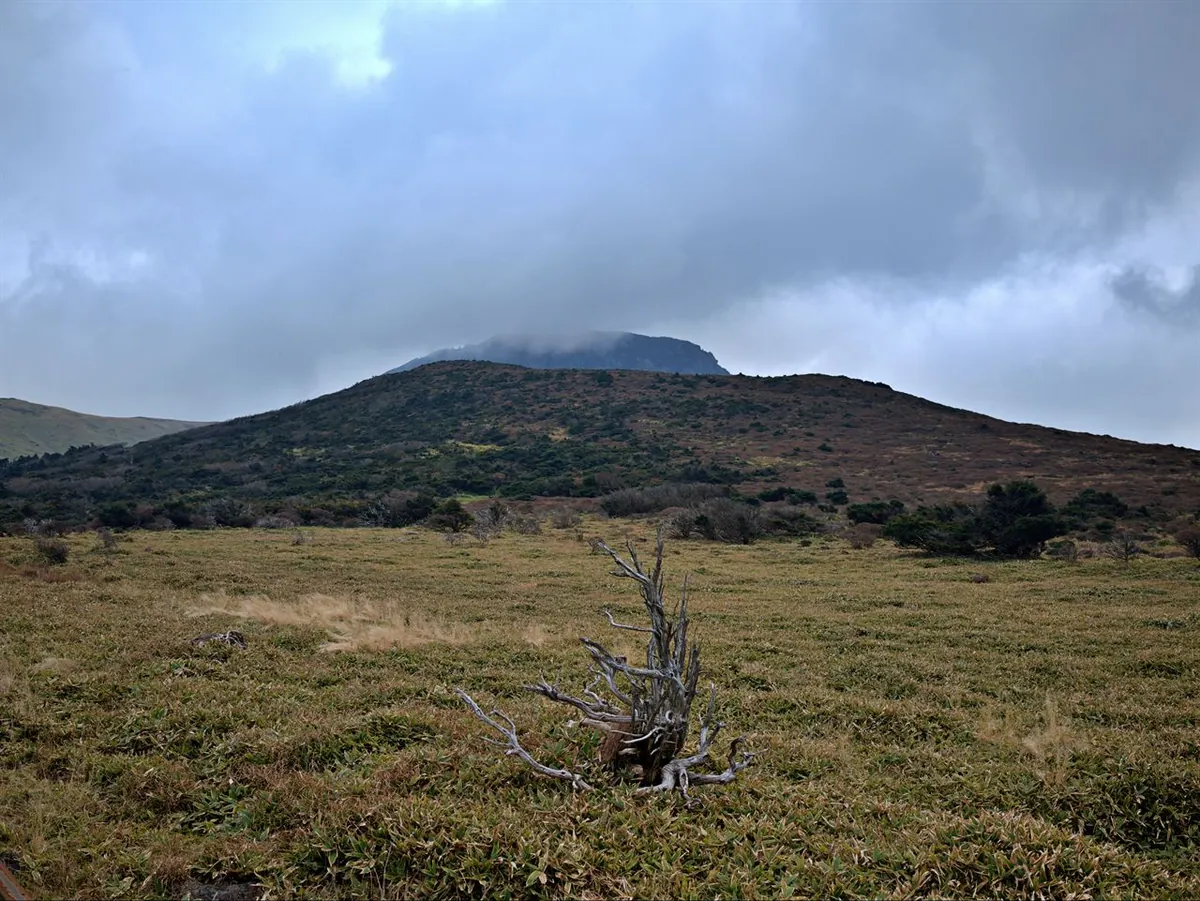
Cloud is common mountain weather, not a failure. Never cross a barrier or step onto fragile terrain for a clearer view. Baengnokdam may remain hidden after hours of climbing. The achievement is returning safely while respecting the controlled route, not producing a particular photograph.
How do seasons change a Hallasan hike?
Season changes daylight, temperature, precipitation, ice, vegetation and entry controls. Summer can combine heat at lower elevation with exposed weather higher up. Autumn brings popular scenery and potential crowding. Winter can require traction and cold-weather competence. Spring conditions may remain colder or wetter than the coast suggests. Use the mountain forecast and official trail status, not the weather icon for Jeju City alone.
Seasonal cutoffs exist to keep hikers from being trapped above safe return times. Record the current times from the official trail page immediately before the trip rather than copying them from this article. Arrive with margin. If a line, delayed bus or slow pace uses that margin, accept a lower turnaround. Rangers do not owe an exception because a visitor planned around an obsolete screenshot.
Can beginners hike Hallasan?
Beginners can experience Hallasan by choosing an official trail that matches their current fitness and conditions. A summit route is not the required first step. Start with a shorter permitted trail or a highland route, learn how the group responds to elevation and weather, and reserve the summit for a properly prepared day. Children, older adults and anyone with a medical condition need an individualized decision from an appropriate professional.
Do not measure readiness only by flat-city walking distance. Mountain surfaces, continuous ascent, descent load and weather add difficulty. Train on hills, test footwear and carry the pack you will actually use. If the group cannot maintain the planned pace comfortably, turn around early. The non-summit routes are not consolation prizes; they reveal Hallasan's forests and highland landscape without forcing one endpoint.
What should the day before and after look like?
Sleep near a practical departure route, avoid alcohol, prepare breakfast and verify the reservation, trail status and transport before bed. Do not schedule a late arrival from mainland Korea followed by a summit attempt with inadequate rest. After the hike, leave room for food, hydration and recovery rather than a long night drive. If another person can share driving legally and under the rental contract, agree on that before the trip.
A Hallasan day should stand as the main event. Pair it with an easy meal or short coastal stop only if daylight and energy remain. Our Jeju without a car guide shows a slower island alternative for travelers who decide the summit logistics do not fit. Choosing another day is good planning, not missing Jeju.
Last verified: August 30, 2026. We checked the official Hallasan reservation and closure information, including the August 1–September 30 Gwaneumsa upper-section closure. Recheck before hiking.
Sources & verification
We use official or primary references to check practical details. Confirm time-sensitive information directly before you book or travel.
- Visit Jeju — Hallasan National ParkJeju Tourism Organization
- Hallasan Trail Reservation SystemJeju Special Self-Governing Province
- Hallasan National Park — Official NoticesJeju Special Self-Governing Province
- Visit Jeju — Official Jeju Tourism GuidebookJeju Tourism Organization
- Public Data Portal — KTO Photo Gallery APIKorea Tourism Organization
Frequently Asked Questions
Do I need a reservation to hike Hallasan?
The official reservation system governs the Seongpanak and Gwaneumsa summit routes. Other trails still have current entry and turnaround controls that must be checked.
Is Gwaneumsa open to the summit in August 2026?
No. The official notice closes Samgakbong to Baengnokdam from August 1 through September 30, 2026. Seongpanak is the summit option during that period, subject to controls.
Can I hike up Seongpanak and down Gwaneumsa?
Not during the stated 2026 upper Gwaneumsa closure. At other times, confirm both routes are fully open and solve transport between different trailheads before attempting a traverse.
Which Hallasan trail is best for beginners?
There is no universal best trail. Choose a shorter official route or a non-summit highland trail according to fitness, weather, current access and transport.
Last verified: August 2026 · TipsKorea Editorial


