A good hanbok rental is less about finding the most ornate garment and more about choosing a complete outfit that fits, feels comfortable and can be returned without rushing. This guide turns the experience into a workable palace plan.
Hanbok Rental at Gyeongbokgung works best when the outfit, palace visit and return deadline are planned as one experience.
Renting hanbok near Gyeongbokgung gives a visitor time in Korean dress within a palace setting, but it also creates practical decisions about fit, weather, belongings, photography and a fixed return. The experience is straightforward when those decisions happen before payment rather than after the outfit is on.
This guide does not rank individual shops or quote a price that may be obsolete by your visit. Instead, it explains the official palace rule and the comparison questions that remain useful across rental businesses. If this is your first trip, the first time in Seoul guide covers transit, money and broader etiquette.
Does hanbok give free entry to Gyeongbokgung?
Korea Heritage Service publishes a free-admission guideline for visitors wearing hanbok at the royal palaces. The guidance recognizes both traditional hanbok and modernized hanbok, but the outfit must be complete and worn correctly. For women, the rule requires a jeogori with a skirt or trousers; for men, it requires a jeogori with trousers. The upper garment should be fastened rather than merely draped over ordinary clothes.
That distinction matters when choosing a costume-style package. A partial top, skirt worn without the proper upper garment, or outfit that does not meet the published standard may not qualify. Ask the rental staff whether the exact combination is intended to satisfy the current palace rule, then wear all required pieces when approaching the gate.
What free entry does not include
Free general admission is not a promise of immediate entry, access to every special program or an exemption from reservation rules. Night openings, exhibitions, guided programs and restricted areas may use separate systems. Treat the hanbok benefit as a general-admission rule and check the official palace notice for anything beyond an ordinary visit.
Visit Seoul identifies the same hanbok benefit across Seoul's five royal palaces, but each palace has its own calendar and route. Gyeongbokgung's official visitor information lists a regular Tuesday closure, with calendar exceptions possible. Confirm the current date, seasonal hours and any closure notice before reserving a rental slot.
How should you compare hanbok rental shops?
Start with the complete cost of the experience, not the largest number on a promotional sign. Shops can structure packages differently, and the lowest entry package may exclude the garment style, hair service or rental duration you expected. Ask for the final amount before changing clothes and make sure the answer covers your selected pieces.
Questions to ask before paying
How long is the rental, and what exact clock time is the return deadline?
Are the underskirt, inner layer, handbag, hair accessory and locker included?
Does hair styling cost extra, and which styles are included?
Are footwear and cold- or wet-weather layers available in the correct size?
What happens after a late return, stain, tear or missing accessory?
Can staff adjust the waist, sleeve or hem before departure?
Is changing space private, and how are valuables stored?
Does this complete outfit meet the current palace free-entry guideline?
Read the shop's posted terms before handing over a passport or other identification. If a deposit or document is requested, ask why, how it is stored and exactly when it is returned. Keep your claim ticket and photograph the agreement or receipt. Do not leave irreplaceable items in an unsecured basket simply because the fitting process feels hurried.
Choose service, fit and location together
A shop close to the palace gate can reduce the risk of a late return, while a more distant shop may offer a style or size range that suits you better. Map the walking route from shop to entrance and back. Include changing, hair styling, queueing, photographs and restroom time instead of treating every rented minute as palace sightseeing.
For families or groups, ask whether everyone can be fitted at the same time. A large catalog is less helpful if the needed children's, tall, short or extended sizes are not available that day. A respectful shop should help you choose a workable fit rather than pressuring everyone into one silhouette.
How do you choose a hanbok that fits?
Color and embroidery matter in photographs, but range of motion determines whether the visit remains enjoyable. Once dressed, raise and lower your arms, take several normal steps, sit carefully and climb a practice step if the shop permits. Check that ties feel secure without restricting breathing and that the skirt or trousers do not drag under your shoes.
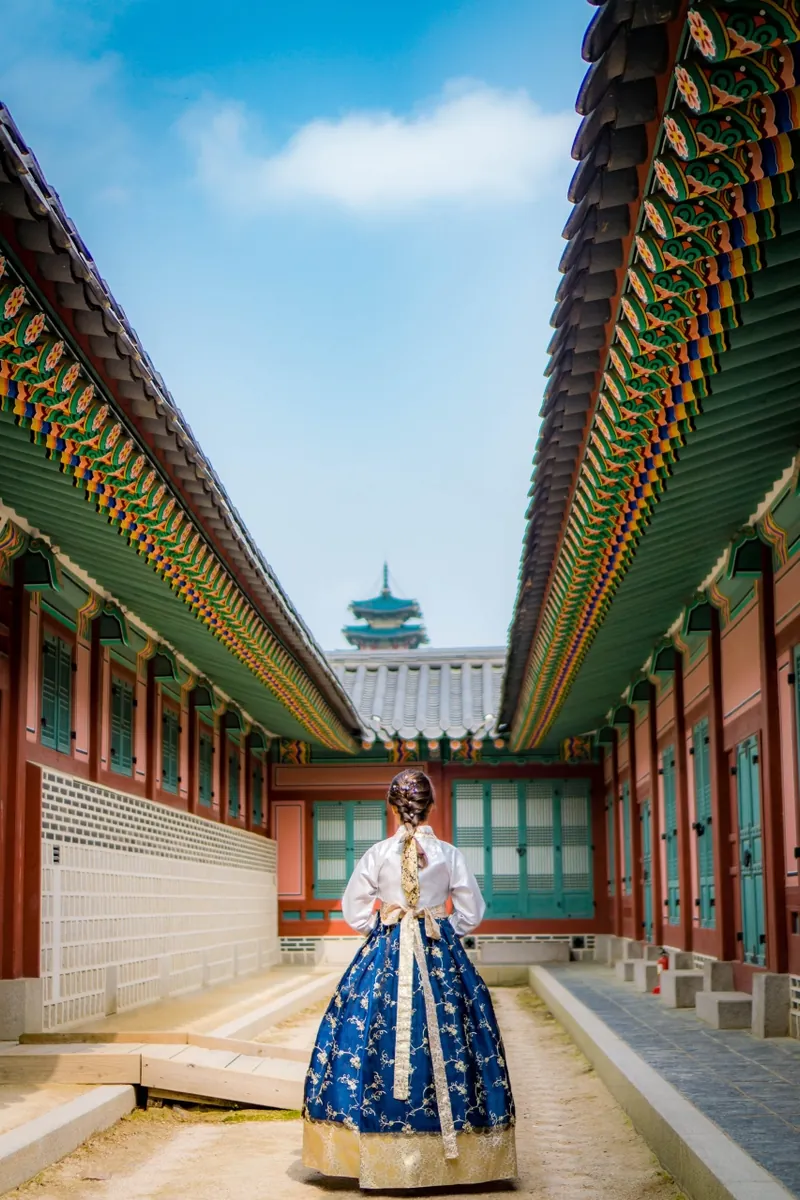
Tell staff immediately if a closure loosens, fabric pulls across the shoulder or the hem catches. Palace grounds include stone thresholds, stairs and broad courtyards, so a garment that works only while standing in front of a mirror is not ready. Make the adjustment while replacement pieces and experienced staff are within reach.
What should you wear underneath?
Choose a thin, smooth base layer suitable for the weather and easy changing. Bulky hoods, stiff collars or large pockets can distort the garment. In warm conditions, breathable layers help; in cold conditions, ask the shop about compatible outer layers rather than hiding the required jeogori under an unrelated coat at the admission gate.
Secure valuables in a small bag that the shop permits with the outfit. Large backpacks can pull at ribbons and crowd narrow interiors. If you carry camera equipment, use a strap that will not snag delicate decoration, and never pin, tape or alter rental fabric without explicit permission.
How much rental time should you allow?
Build the duration backward from the required return, not forward from your arrival. Allow a buffer for fitting, the walk to the gate, admission, the palace route, photographs and the return trip. If your itinerary includes Bukchon, a second palace or a meal, confirm that those distances and opening calendars fit before buying a longer package.
A focused visit can prioritize the principal gate, main throne-hall axis and one quieter courtyard without racing across every corner. The top things to do in Seoul guide helps decide whether the palace should stand alone or connect to another central-Seoul stop. We recommend fewer locations with a comfortable return buffer.
Create a late-return safety margin
Record the shop name, entrance photograph and map pin before leaving. Set two phone alarms: one for beginning the walk back and another before the actual deadline. Rain, queues, closed internal gates and photo stops can all slow a group. If a delay becomes likely, contact the shop using the method on the receipt rather than silently returning late.
Where and how should you take photos?
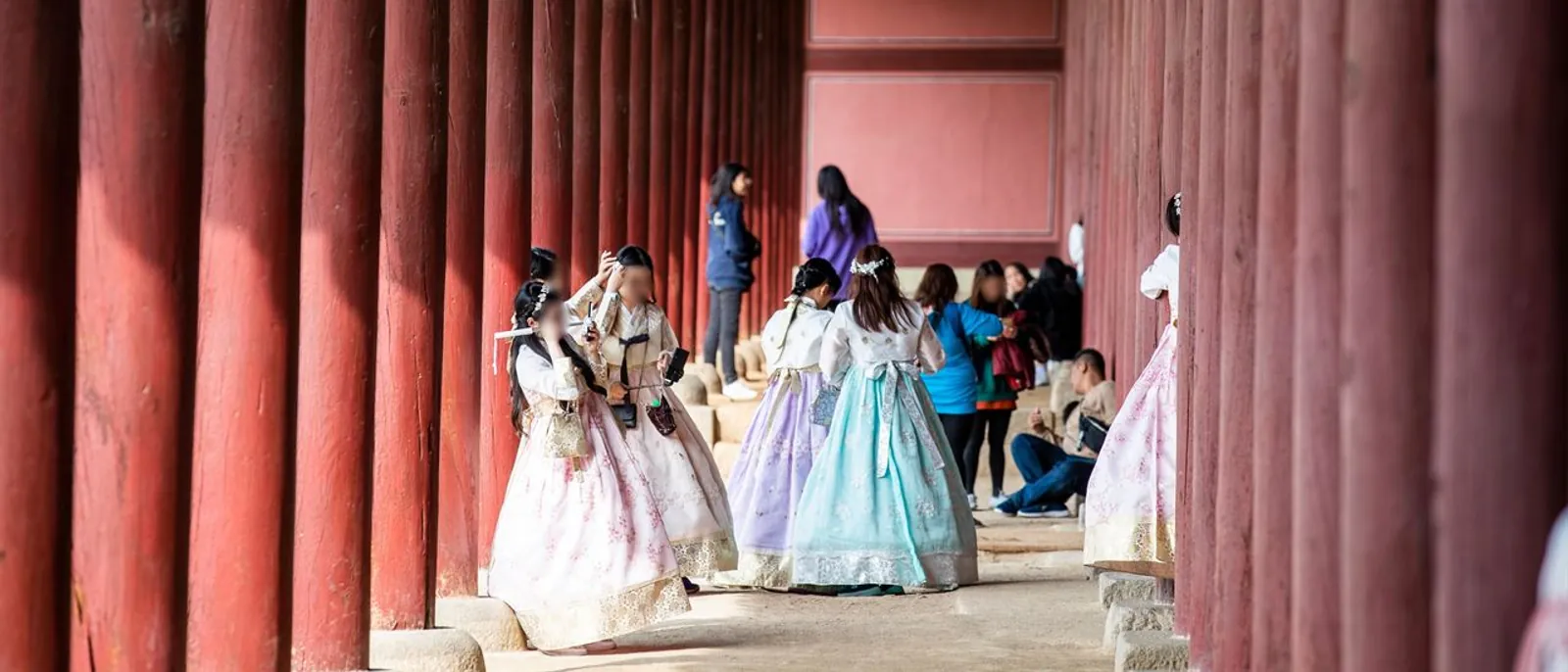
Start with wide architectural frames before hunting for a famous corner. Courtyard gates, painted eaves and colonnades give context to the clothing and distribute visitors more naturally than one congested doorway. Early in your palace visit, take the group photograph everyone wants; later pictures can be optional if the route or weather changes.
Do not block a gate, stair, accessibility route or ceremonial space. Avoid touching painted surfaces, climbing platforms or moving ropes for a clearer background. Ask before photographing strangers, especially children and other renters at close range. A hanbok is not consent to become part of another visitor's portrait or video.
Phone and tripod etiquette
Use a companion or handheld timer where it does not obstruct movement. Rules for tripods, commercial shoots and special equipment can differ from ordinary visitor photography, so check the palace's current notice if your setup goes beyond a phone or small camera. Staff instructions on site take priority over a pose plan.
Wind can lift wide skirts and loosen hair pieces. Face into a sheltered angle, hold the fabric only as the shop demonstrated and keep loose accessories away from water or restricted landscaping. If rain begins, protect the garment first and ask the shop how it expects wet items to be handled.
What changes by season and weather?
Seoul's heat, cold, rain and wind affect an outfit more than they affect a studio photograph. Check the official forecast on the morning of the rental. In hot weather, reduce unnecessary layers, carry water and plan shade breaks. In cold weather, ask about approved warm layers, hand protection and footwear before committing to a long outdoor route.
Wet stone can be slippery, and a saturated hem is uncomfortable and potentially damaging. A rainy-day plan can shorten the palace route, use covered colonnades where permitted and leave more time to return. Do not assume the shop will waive cleaning or damage terms because the forecast changed after booking.
Families and mobility needs
Children should be able to walk without stepping on fabric, and an adult should understand every fastening. For strollers, wheelchairs or limited stamina, review the palace's official access information and choose a simpler garment with a shorter route. The outfit should adapt to the visitor; the visitor should not be forced into an unsafe pace for the outfit.
A step-by-step Gyeongbokgung rental plan
Check the official palace calendar, weather and special notices.
Shortlist shops by size availability, package terms, walking distance and recent official business information.
Confirm the full price, inclusions, deadline, storage and damage policy before changing.
Select a complete hanbok that meets the current admission guidance.
Walk, sit and check the fastenings, hem and shoes inside the shop.
Save the shop location, receipt and return alarms.
Enter the palace with all required garments correctly worn.
Take priority photographs first, then follow a comfortable palace route.
Begin the return walk with a buffer and inspect all accessories before handover.
Collect stored belongings, deposit or identification before leaving.
Travelers staying across the river or far from Jongno should include the shop return in the accommodation decision. The where to stay in Seoul guide explains the tradeoff between central sightseeing access and other neighborhood priorities.
Frequently asked questions
Can foreigners wear hanbok at Gyeongbokgung?
Yes. The official palace guideline applies to visitors wearing a qualifying complete hanbok; it does not restrict the benefit by nationality. Wear the required upper and lower garments correctly and follow staff directions.
Does modern hanbok qualify for free palace entry?
The Korea Heritage Service guideline accepts modernized hanbok when it retains the complete required form: a properly fastened jeogori with the appropriate skirt or trousers. A partial costume may not qualify.
Should you reserve hanbok rental in advance?
Advance contact can help a group with specific sizes, styles or timing, but terms vary by shop. Confirm what a reservation guarantees, the cancellation rule and the final package rather than assuming every displayed garment is reserved.
Can you wear hanbok in rain or winter?
It is possible when the shop provides suitable pieces and the route remains safe, but confirm wet-weather and cold-weather options, footwear and damage terms. Shorten the outdoor plan when conditions require it.
Last verified: August 30, 2026 by the TipsKorea editorial team. Palace hours, closures, special-program rules and rental-shop terms can change; verify the official palace notice and the shop's current agreement before travel.
Sources & verification
We use official or primary references to check practical details. Confirm time-sensitive information directly before you book or travel.
- Korea Heritage Service — Free admission guidelines for hanbok wearersroyal.khs.go.kr
- Korea Heritage Service — Royal palace admission informationroyal.khs.go.kr
- Visit Seoul — Wear hanbok and visit the palacesenglish.visitseoul.net
- Visit Seoul — Official Gyeongbokgung visitor listingenglish.visitseoul.net
- VISITKOREA — Gyeongbokgung Palaceenglish.visitkorea.or.kr
- Korea Tourism Organization — TourAPI Photo Gallerydata.go.kr
Frequently Asked Questions
Can international visitors wear hanbok at Gyeongbokgung?
Yes. Official palace guidance focuses on whether a complete traditional or modernized hanbok is correctly worn, not the visitor's nationality. Follow the required garment form and staff directions.
Does modern hanbok qualify for free Gyeongbokgung entry?
It can qualify when it follows the complete official form: a properly fastened jeogori with a skirt or trousers as appropriate. Partial costume pieces may not qualify.
What should a hanbok rental package include?
Confirm the selected garments, underskirt or inner layer, accessories, storage, hair service, exact duration, late-return terms, damage policy and any deposit before paying.
What should you wear under a rental hanbok?
Use a thin, smooth base layer suited to the weather and easy changing. Ask the shop about compatible warm or rain layers so the complete required hanbok remains correctly worn.
Last verified: August 2026 · TipsKorea Editorial


