
A night in Jeonju is most rewarding when the room fits how you sleep and the schedule leaves time to enjoy the neighborhood. Start with the bed, bathroom and bag.
Two researched examples of different choices
| Option | Specific listing evidence | Where it fits | Confirm before paying |
|---|---|---|---|
| GaEunChae: Double Ondol Room | Two futon beds and a private bathroom in the Trip.com room listing | Floor-bedding option within the village | Exact room, entry instructions and luggage storage |
| Wangyijimil: Standard Double Room | One double bed and a private bathroom in the Trip.com room listing | Raised-bed example outside the village core | Building, transport and eligibility of every guest |
Examples checked on 21 October 2026, not personal inspections or live offers. Wangyijimil’s published child policy conflicts across sources; confirm directly before considering it for children.
Choose a Jeonju hanok stay by the exact room: decide on bedding, check the bathroom and plan your luggage before choosing a courtyard photograph.
Which Jeonju hanok stay fits your overnight plan?
Choose a room in the village when walking out into its lanes is the main reason to stay overnight. Consider a hanok-style hotel outside the core when a particular sleeping setup or hotel service matters more, and include the extra transport. Neither is automatically better: they provide different evenings, different arrivals and different ways to use the following morning.
Jeonju City’s visitor map is useful for checking the relationship between a candidate address, Gyeonggijeon and the main village streets. Do not mistake Jeonju Station for the village or assume that every property with “Hanok Village” in its search description sits inside it. Map the actual front door, then compare the trip from your arrival point with luggage.
An overnight stay should create time, not simply add a bed to a rushed day trip. We recommend protecting one relaxed evening and some time after breakfast. If you arrive very late and leave early, a standard hotel that fits the transport may serve you just as well. Our Jeonju day-trip guide helps you decide whether staying overnight changes the visit.
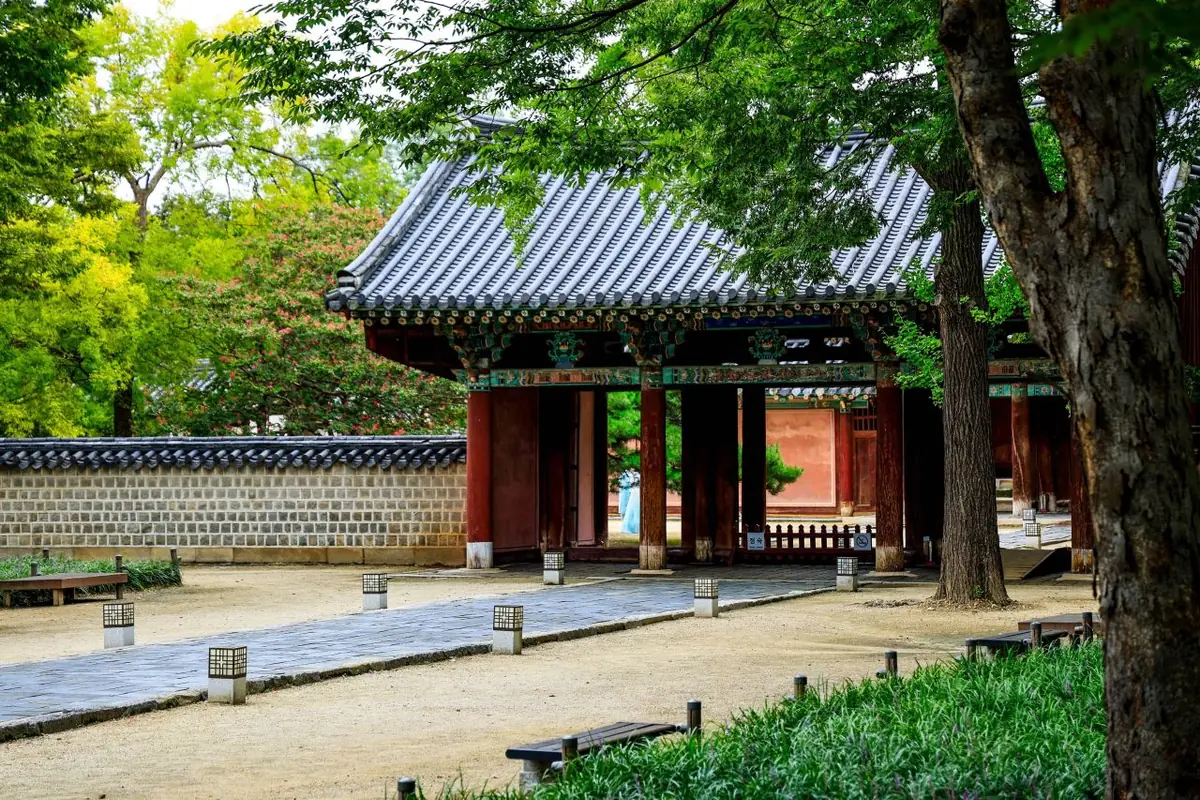
Gyeonggijeon can be the main cultural stop around which you arrange that first afternoon. Keep the village walk flexible, then return for the check-in time agreed with the host. A courtyard photo and a cultural-site photo show the neighborhood’s character; neither demonstrates the bed, bathroom or current condition of the room you will book.
Do you want ondol floor bedding or a raised bed?
Decide on the sleeping arrangement before you choose a room. Ondol refers to floor heating; it does not, by itself, settle whether you will sleep on floor bedding or on a raised bed. Read the bed description, inspect the images assigned to that room category and ask the property to explain any ambiguity. A generic building gallery is insufficient.
Floor bedding: check what happens when the room is set up
Floor bedding can be part of the experience you want. Consider whether everyone can get down to the bedding and stand up comfortably, and where bags will go once the sleeping space is laid out. Ask how many bedding sets the rate includes and whether extra sets cost more. Room capacity and the number of comfortable sleeping places should be confirmed together.
Do not infer mattress thickness, softness or extra padding from the word futon. If any of those would change your decision, request the current room photograph or a clear description from the host. For a multi-night stay, be realistic about your usual sleep needs rather than assuming that novelty will outweigh them. Choosing a bed is still a valid way to enjoy hanok architecture.
Raised beds: confirm the exact category
A double room can describe occupancy or a booking category rather than a Western-style double bed. Conversely, a listing containing “ondol” may include both floor space and a raised bed. Look for the actual bed type in the selected offer. Keep the room name in your confirmation so that a later conversation about the layout refers to the same category you paid for.
Is the bathroom private, and what does the courtyard booking include?
Confirm the bathroom and the courtyard separately. A private bathroom should be assigned to your booking, but you should also establish whether you reach it directly from inside the room. A courtyard-facing room may open onto an area used by other guests. “Hanok stay” is an architectural description, not a promise that the whole building is exclusively yours.
Ask whether there is a shower enclosure or a wet-room layout, where towels are provided and whether a bathtub is part of that exact room. If a step, threshold or outdoor crossing would be difficult, request a picture of the route from the entrance to the bed and bathroom. A ground-floor label alone cannot establish step-free access. Explain the practical requirement rather than relying on a broad accessibility tag.
The courtyard arrangement is worth understanding even when privacy is not your main concern. Doors, windows and shared paths determine where other guests may pass. An archival view of Pungnamheon below illustrates rooms around a common outdoor space; it is a different property from the two booking examples, and it does not establish today’s access rules or room facilities.
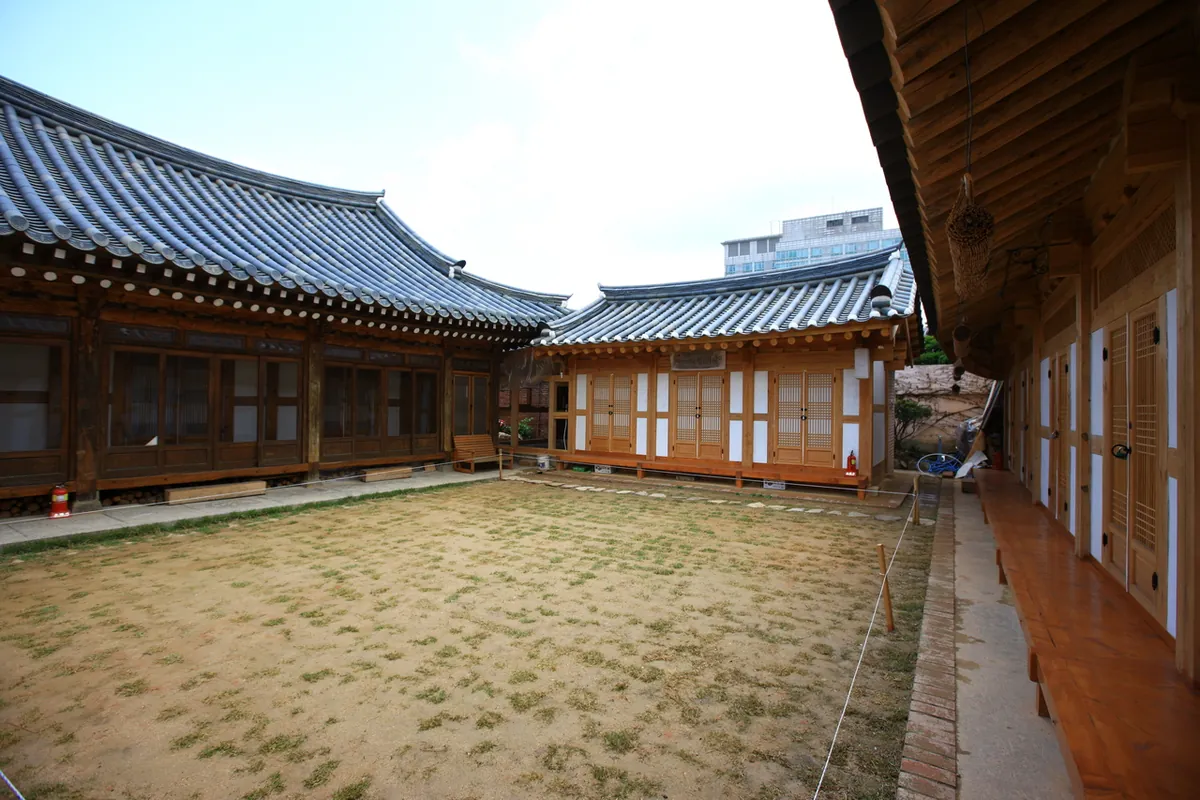
If you want a private whole-house stay, obtain written confirmation of which rooms and outside areas are exclusive to your group. Ask whether a host or another party occupies a separate wing and whether a common entrance remains shared. Do not pay a whole-house premium based on one empty courtyard photograph. A room reservation can be entirely suitable once its limits are clear.
GaEunChae: a village option for deliberate floor sleeping
GaEunChae is a useful researched example for travelers who want a village location and deliberately choose floor bedding. Its Trip.com listing identifies a Double Ondol Room with two futon beds and a private bathroom. Those are named-room details, not a description of every hanok in Jeonju or a guarantee that the room is available on your dates.
Korea Tourism Organization places the original GaEunChae at 68-13 Hanji-gil in Jeonju Hanok Village. GaEunChae 2 is a separate property, so match the original property and room when comparing booking channels. An address may appear in road-name or land-lot form; if the labels differ, check the map and confirmation rather than assuming that a similar name means the same entrance.
This example suits a reader who values the village setting more than a raised mattress. Before booking, ask about bedding preparation, luggage storage and the arrival process for that date. Do not assume that a compact guesthouse offers the same staffed reception or bag-drop routine as a larger hotel. The useful booking result is a clear room choice and an agreed arrival, not simply a low rate.
Wangyijimil: a raised-bed example outside the village core
Jeonju Wangyijimil Hanok Hotel illustrates a different choice: hanok-style surroundings with named raised-bed room categories outside the village core. Trip.com lists a Standard Double Room with one double bed and a private bathroom. Korea Tourism Organization also describes bed-equipped accommodation within the Wangui Jimil complex. Confirm the exact room and building; descriptions of one part of a complex should not be transferred to another.
Treat the location as a separate hotel base, not a room opening directly onto the village’s central lanes. Compare the trip to the village, your evening return and transport to the station. The listing includes luggage storage, but that does not establish its hours, supervision or acceptance of bags before check-in. Ask about the specific service you need rather than assuming that an amenity label answers every detail.
There is an important unresolved policy difference for families: the Trip.com page checked for this guide says children are not permitted, while the tourism description discusses family-oriented rooms. We therefore use this as an adult raised-bed example, not a family recommendation. Anyone traveling with a child should obtain current confirmation from the property and booking channel for the exact room before paying.
These two examples are a way to compare different needs, not a ranking of the best hanoks. We have not stayed in or inspected these rooms. Rates, available categories and policies can change; use the booking confirmation as the record of what you purchased, and resolve a contradictory description before choosing a non-refundable rate.
How will you handle luggage, check-in and the last few steps?
Plan the bag before the sightseeing. Ask whether the property accepts luggage before check-in and after check-out, where it is kept and when you can retrieve it. Establish the vehicle drop-off point separately from the postal address. A reservation can be perfectly valid while still leaving you with a difficult final walk if you arrive carrying more than you can comfortably manage.
A small overnight bag can simplify a one-night detour, but leave larger luggage elsewhere only under a confirmed storage arrangement. Do not assume that a Seoul hotel will hold bags across an unrelated stay or that a station locker will fit the case and be available. Keep essential medication, travel documents and valuables with you, and check the collection deadline before buying the return train.
Request arrival instructions before you board transport to Jeonju. Save the Korean property name, address, contact method and any access instructions offline. If arrival may be late, give the host your expected time and ask how changes should be communicated. A listed check-in range is not evidence that someone will wait indefinitely after a delayed train or a missed connection.
When parking matters, ask whether it is on-site, in a public lot or merely nearby. Confirm the walking route, payment process and any validation rather than assuming “parking” means free space at the gate. For a taxi, use the host’s recommended legal drop-off location. Do not ask a driver to force a vehicle through a lane because the room’s map pin sits farther inside.
Leave time for the stay: one evening and a slow morning
An overnight visit works best when you allow time to settle in and enjoy the neighborhood without a train deadline immediately ahead. After checking in, choose one meal and a short walk rather than another cross-city attraction. Ask about quiet hours and shared spaces, then use the following morning for a modest plan close enough to return for bags on time.
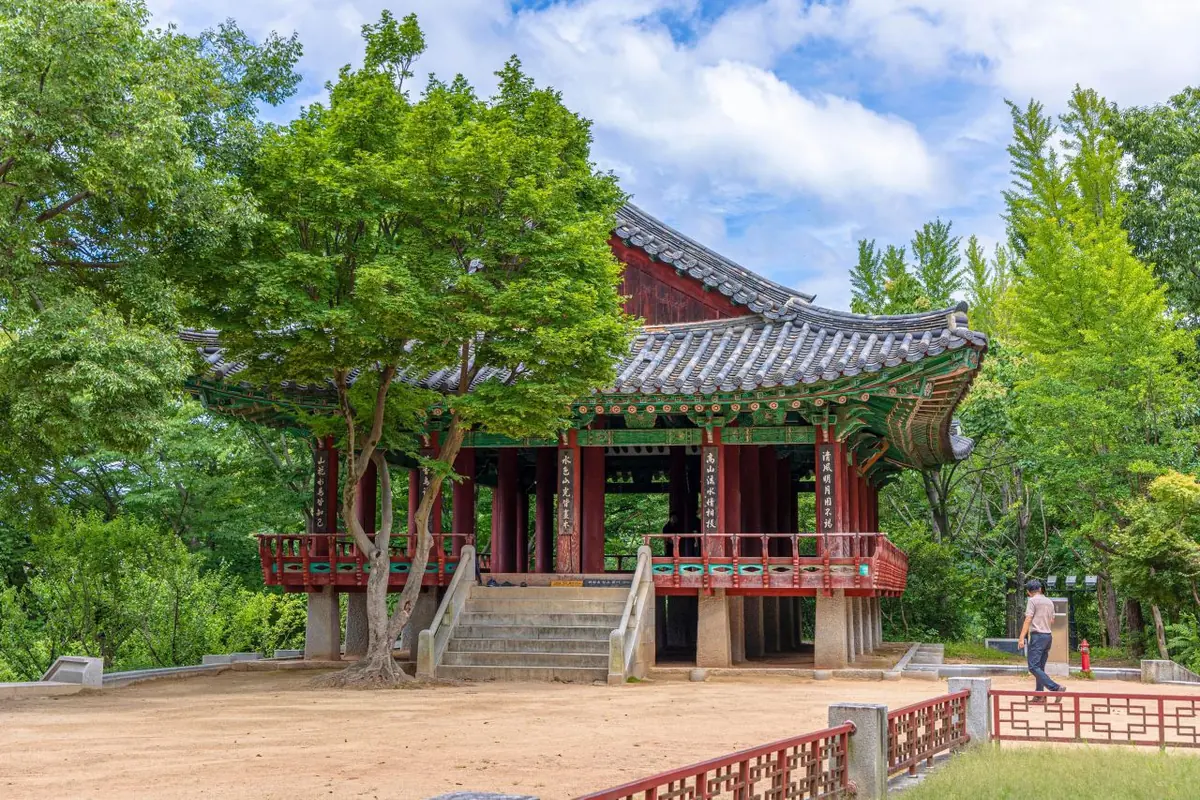
Omokdae can be an optional pavilion stop for travelers comfortable with the approach and steps. It should not become a compulsory dawn climb or a reason to rush a companion. A flatter village stroll or a seated breakfast is an equally sensible way to use the extra morning. Choose the version that fits the weather and the people actually taking the trip.
Treat the property as a place where other people are sleeping. Follow the host’s directions about shoes, food, photography and courtyard use, and keep voices low when returning at night. Do not enter another room or open a private gate to take a photograph. Our Korean etiquette guide provides context, but the accommodation’s own rules should guide your stay.
Before departure, settle any outstanding charges and collect luggage within the agreed window. Preserve a margin for the station transfer rather than scheduling a final activity up to the train’s departure time. If Jeonju is part of a wider trip, the seven-day Korea itinerary helps you decide what to remove elsewhere so the overnight detour does not compress every following day.
What should you ask the host before paying?
Send one clear message covering the conditions that would change your choice. Include the dates, total guests and ages of any children, then name the exact room. Avoid a vague question such as whether the accommodation is comfortable or family-friendly. Specific questions produce answers you can compare with the listing and retain alongside the reservation.
Does this room contain raised beds or floor bedding, and how many sleeping places are included?
Is the bathroom private and reached from inside the room, and is there a step or threshold?
Which courtyard or living areas are shared with other guests?
Can you store our bags at our intended arrival and departure times?
Where should a taxi stop, and are there steps between that point and the room?
How should we check in if our arrival changes, and how can we contact you?
Then compare the total for the exact party, including extra bedding, meals, parking and transport where relevant. Read the cancellation deadline and any deposit conditions. The facts and room descriptions in this guide were checked on 21 October 2026; unconfirmed services remain questions for the host. Book only when the sleeping setup, privacy and arrival plan are clear enough for you to rely on.
Frequently Asked Questions
Does an ondol room always mean sleeping on the floor?
No. Ondol describes floor heating, and booking names can combine it with different bedding arrangements. Read the selected room’s bed description and ask for clarification. GaEunChae’s Double Ondol Room is specifically listed with two futon beds.
Can I book a hanok in Jeonju with a private bathroom?
Yes, private bathrooms are listed for the two named room examples in this guide. Verify the exact offer and whether the bathroom is entered from inside the room. Do not assume that a private bathroom also includes a bathtub.
Is Wangyijimil suitable for a stay with children?
We could not resolve that from the published descriptions: Trip.com states children are not permitted, while a KTO record discusses family rooms. Confirm the exact guests and room directly with the property and booking channel before considering it for children.
Is one night in Jeonju enough for a hanok stay?
One night can work when you arrive with time to check in, have dinner and enjoy some of the next morning. If you will arrive very late and leave early, compare a day trip or a conventional hotel that better fits your transport.
Last verified: October 2026 · TipsKorea Editorial


