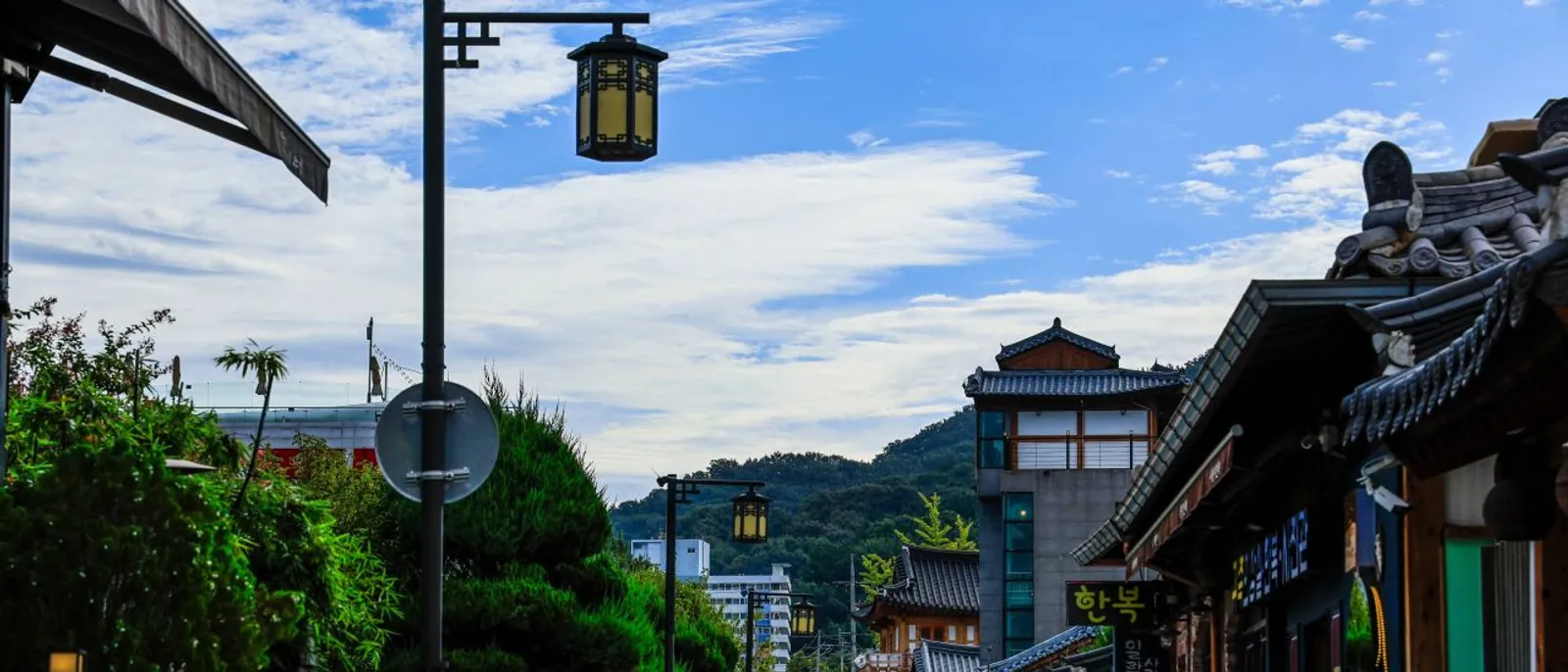
Jeonju works as a day trip when rail is booked first and the sightseeing stays inside one walkable historic core. The train is the clock; Hanok Village provides the route.
A flexible day at a glance
| Option | Primary plan | Optional addition | Remove first if delayed |
|---|---|---|---|
| Morning | Transfer to Hanok Village and Gyeonggijeon | Official guided walk if timing matches | Cafe stop |
| Midday | Jeondong area, lanes and local lunch | One craft or culture facility | Second snack queue |
| Afternoon | Omokdae viewpoint or flat village loop | Nambu Market area | Distant district |
Check the return journey throughout the afternoon. The correct last stop is the one that preserves your confirmed train.
This Jeonju day trip from Seoul uses the confirmed train as its boundary and keeps the city route inside one coherent historic core.
Is Jeonju a realistic day trip from Seoul?
Yes, when you obtain a useful outbound and return train and accept a selective day. Jeonju is far enough from Seoul that this is not a spontaneous suburban excursion. The official Hanok Village directions identify rail from Yongsan to Jeonju as a principal approach, followed by local transport. Check the exact date, train, fare and seat through KORAIL; do not plan around a duration copied from an old article.
A day trip works best for travelers who want Hanok Village, one major historic site and an introduction to Jeonju food. It works poorly for anyone who wants several outlying districts, a late evening or a slow hotel experience. In those cases, stay overnight. The city's identity deserves more time, and one night removes the pressure of the return reservation.
The official village information describes a central area with more than 700 hanoks and about 20 cultural facilities. That density makes the day possible but also creates choice overload. The right goal is not entering every building. Use the official map to identify one historic anchor, one craft or cultural interest and a meal, then let the streets connect them.
How should you book the Seoul–Jeonju train?
Reserve the return before adding attractions
Search official KORAIL channels for Yongsan to Jeonju on your exact date. Compare departures by arrival usefulness, not only the shortest journey. Then reserve a return that leaves a station buffer after your planned final bus or taxi. Holiday and weekend demand can reduce choice. Never buy through an unverified link or assume an unreserved seat will appear because a weekday looks quiet.
Save the train number, station, departure time and booking credential offline. Yongsan and Seoul Station are different rail stations; go to the one shown on the ticket. Arrive according to current operator guidance and check the platform display. Our Seoul-to-Busan train guide explains general KORAIL habits, but your Jeonju ticket and live display control this journey.
At Jeonju Station, pause before leaving. Confirm the live local route to Hanok Village and note where you will return. A city bus can be economical; a taxi can simplify the transfer for a group or save walking with limited time. Traffic changes the result. Do not begin the day with an exact minute-by-minute promise.
What is the best morning route in Hanok Village?
Begin at Gyeonggijeon when its current access and your arrival align. The site provides a historical center to the day and helps explain why Jeonju's royal and Joseon-era associations matter. Read the on-site interpretation, stay on public routes and check photography restrictions. Indoor rooms, exhibitions and special areas can observe different controls from the outer grounds.
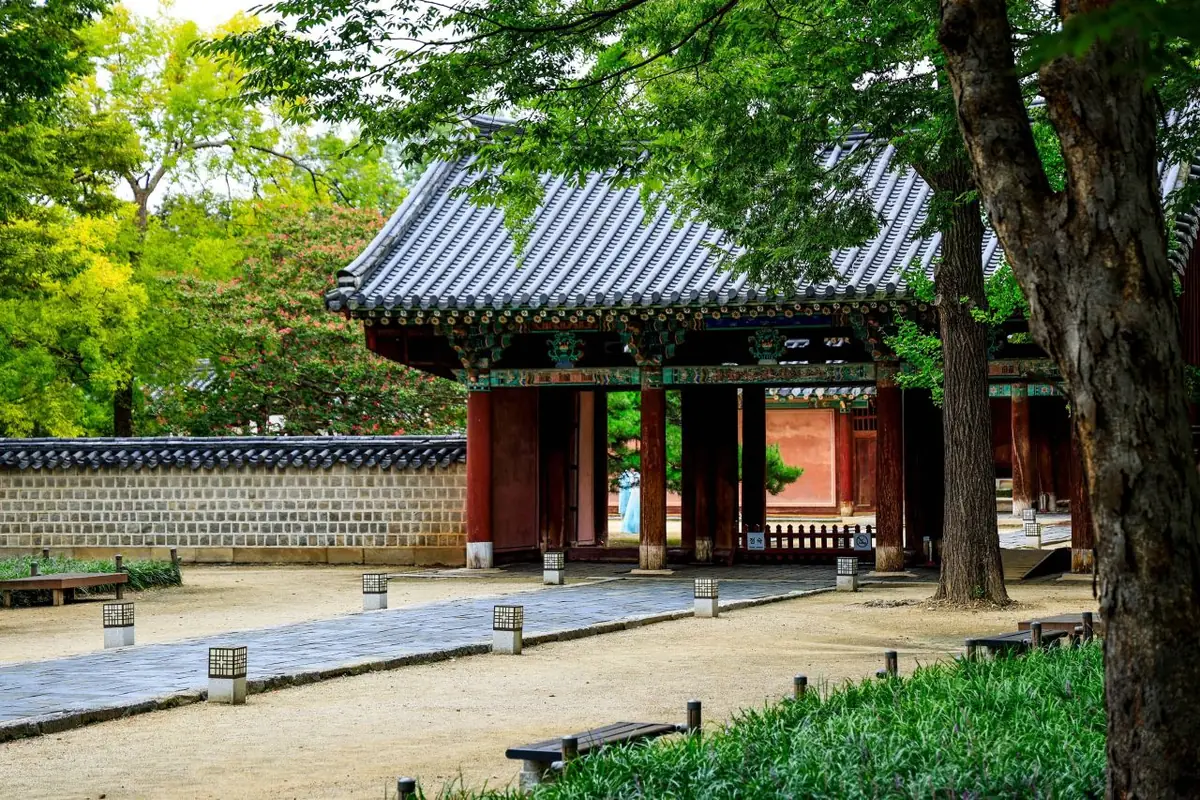
From Gyeonggijeon, move toward the Jeondong Cathedral area and surrounding hanok streets. Treat the cathedral as an active religious site. Public exterior viewing does not guarantee tourist access during worship, events or maintenance. Dress and behave respectfully, keep voices low and follow any posted photography guidance. If access is limited, the urban relationship between the cathedral, shrine and village remains visible from public space.
The official village tour page lists guided walks, including language-specific options on current schedules. Use a guided tour if its date and time fit naturally; do not distort the whole day around an old published hour. Confirm the meeting point and language through the official page shortly before travel. A tour adds context but is not required for a thoughtful visit.
What should you eat in Jeonju?
Jeonju bibimbap is the obvious first dish, but approach it as a regional style rather than a single compulsory restaurant. The bowl brings rice, vegetables and other toppings together, with recipe and presentation varying by venue. Read the menu for meat, egg and seasoning. Vegetarian travelers should ask about broth, garnish and sauce rather than removing one visible ingredient after preparation.
Choose lunch near the walking route and reserve enough time to sit. A famous queue is not worth losing the principal site or return buffer. Save two current restaurants in the same area, check their own closing information and choose based on the day. Jeonju also has soups, noodles, bean-sprout dishes, rice wine traditions, market food and sweets; one day needs only one main meal and perhaps one snack.
If ordering a set, confirm portion, price and included dishes first. Travelers with allergies should carry a Korean card and ask about sesame, soy, egg, seafood and shared equipment as relevant. Do not interpret a tourism reputation as a guarantee for individual dietary needs. The practical preparation in our Korea travel essentials guide supports communication and payment.
Which afternoon stop should you add?
Choose one of three shapes. For a viewpoint, walk toward Omokdae only if weather, stairs and the group's mobility make the climb appropriate. For culture, choose one currently open museum, craft center or workshop from the official village map. For food and everyday city atmosphere, continue toward the Nambu Market area under its current operating pattern. Each option adds a different value; combining all three makes the return stressful.
A craft experience may require reservation and a fixed duration. Verify before arriving. A museum can close on a weekly schedule or for maintenance. A viewpoint loses value in heavy rain or poor visibility. Keep the category flexible until the morning of the trip. If one option fails, walk the public lanes slowly instead of crossing Jeonju for a replacement.
Hanbok rental is available through private businesses, but it is not necessary for understanding the village. If you rent, confirm price, duration, deposit, changing facilities, return deadline and damage terms. Wear footwear safe for stone streets and do not enter restricted property for photographs. The village is a living district, not an unrestricted studio.
How do you walk the village respectfully?
Stay on public lanes, respect homes and businesses, and keep noise low near residences. Do not photograph through windows, block narrow alleys or treat a private gate as a prop. Historic roofs and walls are vulnerable; never climb or lean equipment on them. Dispose of rubbish properly and use public toilets or facilities shown on the official map.
The stone and sloped streets can be tiring. Travelers with limited mobility should ask the visitor information service about current accessible routes, entrances and toilets. A broad district being described as walkable does not mean every viewpoint or traditional building is step-free. Choose Gyeonggijeon, flatter lanes and one accessible facility instead of forcing the standard uphill loop.
How should bad weather change the day?
In rain, reduce the outdoor lane circuit and choose one verified indoor cultural facility. Traditional eaves do not provide continuous shelter, and stone can become slippery. In strong heat, begin the principal site earlier, take a long indoor lunch and keep the afternoon compact. Snow or severe conditions can affect rail and local transport; follow operator notices and be willing to postpone.
Do not respond to delay by removing the station buffer. Remove Omokdae, the workshop or the market extension first. A day trip is successful when the core experience fits safely between the trains. If disruption threatens the return, contact KORAIL through official channels and travel toward Jeonju Station rather than waiting for the situation to fix itself.
When should you stay overnight instead?
Stay overnight if you want a hanok accommodation experience, evening streets, multiple museums, a long food exploration or a regional temple and countryside extension. One night also lets you use a less aggressive train schedule. Compare the value with other choices in our best Seoul day trips guide; Jeonju is the better choice when culture and food justify the longer rail commitment.
A one-day visitor should leave wanting more rather than exhausted by completionism. Gyeonggijeon provides history, the lanes provide texture, lunch provides regional flavor and one optional stop provides personal focus. Everything else can become the reason to return.
A final return-to-Seoul checklist
Check the live route to Jeonju Station before the final attraction. Retrieve any stored bag, confirm the correct rail station, and leave a buffer for traffic and platform navigation. Keep the ticket and identification ready. Buy food only if the queue cannot threaten boarding, and follow train rules for eating and luggage.
On arrival in Seoul, confirm the last connection to your hotel rather than assuming the subway runs indefinitely. A day trip extends beyond the intercity train. When the full chain is planned, Jeonju offers a meaningful change of scale: royal history, dense hanok streets and a food culture distinct from the capital, all within a deliberately limited route.
Last verified: August 30, 2026. We checked Jeonju City's official English village information and directions; verify KORAIL schedules, site access and guided tours for your date.
Sources & verification
We use official or primary references to check practical details. Confirm time-sensitive information directly before you book or travel.
Frequently Asked Questions
Can Jeonju be visited as a day trip from Seoul?
Yes, when you reserve useful outbound and return trains and keep the visit centered on Hanok Village. Stay overnight for multiple districts or a slower evening.
Which Seoul station has trains to Jeonju?
Jeonju's official directions identify Yongsan as the Seoul rail origin. Your KORAIL ticket and current schedule are authoritative, so check the exact station before travel.
Is Jeonju Station inside Hanok Village?
No. Plan a current local bus or taxi connection between the station and the village, and protect the same transfer buffer for the return.
What are the essential Jeonju stops in one day?
Use Gyeonggijeon as the historic anchor, walk the Jeondong and hanok lanes, eat one local meal, and add only one viewpoint, cultural facility or market extension.
Last verified: August 2026 · TipsKorea Editorial


