
Jinju has confirmed a sixteen-day 2026 festival and nightly lantern hours. This guide turns those facts into a low-backtracking river route without borrowing an old program or price.
Jinju Lantern Festival 2026 runs October 3–18 around Jinju Fortress and the Namgang River, with official lantern lighting listed from 18:00 to 24:00.
When is Jinju Namgang Lantern Festival 2026?
Confirmed dates and nightly hours
The official festival site confirms October 3–18, 2026. It also lists lantern lighting from 18:00 to 24:00 and operating hours of 13:00–23:00 for temporary bridges and festival booths. Those are different windows: the site can be active before the lights come on, and some facilities may close before the river display ends. Treat the current official notice as the authority for access, weather changes and individual program times. A general listing cannot tell you whether a specific bridge, performance or activity is available on your date.
Sixteen festival days offer flexibility, but weekends and opening or closing nights may attract more visitors. We do not publish an unsupported crowd forecast. Choose dates from your route, accommodation and the official daily program, then arrive with time before 18:00. Daylight orientation helps you recognize riverbanks, entrances and return routes before the visual focus shifts to the water. If rain or wind affects an outdoor program, follow the organizer's notice rather than assuming every illuminated installation operates unchanged.
Why are lanterns important in Jinju?
The fortress history behind the lights
The official history connects Jinju's lantern tradition to the 1592 Battle of Jinjuseong during the Imjin War. Lanterns on the Namgang were used for military signals and as a means of communication with families beyond the fortress. The festival also remembers the second battle in 1593 and those who died. That origin changes how the river should be read: the displays are visually inviting, but they sit within a landscape of defense, communication, loss and remembrance rather than functioning only as contemporary decoration.
Begin with Jinju Fortress or an official historical introduction before dark. Look across the river from the walls and notice how water, elevation and sightlines relate. Once the lanterns illuminate, the same geography becomes easier to understand. We recommend describing the historical link carefully, without implying that every modern lantern recreates a specific sixteenth-century object. The current festival uses creative installations and international themes while drawing its name and identity from the earlier yudeung, or floating-lantern, story.
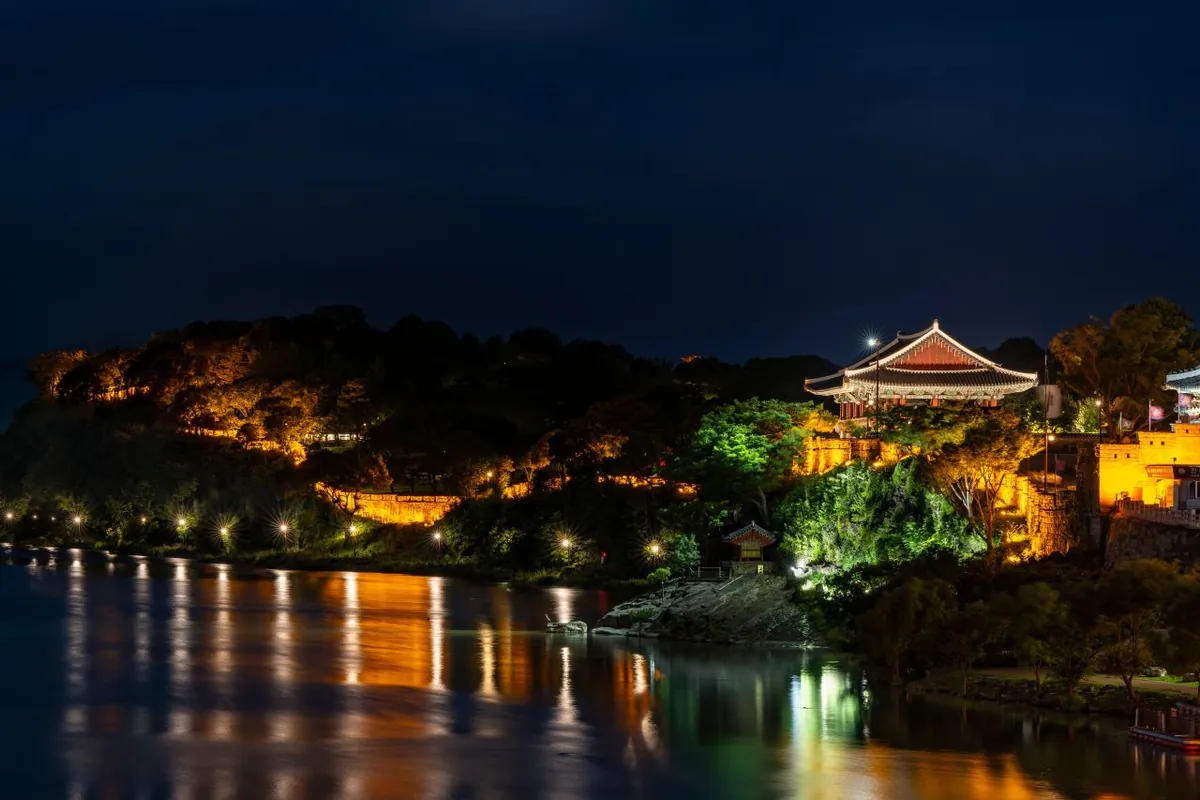
Where should you start the festival route?
Orient yourself at Jinju Fortress
Jinju Fortress is the strongest starting point because it supplies historical context and elevated views. Arrive in the late afternoon, confirm any admission or event-zone rule and walk only the portion that matches your mobility and remaining daylight. The fortress complex is not a five-minute photo stop. Paths, gates and viewpoints take time, and temporary festival circulation can differ from an ordinary day. Save the official site map and identify your intended exit before the evening crowd builds.
After the fortress, move toward the riverfront and choose one crossing only when the current site map confirms it. Temporary festival bridges can be useful, but their entrances, pricing or capacity should never be guessed from a prior-year article. If a bridge queue is long, continue along one bank and enjoy the installation from a wider angle. The objective is not to cross every structure; it is to create a clear loop that ends near your transport or accommodation.
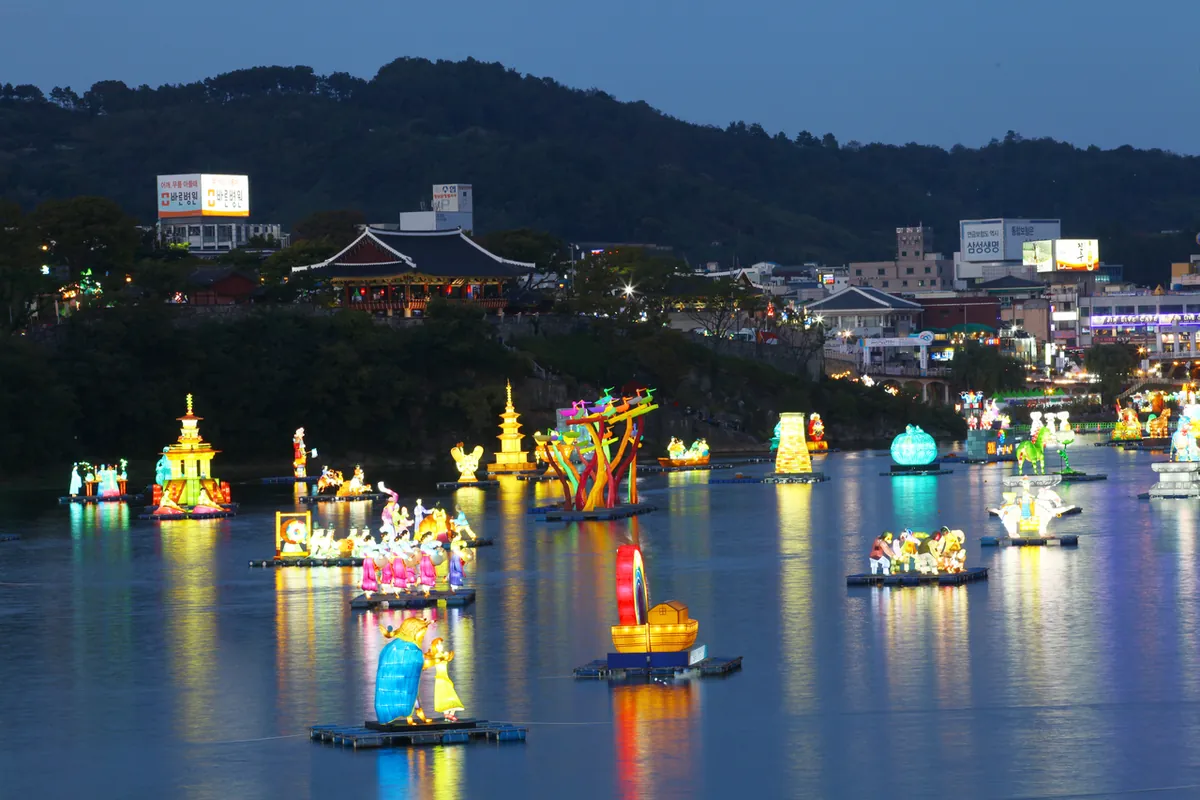
What is the best time to see the lanterns?
Use the transition from daylight to night
Aim to be in the core area before 18:00. You will have enough light to read directional signs, locate facilities and understand the fortress-river relationship. When the official lighting period begins, remain at one broad viewpoint for the first transition rather than walking through a bottleneck. Later, explore close details after the initial movement disperses. The best photographic light cannot be guaranteed; cloud, rain and haze alter the scene. A flexible viewpoint matters more than a promised sunset color.
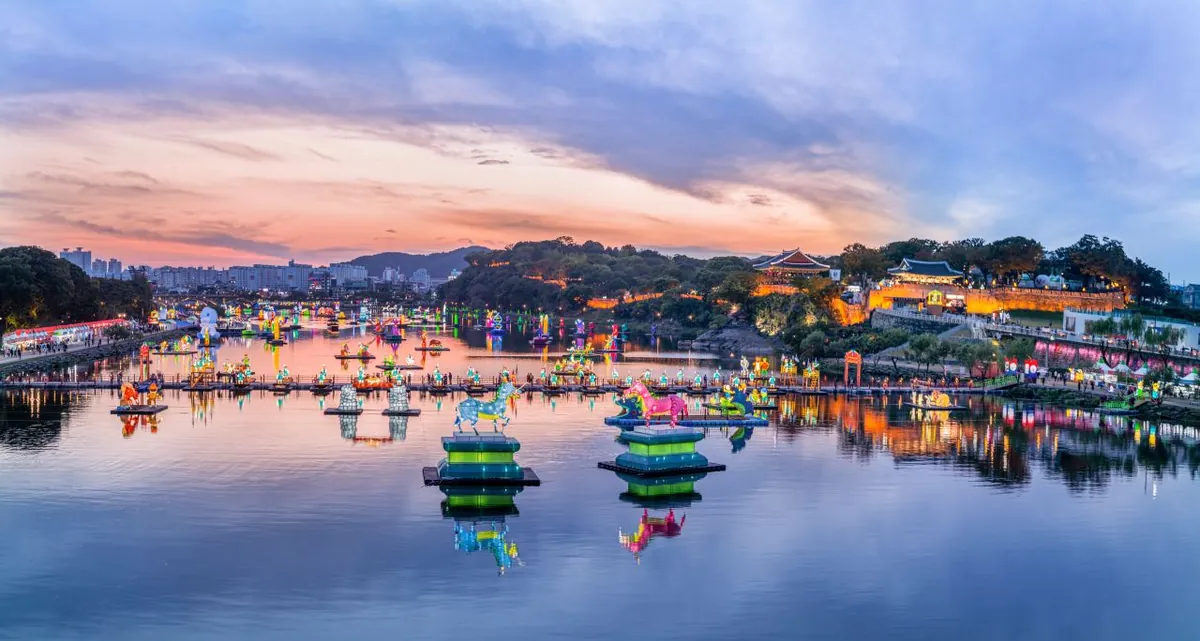
The listed midnight lighting finish does not mean every activity, shop or transport option runs until midnight. Festival booths and temporary bridges are listed only until 23:00, and individual services can follow shorter schedules. Decide your return before the final hour. If staying in Jinju, walk back by a route you already saw in daylight. If leaving that night, protect the bus or train with a generous buffer and do not make a final viewpoint depend on catching the last departure.
How should you get to Jinju?
Build the trip around the final local connection
Jinju can be reached by intercity rail or bus, but the best option depends on origin, date and where you will sleep. Search the exact service through its official operator, then map the station or terminal to the festival entrance. The intercity arrival point is not the riverbank. A route that looks short on a regional map can still require a city bus, taxi and event-zone walk. Save the venue name in Korean and allow extra time for temporary road controls.
A same-day visit from Busan can be feasible when a confirmed return leaves a comfortable margin, but the evening is the main experience. Our three-day Busan itinerary is designed for Busan itself; remove one complete day rather than inserting Jinju into an already full market-and-beach schedule. Travelers on a broader route can use our seven-day South Korea itinerary for sequencing, then replace generic travel blocks with current Jinju transport.
Should you stay overnight in Jinju?
We recommend one night for most international visitors. It removes pressure to abandon the river when the atmosphere is strongest, allows dinner away from the tightest queue and makes bad weather less destructive. Choose accommodation by the verified route from the festival area, not by city-center wording alone. Ask whether late check-in is available and note the final bus or likely taxi pickup area. A room near the terminal can simplify departure; a room near the river can simplify the festival evening.
A day trip can still work if you choose one river loop, arrive before dark and reserve the return in advance. Set a nonnegotiable departure time and keep the final viewpoint on the same side as your exit. Do not plan a long dinner, lantern-making activity and fortress walk after 20:00. With limited time, the strongest sequence is context before dark, one complete river route after lighting and a controlled return.
How can you photograph the festival responsibly?
Protect access and other visitors' view
Tripods, drones, flash and commercial equipment can have restrictions that vary by zone. Use only what the current festival and local rules allow. Never plant a tripod in a narrow crossing, lean over a barrier or stop in the center of a moving crowd. Lower the screen brightness, avoid repeated flash and take turns at railings. A wider river view often communicates the festival better than a close image that removes the fortress and water from the story.
Photograph installations and public performances without assuming every attendee consents to become a portrait subject. Ask before focusing on a recognizable person, especially a child. Do not touch floating lanterns, enter controlled river edges or bypass a closure for a clearer angle. The KTO archive image in this guide shows an earlier edition and illustrates the setting; it does not promise that a particular dragon, bridge or layout will appear in 2026.
What should you eat and carry?
Eat before the busiest lighting hour or after completing your main loop. Festival stalls are useful, but menus, payment methods and queues differ, so keep a nearby restaurant backup and confirm its current hours. Travelers with allergies should carry a Korean explanation and ask about broths, sauces and shared cooking surfaces. Bring a charged phone, compact power bank, light rain protection and a layer for the river after dark. Our Korea travel essentials guide covers countrywide payment and connectivity setup.
Wear shoes suitable for stone, slopes and sustained walking. The fortress and riverbanks create more distance than a panorama suggests. Carry only a small bag, retain enough battery for the route home and download the festival map in case mobile service slows in a dense crowd. If the organizer issues a safety direction, weather closure or one-way route, follow it even when it changes your planned photograph.
What should you verify on the day?
The official weather, closure and crowd-control notice for your date.
The active entrances, temporary bridge status and any required ticket or reservation.
The day's performance and activity timetable rather than a prior-year program.
Your final train, bus or hotel route, including time beyond the festival boundary.
Photography and equipment rules for each performance or controlled zone.
Restaurant hours and a backup meal outside the busiest riverfront strip.
The best Jinju night combines three views: the fortress as history, the river as communication landscape and the modern lanterns as an evolving public festival. Arriving before dusk lets those layers connect. Stay selective, follow current access guidance and leave enough time for the river to become more than a backdrop.
Last verified: August 30, 2026, by the TipsKorea editorial team against the official Jinju Namgang Yudeung Festival site. Recheck daily programs, bridge access and weather notices immediately before travel.
Frequently Asked Questions
What are the Jinju Namgang Lantern Festival 2026 dates?
The official festival site confirms October 3–18, 2026 around Jinju Fortress and the Namgang River.
What time do the Jinju lanterns turn on?
The official site lists lantern lighting from 18:00 to 24:00. Temporary bridges and festival booths are listed for 13:00–23:00, so individual facility hours differ.
Is Jinju lantern festival a day trip from Busan?
It can be when a confirmed return provides a generous margin, but one night is less rushed because the main experience begins after dark. Map the final local connection before booking.
Is the 2026 Jinju festival program final?
The dates, theme and broad hours were confirmed at verification. Check the official daily program and notices for specific performances, bridge access, admission and weather changes.
Last verified: August 2026 · TipsKorea Editorial


