
Korea's entry process is manageable once you separate three different questions: whether you need a visa, whether K-ETA applies to your visa-free trip, and whether you must submit an arrival card. This guide turns the official rules into a practical decision path without guessing from nationality alone.
Which official document path should you check?
| Option | Your status | First official check | Planning path |
|---|---|---|---|
| Possible visa route | You may need a visa | Korea Visa Portal Visa Navigator | Match passport, purpose and stay length; follow the listed visa and mission instructions |
| Possible visa-free route | You may be eligible for visa-free entry | Visa Navigator, then official K-ETA portal | Check whether K-ETA is required, temporarily exempted or already valid for your trip |
| Temporary K-ETA exemption | The official portal confirms you are temporarily exempt | Official K-ETA exemption check | Travel without K-ETA only if confirmed; submit an arrival card unless separately exempt |
| Existing valid status | You hold a valid K-ETA or residence status | Official e-Arrival Card Navigator | Confirm whether your current status exempts you from the arrival declaration |
This table identifies the next official check; it does not determine visa or entry eligibility.
South Korea entry requirements 2026 depend on your passport, purpose, stay length and entry status.
What determines your entry requirements?
There is no reliable one-line answer for every traveler. Your passport or travel document, the reason for the visit, the intended length of stay and any current Korean visa, K-ETA or residence status all matter. A short holiday and a work assignment are not the same case. Neither are a fresh tourist arrival and a resident returning with valid status. Start with those facts before searching for a form.
Use a four-question decision check
Which passport or travel document will you present at check-in and immigration?
What is the real purpose of the visit: tourism, business, study, work, family, transit or something else?
How long do you intend to stay, and are you entering once or under an existing status?
Do you already hold a valid Korean visa, K-ETA, residence card or another approval relevant to this arrival?
Enter those answers in the official Korea Visa Portal Visa Navigator, then read the instructions for the result rather than stopping at the category name. If an application or supporting-document question remains, confirm it with the Korean embassy or consulate responsible for your application. An airline may also check travel documents before boarding, but its check does not replace the government's decision about admission.
This is why we do not publish a nationality-by-nationality verdict here. Lists change, conditions can be narrower than a headline suggests, and travelers who share a passport may still have different purposes or status. Use this guide to identify the right official check, not as a substitute for it.
Do you need a visa, K-ETA or e-Arrival Card?
Visa: permission tied to passport and purpose
A traveler who is not eligible for visa-free entry needs the appropriate visa before travel. The Visa Navigator lets you filter by country or region, purpose and stay length, then points toward the relevant category and process. Tourism is only one category; employment, study, journalism, medical travel and family visits can follow different rules. Do not use a tourist checklist to authorize an activity that needs another status.
Visa-free eligibility also has conditions and a permitted stay that can vary by passport. A visa-free result does not mean unlimited entry, unlimited stay or permission to work. Read the current official result for your passport and purpose, and keep the departure or onward plan that supports the trip you described.
K-ETA: authorization for an eligible visa-free journey
K-ETA, the Korea Electronic Travel Authorization, is not a visa and does not create visa-free eligibility. It sits after the visa question: first establish that your passport and trip can use an eligible visa-free route, then check whether K-ETA is required for that route. Approval also does not guarantee admission; the immigration officer at the port of entry makes the final decision.
For 2026, the Ministry of Justice extended the temporary K-ETA exemption for countries and regions that were already subject to the exemption. The official period runs from January 1 through December 31, 2026, Korea Standard Time. The safest confirmation is the official K-ETA portal's passport scan: travelers covered by the exemption receive a pop-up after scanning the passport information page. Do not infer your status from a friend's trip or an old country list.
e-Arrival Card: a free declaration, not entry permission
The Korea e-Arrival Card is the electronic arrival declaration. It does not replace a visa or K-ETA and does not decide whether you may travel. Foreign nationals who are required to submit an arrival declaration should use the official website before immigration inspection.
Do not plan on completing a paper arrival card in 2026. The Ministry of Justice described the choice between paper and electronic filing as a transition available only through the end of 2025, and current 2026 diplomatic guidance says the e-Arrival Card replaces the old paper form. This change does not remove the official exemptions for valid K-ETA holders, registered foreign residents and the other limited categories shown by the Navigator.
Common exemptions include registered residents in Korea and travelers holding a valid K-ETA. The official notice lists additional limited categories, including certain group and transit cases and airline crew. Because those categories are specific, use the e-Arrival Card Navigator to check what applies to the documents you will actually hold on arrival.
How should K-ETA-exempt travelers choose in 2026?
If the official portal confirms that you are temporarily exempt, you have two planning paths. You can use the exemption and travel without a K-ETA, then submit an arrival declaration if the e-Arrival Card Navigator says you must. Or you can voluntarily apply for K-ETA, pay the official fee and, once approved and valid, receive the benefit of not having to submit an arrival card.
Choose for convenience, not eligibility
A voluntary K-ETA does not turn an ineligible trip into a visa-free trip, extend a permitted stay or authorize a different purpose. It is mainly a convenience choice for a traveler who has already confirmed an eligible visa-free route. The Ministry of Justice also states that the application fee is non-refundable. If you already hold a K-ETA, check the recorded expiry rather than applying again simply because the exemption was extended.
For one straightforward trip, the free e-Arrival Card may be the simpler path if you are confirmed as K-ETA-exempt and otherwise required to declare. A frequent traveler may value the arrival-card exemption attached to a valid K-ETA. Either way, base the decision on the official result shown for your passport, not on a generic recommendation.
How do you complete the official e-Arrival Card?
Go directly to the Ministry of Justice e-Arrival Card portal. It is an official Korean e-government website, requires no fee and accepts an individual submission for one to nine travelers. The separate group service is intended for groups or travel agencies. For an ordinary solo, couple or family trip, the individual route is usually the relevant starting point.
Prepare the details for the exact filing window
An email address you can access for verification and later lookup
The valid passport you will present on arrival
Arrival flight or ship details, plus departure information when available
Your accommodation address and a reliable contact number in Korea
A clear photo or scan of the passport information page if the form requests it
The official example treats the filing window as your arrival date plus the two preceding calendar dates in Korea Standard Time: for a March 31 arrival, file on March 29, 30 or 31 before immigration inspection. A second rule applies after submission: the declaration expires 72 hours after it is filed, so submit again if you do not enter Korea within that period. Enter the information exactly as it appears in your passport and itinerary, review it, then save the issue number or confirmation email. The portal provides a Check/Edit function, so correct changed arrival or stay details before you reach immigration rather than hoping a mismatch will not matter.
You do not need to pay, and the official process does not require a travel agent. If the site says your declaration date is not yet available, check the Korea-time window rather than using an unofficial service. If you are unsure whether you must file at all, run the official Navigator with the valid visa, K-ETA, residence card or other status you expect to present.
Which documents should you prepare before flying?
Build one compact arrival folder on your phone, with an offline backup for the details most likely to be requested. Keep your passport accessible, not buried in checked baggage. Save evidence of the visa or K-ETA you will use, your e-Arrival Card confirmation when required, accommodation booking, Korean address and phone number, and departure or onward itinerary. A screenshot can help when airport Wi-Fi is slow, but it should match the live approval in the official system.

Do not apply a blanket six-month passport rule
We deliberately do not state that every traveler needs six months of passport validity. Passport-validity requirements can depend on the travel document, visa route, transit points and carrier checks. Confirm the requirement shown by the Korea Visa Portal or responsible diplomatic mission for your case, and check any transit-country and airline document rules before departure. If your passport is damaged, nearly expired or will be replaced before the trip, resolve that before filing forms tied to its number.
Keep practical arrival details together
Write the lodging address in English and Korean when the property provides both, plus a phone number and booking reference. Keep the first night's plan credible and easy to explain. If you are visiting more than one city, the first accommodation is the important arrival reference, while the wider itinerary supports the purpose and timing of the trip. Our Korea travel essentials checklist covers the phone, power, payment and packing items that sit beside these documents.
Medication, food, plants, large amounts of currency and goods above current allowances may require separate preparation or declaration. Entry permission and customs clearance are different processes. Check the Korea Customs Service guidance for what you are carrying, especially when the item is regulated, valuable or not obviously for ordinary personal use.
Check Q-CODE against your recent travel
The Korea Disease Control and Prevention Agency separates two cases. Travelers who departed from, stayed in or transited a priority quarantine management area must submit Q-CODE or a health questionnaire whether or not they have symptoms. Travelers linked to an ordinary quarantine management area submit only when they have symptoms such as fever or cough. Q-CODE is therefore not a universal form for every arrival. Check the live quarterly area notice shortly before departure because the list can change; the current portal accepts Q-CODE entries from seven days before arrival.
How can you avoid fake K-ETA and e-Arrival sites?
Search ads and look-alike domains can imitate official travel forms. The official K-ETA service uses k-eta.go.kr, and the official e-Arrival Card uses e-arrivalcard.go.kr. The Visa Navigator is on visa.go.kr. Type or bookmark those domains directly, check the address bar before uploading a passport image, and avoid links sent by an unknown account or embedded in an advertisement.
The payment request is an important clue
The official e-Arrival Card is free. A page asking for card details to submit that declaration is not the official service. K-ETA is different: a voluntary or required application on the official K-ETA portal does carry an application fee. A third party may charge its own service fee without adding immigration authority, so read the domain and service description before paying or sharing personal data.
Treat passport scans, travel dates and lodging details as sensitive information. Do not upload them to a site merely because its design uses government colors or the Korean flag. If you already paid a suspicious service, contact your card provider, preserve the transaction record and complete any required application only through the official portal.
What happens at immigration and customs?
After arrival, follow signs to immigration and present the passport and status relevant to your trip. The officer may confirm your purpose, accommodation or onward plan. A visa or K-ETA approval supports travel but does not guarantee admission, so answer accurately and keep the arrival folder available. Do not present a voluntary K-ETA, arrival card or booking as if it changes the purpose you are permitted to undertake.
Customs is a separate decision after baggage claim
Collect your baggage and make the customs declaration required for what you are carrying. Korea Customs Service provides traveler declaration guidance and a mobile declaration service. If you have restricted items, goods over the current allowance or another declarable item, use the proper declaration route and ask an officer when uncertain. Do not assume that completing the e-Arrival Card also completes customs; they serve different authorities and questions.
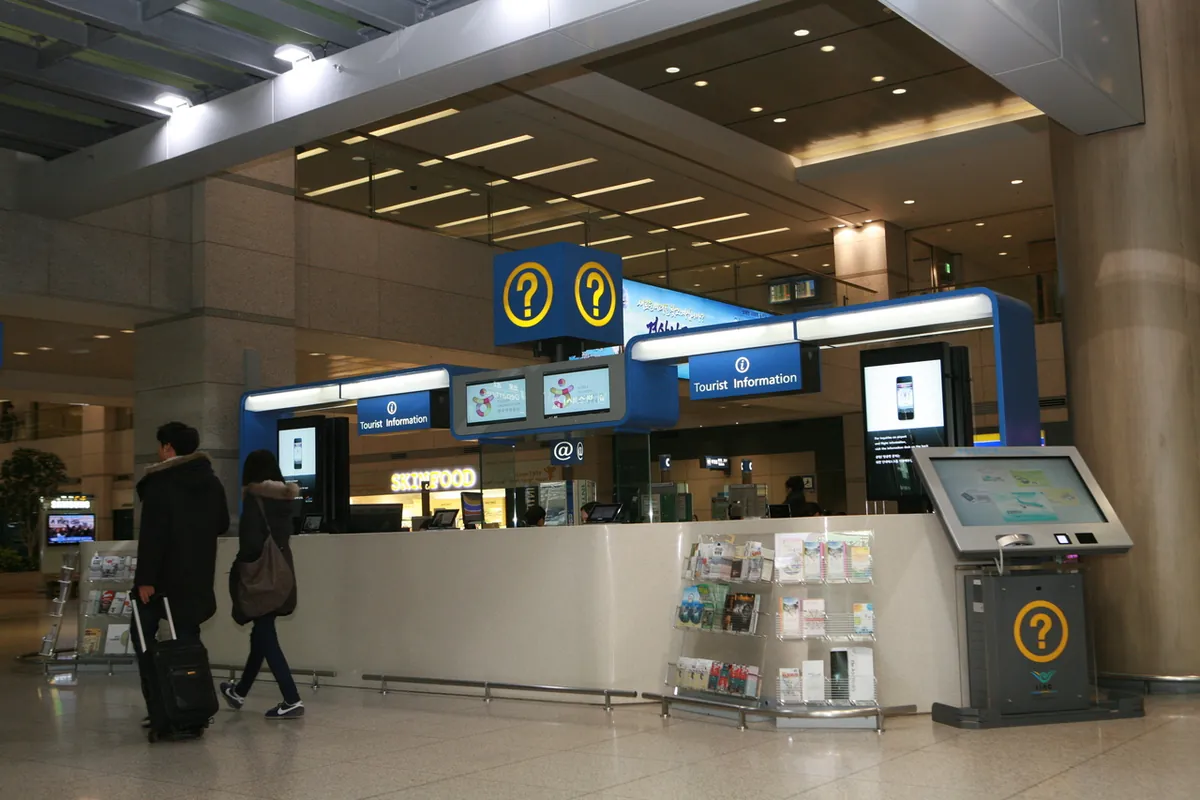
Once you clear customs, switch from border documents to the first-hour plan. Connect your phone, locate the correct terminal transport area and confirm the live route to your hotel. Our Incheon Airport to Seoul guide compares rail, limousine bus and taxi choices, while the Korea eSIM guide helps you arrange data before landing.
What is your final airport checklist?
Before airline check-in
Re-run the Visa Navigator for your passport, purpose and stay if anything changed after booking.
Confirm whether K-ETA is required, temporarily exempt or already valid; do not rely on nationality alone.
Submit the free e-Arrival Card on your arrival date or either of the two preceding Korea-time calendar dates if the official Navigator says you need one.
Check that the passport number on every approval matches the passport you will carry.
Save lodging, contact and onward-travel details offline, together with approval confirmations.
After landing
Follow the arrival and immigration signs and keep your passport out of checked baggage.
Answer questions using the same purpose and itinerary shown in your documents.
Collect baggage, then make any separate customs declaration required for your goods.
Use official airport signs and counters before following transport advice from a solicitor.
Open your saved hotel route and confirm the live service before buying a ticket.
What changes after December 31, 2026?
The current K-ETA temporary exemption extension ends on December 31, 2026 Korea Standard Time. That date does not tell us what the 2027 policy will be. Travelers arriving near or after the deadline should recheck the K-ETA notice board and passport scan result shortly before departure rather than assuming the exemption will continue.
The same refresh habit applies to the e-Arrival Card, visa categories, health controls and customs guidance. Government systems can change forms or eligibility without changing the purpose of this planning framework. Verify the live official result, save it, and make the rest of the trip easier with a simple arrival plan. Last verified: August 30, 2026, by the TipsKorea editorial team.
Frequently Asked Questions
Do I need both K-ETA and an e-Arrival Card for South Korea?
Usually not when you hold a valid K-ETA, because valid K-ETA holders are exempt from the arrival declaration. A traveler confirmed as temporarily K-ETA-exempt may still need the free e-Arrival Card. Use both official navigators for the documents and status you will hold.
Is the Korea e-Arrival Card free, and when can I submit it?
Yes. The official Ministry of Justice e-Arrival Card is free. File on your arrival date or either of the two preceding calendar dates in Korea Standard Time and before immigration inspection. It expires 72 hours after submission if you have not entered Korea. A site requesting payment for this declaration is not the official service.
Does the 2026 K-ETA exemption mean I can enter Korea without a visa?
No. K-ETA exemption and visa-free eligibility are different decisions. First confirm that your passport, purpose and stay qualify for a visa-free route in the Korea Visa Portal. Then use the official K-ETA portal to confirm whether K-ETA is required or temporarily exempt.
How long must my passport be valid to enter South Korea?
Do not apply one blanket six-month rule to every traveler. The relevant validity requirement can depend on your passport, visa or visa-free route, transit points and carrier checks. Confirm your exact case with the Korea Visa Portal, the responsible Korean diplomatic mission and any airline or transit-country rules.
Last verified: August 2026 · TipsKorea Editorial


