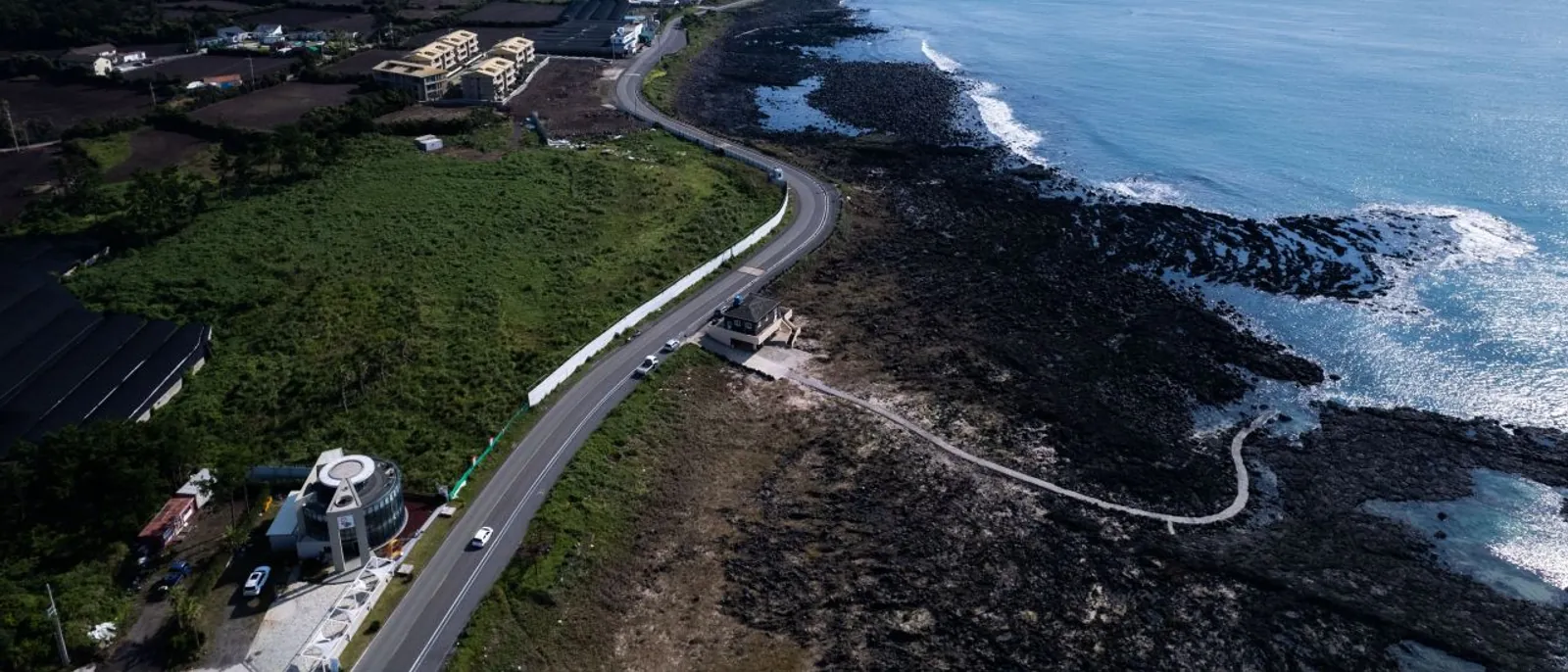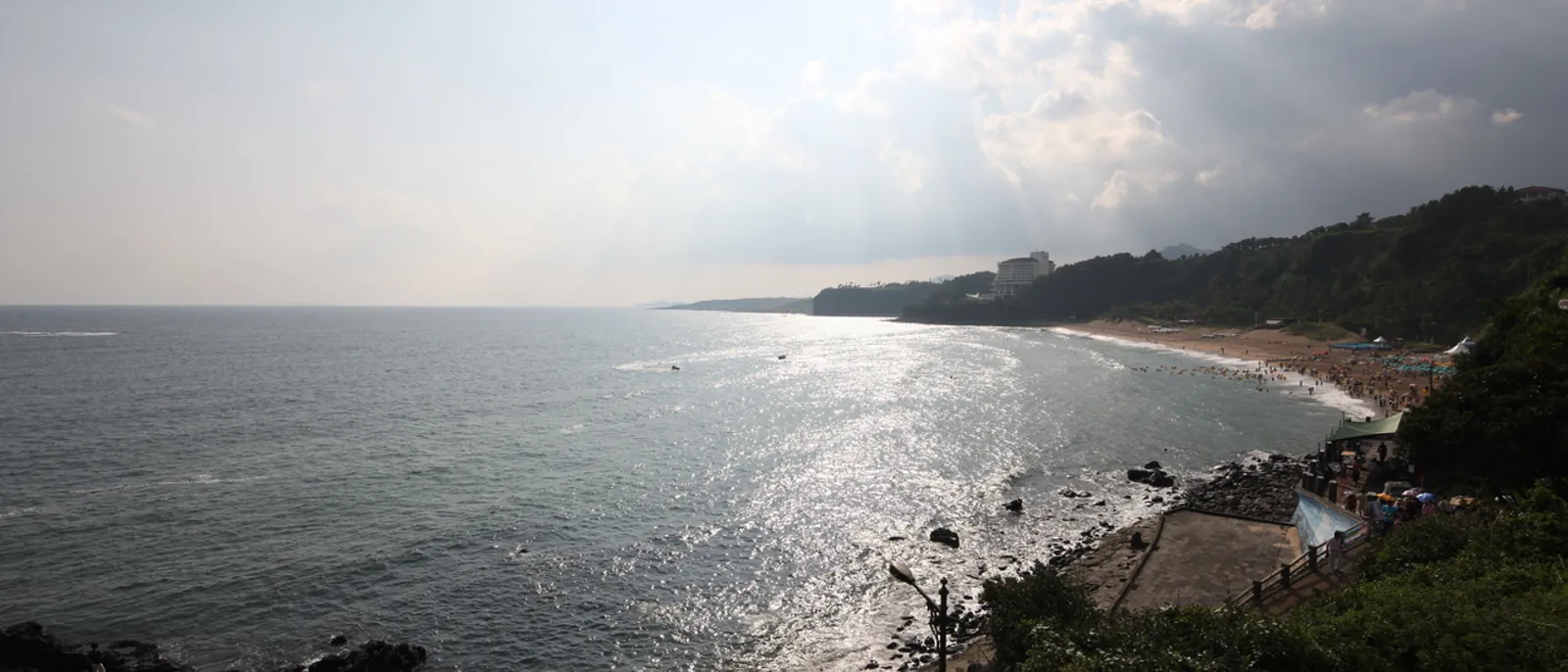
Choose the part of the island that fits your arrival, daily transport and evenings. A well-placed hotel makes a greater difference than a long list of nearby attractions.
Three bases, three different decisions
| Option | Best starting point for | Check before booking | Main trade-off |
|---|---|---|---|
| Jeju City | Short flight-linked stay or confirmed north-side pickup | Exact neighborhood and pickup/airport route | Longer returns after south-coast days |
| Central Seogwipo | Southern sights and meals around the old center | Map pin near your evening and bus anchors | Airport and north-coast trips need planning |
| Jungmun | Resort time and a focused southwest trip | Bus stop, beach access and hotel inclusions | Less convenient for a different island corner every day |
These are planning recommendations, not measured travel-time or price rankings.
Where to stay in Jeju depends on your transport: choose Jeju City for flight logistics, central Seogwipo for southern days, or Jungmun for resort time.
Where to stay in Jeju: which base fits your trip?
We recommend starting with your first and last journeys, then choosing the place you want to return to each evening. Jeju City is the practical starting point for airport-linked nights and confirmed pickups nearby. Central Seogwipo suits a southern itinerary with meals around its old center. Jungmun suits travelers who will use their resort and explore a smaller southwest area.
The important distinction is between an administrative address and a useful neighborhood. Both Jeju City and Seogwipo cover areas beyond their urban centers. A hotel described as being in Seogwipo may be nowhere near Maeil Olle Market. Jungmun is within Seogwipo but is a separate base from the old center. Search the actual hotel entrance, not simply the city name on a booking card.
Mark three things on one map: the hotel, your most important departure point and where you expect to eat after sightseeing. If those points require a vehicle every time, include those rides in the decision. A room with an attractive nightly price can still make the trip awkward when every breakfast, pickup and evening meal starts with another transfer.
Jeju City: choose the neighborhood, not just the airport label
Choose Jeju City when airport access, north-side sightseeing or a confirmed day-tour pickup is central to the trip. It is especially worth comparing for an arrival evening or a final night. However, “Jeju City” is not one compact hotel district: the old center around Dongmun Market and the Yeondong area offer different local routines and pickup points.
Old center: Dongmun Market and the waterfront side
The old center works when you want the market and surrounding streets to be part of your stay. Visit Jeju identifies Dongmun as a Jeju City market, while its neighborhood guides connect the area with shopping and food streets. Choose a hotel by the particular places you plan to walk to, then inspect the airport journey separately. Being in town does not mean walking from the terminal.
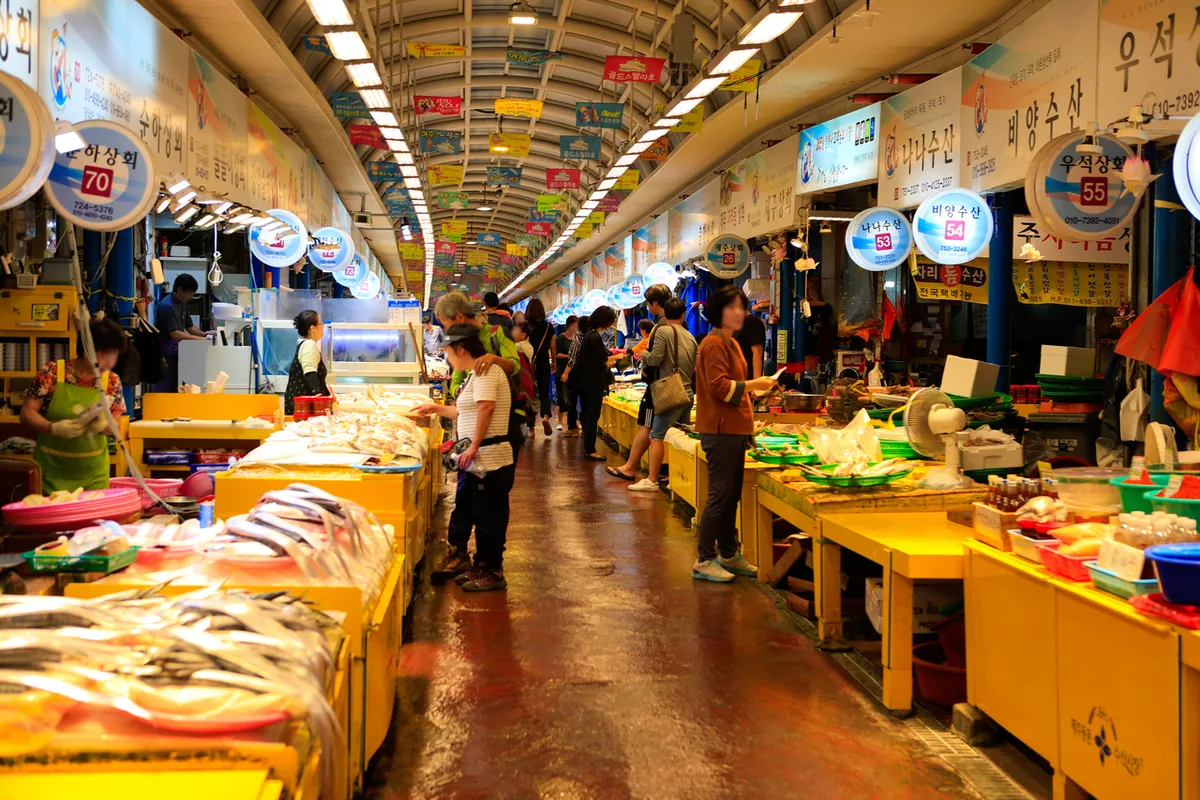
A landmark search around Dongmun is a starting list, not a promise that every result is equally close. Open the map for each candidate, examine the route to the entrance and compare the surroundings after dark. A main-road room, an inland side street and a waterfront room are different choices even when all three appear under the same market search.
Yeondong: useful when the pickup or hotel fits
Yeondong belongs in your comparison when the selected hotel, restaurant area or tour meeting point is there. Check the meeting-point address before paying for the room. Some tours collect passengers at named locations rather than individual hotels; do not assume that a booking described as departing from Jeju City includes a pickup at your door. Save the meeting instructions and the walk to them.
The trade-off is the return journey from the south. We would not choose a northern room solely for airport convenience if nearly every planned day is around central Seogwipo. On a short car-free trip, however, a matching pickup and an uncomplicated final morning may be worth more than a theoretically central point on the island. Build that version with our Jeju without a car itinerary.
Central Seogwipo: a base for southern days and local evenings
Choose central Seogwipo when your trip centers on the south coast and you want to return to an established town after sightseeing. Use Maeil Olle Market and Lee Jung-seop Street as recognizable map anchors. The useful question is whether your hotel connects comfortably with those places and your transport, rather than whether its listing merely contains the word Seogwipo.
Visit Jeju places Maeil Olle Market in the southern city center. Around this part of town, you can plan a market visit, a meal and a nearby walk without treating the entire evening as another island excursion. Shop and restaurant hours still differ. Have one confirmed dinner option near the hotel, particularly when you expect to return late or need a particular diet.
Cheonjiyeon provides one possible sightseeing anchor for a stay in this area. Do not confuse it with Cheonjeyeon, which is associated with Jungmun. The similar names can send a hotel search or day plan to the wrong part of the south coast. Check the Korean name and map pin before judging whether a room is convenient for the waterfall you intend to visit.
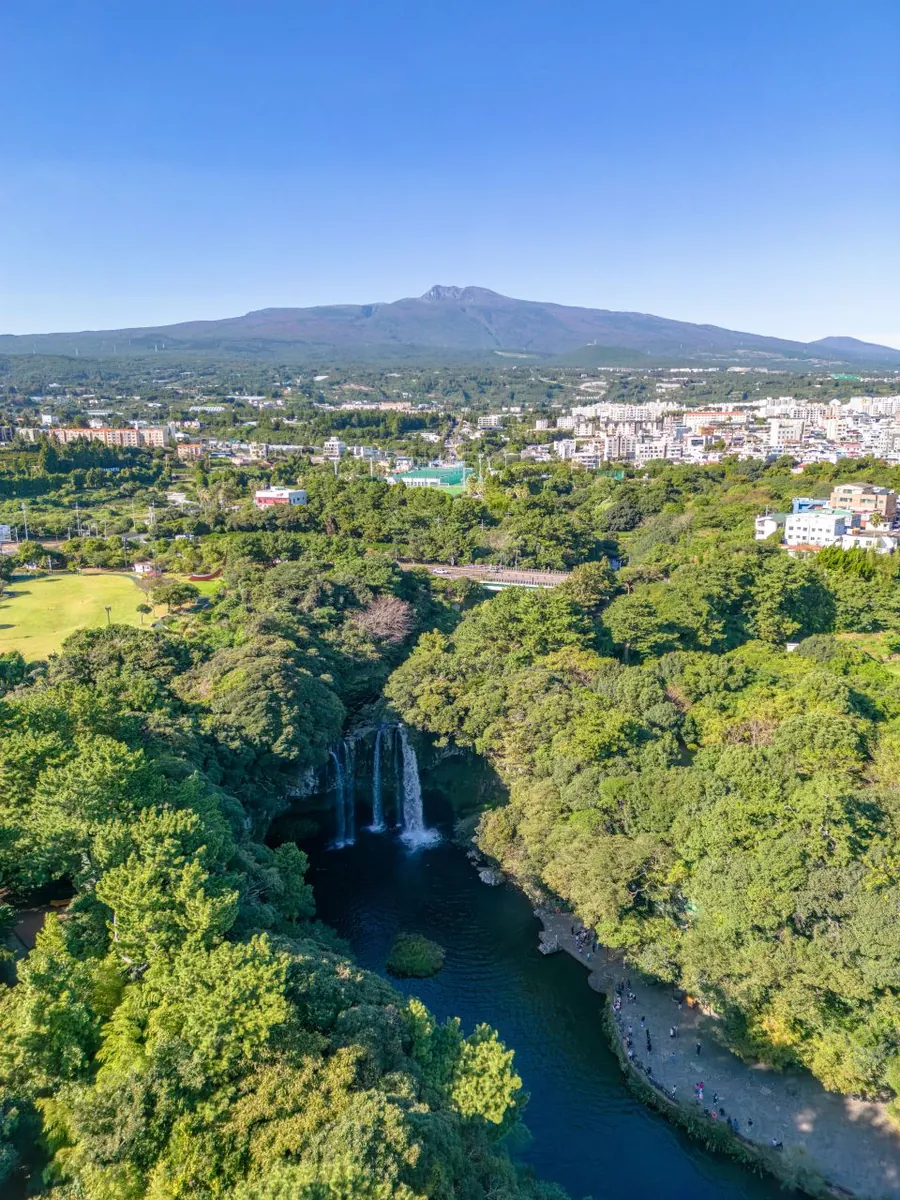
Car-free travelers should compare the nearest useful stop and the final walking segment, including hills, crossings and luggage. Drivers should ask where to enter the car park and whether it is on-site, shared or limited. Neither “central” nor “parking available” answers those practical questions. The right room is the one that works after a wet day when everyone is tired, not only on the map screenshot.
Central Seogwipo is not a shortcut to every coast. An ambitious eastern or northern day still needs a proper outbound and return plan. We recommend choosing one geographic cluster per day and leaving room for a meal near the hotel. Use the Jeju food guide to make dinner part of your base choice instead of adding a distant restaurant at the end of an already long route.
Jungmun: book it for resort time and a focused southwest stay
Choose Jungmun when time at the hotel, the nearby coast and the southwest are part of the holiday itself. It is a good area to investigate for a resort stay, but the word resort does not establish what is included. Inspect the exact room, meal plan, facilities and transport arrangements before paying for a higher-priced property.
Jungmun and the adjacent Daepo coast give this base a different focus from central Seogwipo. The columnar-joint coastline is one example of a nearby sightseeing theme. A hotel search around Jungmun Beach can help locate candidates, but a straight-line distance does not show the actual walking route, slopes, stairs or the entrance used by guests. Ask about the route if beach access matters.
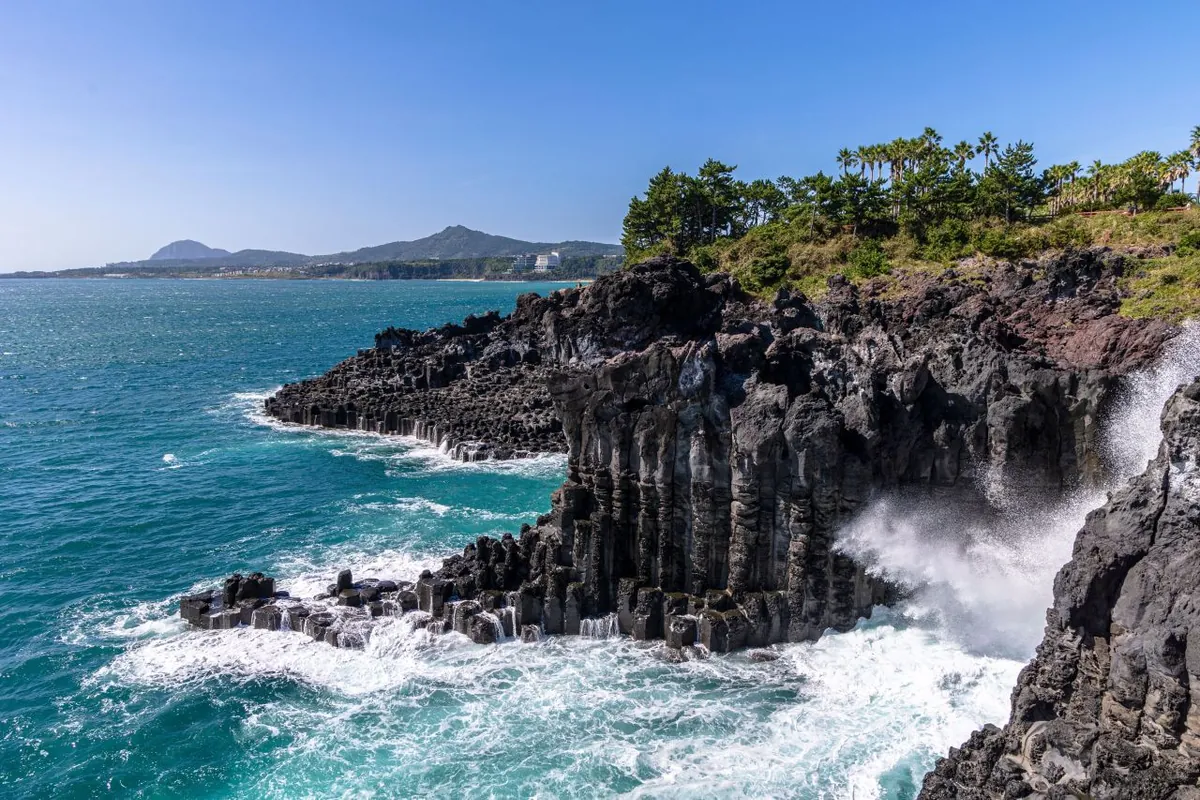
Korea Airports Corporation currently lists airport limousine bus 600 through Jungmun and onward to Seogwipo, including several named hotel stops. That makes a car-free Jungmun stay possible to consider. It does not prove that every resort has a stop at its front door, or that the bus serves your flight time. Match the current route to the property and check the final departure before committing.
For a family or a relaxed couple’s trip, compare the amenities you will actually use: breakfast for the booked guests, room occupancy, pool access and any age or seasonal restrictions. A large pool in a promotional image is not evidence of year-round access or inclusion in every rate. Request the conditions for your dates, and price meals and local rides alongside the room.
We would reconsider Jungmun if the plan involves a different distant corner every day and little time at the property. Conversely, there is no need to move downtown simply because a resort is less convenient for a full-island checklist. A deliberate resort holiday can be a better match than trying to combine its price with a schedule that keeps you away all day.
How does the choice change without a car?
Without a car, choose around a repeatable journey rather than the island’s geometric center. Find the morning stop or tour meeting point, the evening return and a nearby meal option. If those three work, the base is useful. If one depends on an uncertain late ride, solve that gap before booking a non-refundable stay.
Compare a complete door-to-door route for one ordinary day. Include the walk out, waiting time, transfers, sightseeing access and the journey home. Do the same for your flight day with luggage. Do not substitute an old blog’s bus frequency for the current timetable, or a driving estimate for a bus journey. Older official tourism explainers are useful background but can retain superseded route numbers and fares.
A taxi for a difficult final segment can be a planned part of a car-free holiday. Put a realistic allowance in the budget and ask the accommodation how it helps guests arrange pickups; a remote road may need more coordination than a town street. For organized tours, confirm the exact meeting point, return location and luggage policy with the operator. A tour seat does not automatically solve a hotel transfer.
Should you stay in one place or split the trip?
For a short stay, we usually favor one base and a selective route. Packing, checking out, moving luggage and waiting for the next room can consume the time that a split stay was meant to save. Move only when the new base changes the journey enough to justify those costs, or when a final airport-linked night solves a real departure problem.
With a car, a north-and-south split can support a route that progresses around the island. Keep each block of nights tied to nearby sights rather than crossing back to yesterday’s area. Our Jeju three-day driving route is a framework to adapt, not a reason to change hotels every night. Check the car rental guide before assuming that collecting a vehicle will be straightforward.
Before an early departure, work backward from the airline’s check-in requirements and the rental return instructions, if applicable. Allow for fuel, inspection and a rental-company shuttle where required. If the resulting morning starts uncomfortably early from the south, compare a final night in Jeju City. That decision should follow the actual flight and contract, not a universal rule that everyone needs an airport hotel.
What should you compare on the final hotel booking screen?
Enter the real dates, all adults and each child’s age before comparing totals. Keep the room category and cancellation conditions equivalent. Then check the features that determined your area choice: the entrance, nearest transport, parking arrangement and meal options. A cheaper room with a different cancellation rule or occupancy limit is a different offer, not a straightforward saving.
Save the hotel’s Korean name, address, contact details and check-in instructions.
Confirm whether breakfast covers everyone in the room and whether extra bedding costs more.
For car-free stays, save the specific stop or pickup point and an alternative for a missed connection.
For driving stays, confirm the parking entrance, vehicle restrictions and any charge.
Check the cancellation deadline in the booking’s stated local time and keep the confirmation.
Our area recommendations are planning judgments based on geography and transport information checked on 21 October 2026. They are not personal hotel inspections, a claim of live room availability or a price ranking. Use the linked search tools to compare the exact dates, then ask the property about any condition that would change your decision. A clear answer about access or bedding is more useful than an attractive but incomplete listing.
Frequently Asked Questions
Is Jeju City always the best place to stay without a car?
No. It is a useful starting point for airport-linked nights and matching tour pickups. Central Seogwipo can suit a southern itinerary, while Jungmun can work for a focused resort stay with a verified transfer. Compare your actual morning and evening journeys.
Are Jungmun and central Seogwipo the same hotel area?
No. Jungmun is within Seogwipo’s administrative area, but it is a separate base from the old center around Maeil Olle Market and Lee Jung-seop Street. Check the precise hotel pin rather than relying on the city label.
Do I need to change hotels during a three-night Jeju trip?
Usually only when the move solves a clear route or flight problem. A single base with fewer distant excursions often works better than spending part of each day packing and moving luggage. A rental car makes a split easier, but does not make it necessary.
Should I book a hotel before choosing a Jeju day tour?
Check the tour meeting point first when that tour is central to the trip. Confirm the exact departure and return locations, then choose a hotel with a workable connection. Do not assume every Jeju City hotel receives door-to-door pickup.
Last verified: October 2026 · TipsKorea Editorial