
There is no universal best transfer from Incheon Airport. The answer changes with your hotel’s real location, bags, group size, terminal, and arrival time—so compare the complete door-to-door journey rather than a vehicle category.
Incheon Airport to Seoul: at a glance
| 選項 | Best for | Strong point | Main trade-off |
|---|---|---|---|
| AREX Express | A direct Seoul Station arrival | No intermediate rail stops | You may still need a hotel transfer |
| AREX all-stop | Intermediate stations and flexible transfers | Fits more rail endpoints | More stops and luggage handling |
| Limousine bus | A documented stop near your hotel | Less station navigation | Traffic and route timing |
| Official taxi | Late arrivals, groups, or mobility needs | Direct door-to-door travel | Higher total cost |
Confirm your terminal, operating hours, route, and hotel endpoint on the airport or operator website on the day you travel.
Choose the best 2026 route from Incheon Airport to Seoul: compare AREX Express, the all-stop train, airport bus and taxi by hotel and luggage.
Key takeaways
The best route is the one with the fewest difficult transfers after you account for your final hotel neighborhood, not necessarily the quickest vehicle on a timetable.
AREX Express is a reserved non-stop rail option to Seoul Station; the all-stop service is more flexible for stops and subway connections along the line.
Airport limousine buses can be the easiest choice with luggage when a current route stops close to your hotel, but traffic affects journey time.
Use only official airport taxi ranks or a reputable prebooked transfer, and verify terminal-specific pickup information before leaving arrivals.
Getting from Incheon International Airport to Seoul is straightforward once you choose the route that matches your actual hotel, luggage, and arrival time. The mistake is treating every option as a race to Seoul Station. A fast train to the center can become a slow trip if you still have two subway transfers and a steep walk with suitcases. A bus that looks slower can be the calmest choice when it stops a block from your hotel. And an official taxi can be sensible for a family, a late arrival, or a destination beyond the rail network.
In 2026, the core choices remain AREX rail, airport limousine buses, and official taxis. There are two AREX services: a reserved direct train to Seoul Station and an all-stop train that serves intermediate stations. This guide explains how to choose among them without relying on an old timetable or a generic price comparison. Use official live transport pages on the day of travel for current schedules, routes, terminals, fares, and service notices.
Choose your airport transfer by endpoint, not by category
Seoul Station is a useful hub, not every hotel's destination
Seoul Station is an excellent arrival point when you are staying nearby, connecting to KTX, or transferring easily to a subway line. It is less ideal when your hotel is in a neighborhood that requires another crowded line, a long station walk, or a taxi after you arrive. Before choosing a train, put your hotel's exact address into a Korean map app and look at the final door-to-door route. Note the number of line changes, exits, elevator access, and walking distance. What looks like a short transfer on a map can be tiring with two large bags.
Some Seoul neighborhoods connect naturally to the all-stop AREX line or a single transfer. Others are better served by an airport bus. A stay near Hongik University, Digital Media City, or Seoul Station can favor rail. A hotel near a documented limousine stop may favor a bus even if the bus takes longer in traffic. Make the decision around the last mile: you are not trying to reach a famous station, you are trying to reach your accommodation with enough energy left for the first evening.
Luggage, children, accessibility, and arrival time change the answer
Rail is predictable compared with road traffic, but it involves platforms, gates, escalators, and sometimes a transfer. Travelers with a backpack can move quickly; travelers with a stroller, a mobility aid, or several checked bags may value a seat and a stop closer to the hotel. An airport limousine bus can reduce the number of lifts and corridors you need to navigate. A taxi can be the simplest option when the group can share the cost, when you land very late, or when a child needs a direct ride after a long flight.
Do not decide solely by a pre-departure estimate. Flight delays, immigration queues, baggage delays, weather, and terminal changes can alter which service still makes sense. Keep a primary route and a backup route. If the last convenient train has gone or the relevant bus route is finished, you should already know where the official taxi stand is and have your hotel address ready in Korean.
AREX: choose between the Express Train and the all-stop train
AREX Express: best for a direct Seoul Station arrival
The AREX Express Train is the direct, reserved-seat service between Incheon Airport terminals and Seoul Station. It is designed for travelers whose plan begins at Seoul Station or who want a non-stop airport rail ride before making a single onward connection. Because it is a distinct service, it uses its own ticketing and schedule. Check the official AREX timetable, terminal station, luggage guidance, and latest departure before you rely on it, especially after an evening arrival or a delayed flight.
The Express Train is not automatically the best rail choice just because it is direct. If your hotel is near an intermediate AREX station, taking the express to Seoul Station and doubling back may add a transfer that the all-stop train avoids. If you are traveling on a tight budget or want to use a regular transit card for a local connection, compare the whole journey rather than one train segment. A reserved non-stop ride is valuable when it removes complexity; it is less valuable when it creates it.
AREX all-stop train: best for intermediate stations and flexible transfers
The all-stop AREX train runs between the airport and Seoul Station while calling at intermediate stations, including transfer points that can be useful for Seoul destinations. It is often the practical rail choice for Hongdae-area accommodation, some western Seoul routes, or travelers who prefer an ordinary local-service connection over a reserved express ticket. Its stops make it more flexible, but also mean a longer ride to Seoul Station than the direct service.
For this service, confirm the current ticket and transport-card rules at the airport. A local transport card can be useful for all-stop rail and onward subway travel, but a card does not replace every airport product. Read our Korea transport cards and passes guide before choosing T-money, WOWPASS, or a Seoul pass for the rest of your itinerary. Keep enough time for the walk from the airport arrival hall to the rail station and for the final transfer after you leave the train.
Airport limousine buses: the comfortable hotel-nearby option
When a bus wins over rail
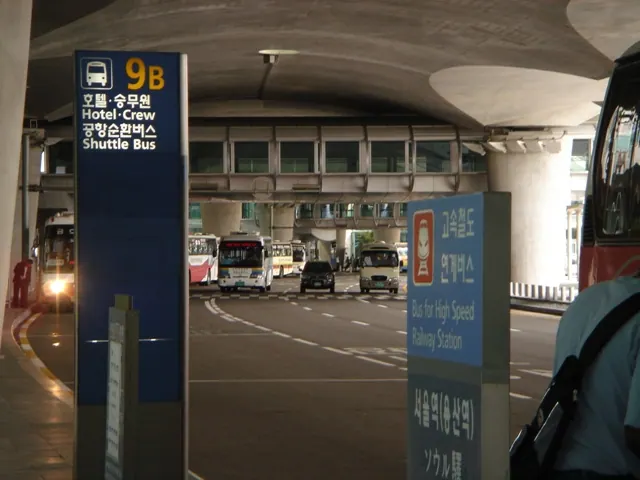
Airport limousine buses serve many Seoul districts and selected hotels. They are especially useful when your accommodation is close to a current stop, you have bulky luggage, or your group wants to avoid switching lines. You board once, place bags in the luggage hold when offered, and can usually sit until your stop. That lower-effort journey can be the better value even when road traffic makes it slower than rail.
The bus is not a universal shortcut. Routes, stops, night service, terminal departure points, and travel time vary. Traffic can be substantial during peak periods or bad weather. Before choosing it, search the operator's current route information or the official airport transport guide for your hotel district, then compare the stop name with the hotel address. A bus that stops near a landmark may still leave a long walk on the wrong side of a major road. Ask your hotel for its closest airport-bus stop if the route map is unclear.
Tickets and boarding: confirm the live details
At Incheon, airport bus ticketing and boarding locations are organized by terminal, and they can differ between Terminal 1 and Terminal 2. Look for official information desks, current display boards, or the airport website rather than following an old blog's exit number. Check whether your route needs a ticket in advance, which payment types are currently accepted, how luggage is tagged, and where to signal for your stop. If you are nervous about the bus system, take a screenshot of the route number, stop name, and hotel address while you have airport Wi-Fi.
Do not use a general Seoul bus route as a substitute for an airport limousine plan unless you have verified the route, fare, and luggage policy. Airport services are designed for airport travelers; local buses may be harder with suitcases and may not provide the connection you expect. When in doubt, choose a confirmed rail, limousine, or official taxi option instead of improvising at the curb.
Taxi and prebooked transfer: choose directness and safety
Use the official taxi rank
An official airport taxi is the clearest door-to-door choice. Follow airport signs to the designated taxi stand outside the arrivals area and use the official queue or staffed assistance point. Avoid unsolicited drivers inside the terminal or people who offer to change the plan before you reach the rank. The airport publishes pickup guidance and taxi information; review it if you need a particular vehicle size, accessible vehicle, international-taxi service, or a late-night option.
Before you enter, show the driver the hotel address in Korean and ask that the meter or agreed official process be used. Confirm any tolls, the payment method, and whether the vehicle can accommodate your bags. Taxi cost varies by destination, traffic, vehicle type, tolls, and time, so a single price from a travel blog is not a planning guarantee. A metered standard taxi, an official international taxi, a larger vehicle, and a private transfer solve different problems. Choose the one that fits your group and understand the terms before departure.
When a prebooked transfer is worth it
A prebooked transfer can be useful when you arrive late, need a child seat, have several passengers, require assistance, or want a driver who is expecting you after a long flight. Use a reputable provider with a clear meeting point, cancellation policy, contact method, and vehicle capacity. Confirm the actual arrival terminal on your ticket because airlines can use either Incheon terminal and codeshares can complicate assumptions. Keep the booking confirmation offline and know what to do if your flight is delayed.
Terminal, timing, and late-night checks before you commit
Terminal 1 and Terminal 2 are not interchangeable
Incheon has Terminal 1 and Terminal 2, with different arrival halls, rail access paths, bus-ticket areas, and pickup locations. Your airline's terminal can change through a schedule or codeshare update, so confirm it through your current e-ticket and the airport website shortly before travel. The time it takes to reach a rail platform or a bus stop also differs by terminal. A route comparison that begins at the wrong terminal can give false confidence about the last train or bus.
After immigration and baggage, reconnect to data or airport Wi-Fi and check the live service board. If you arrive at a concourse, allow time for any required transfer within the airport before choosing surface transport. Do not buy a non-refundable ticket from a screenshot until you know your terminal, the time, and your luggage situation. A five-minute check can prevent an expensive or exhausting detour.
Late arrivals need a specific plan
If your flight lands in the evening, look at the time you are likely to clear immigration and collect bags—not just the scheduled landing time. Rail and many airport-bus services do not run all night, and seasonal or operational changes can alter final departures. Check the official airport and operator pages for the relevant day. If public transport will be tight, decide in advance whether you will use an official taxi, an approved transfer, an airport-area hotel, or a verified late-night bus route.
Late-night arrivals are where mobile data matters most. Save your hotel address, contact number, airport pickup instructions, and a screenshot of the official taxi guidance before boarding. If you have not yet chosen a data plan, use our Korea SIM vs eSIM guide to prepare before the flight. Follow the provider's installation and activation timing, and save the instructions offline instead of relying on an airport counter being open.
Compare the complete door-to-door journey
Time means more than the time on board
To compare options honestly, add the time from baggage claim to the station or bus stop, waiting time, time on board, transfer time, walking time, and check-in at your hotel. Rail often wins on predictable movement into the city. A bus can win when its stop is near the hotel. A taxi can win when it eliminates transfers for multiple people. The gap between vehicles is often smaller than the gap between a smooth final connection and a difficult one.
Map the final ten minutes before you leave home. Check whether your hotel entrance is on a hill, behind a market street, or across from a subway exit with no elevator. This is not over-planning; it is the information that makes an airport transfer genuinely easy. If the route includes a confusing transfer, it may be worth changing modes rather than arriving tired and lost.
Cost means the cost for your whole group
Compare published current fares only on official sources or confirmed booking pages, then calculate the group total. A rail ticket may be the economical answer for one or two light travelers. A taxi may become more reasonable when several people share it, especially after accounting for separate local transfers. A limousine bus can be a comfortable middle ground. Avoid hard-coding a budget around a price seen months ago; airport transport fares, promotions, exchange rates, and route availability can change.
Three practical arrival plans
Light luggage, hotel near Hongdae or an AREX stop
Start by checking the all-stop AREX service and the transfer or walking route from your selected station. It can be a simple option when the hotel is close to the line and you can manage your own bags. Have a transit-card plan for the onward journey, but make sure the all-stop service is operating at your arrival time and check the latest route guidance.
Large luggage, family, or hotel near a documented bus stop
Compare the current airport limousine route that serves your hotel district. If the stop is a short, well-lit walk from the entrance, it may be the gentlest arrival. Confirm Terminal 1 or Terminal 2 boarding location, the final service, luggage policy, and route number. Keep a taxi as the backup if the flight is delayed beyond the useful bus window.
Late arrival, accessible need, or a group staying beyond rail convenience
Use an official taxi or a reputable prebooked transfer. Confirm vehicle capacity and the meeting point, then share the Korean hotel address. This choice prioritizes reliability, directness, and energy over a theoretical saving. It is especially sensible when the alternative requires navigating several stations after midnight or taking multiple bags through an unfamiliar interchange.
Your first hour after landing
Confirm the arrival terminal through your airline details and the airport's current information.
Connect to mobile data or airport Wi-Fi, then check live AREX, bus, and taxi information for your actual time of arrival.
Open your hotel address in Korean and English, and save a screenshot that can be shown without a connection.
Choose the route with the simplest final leg for your luggage and group, not just the quickest headline journey.
Keep a backup method ready in case the planned train or bus is no longer operating when you exit arrivals.
Sources and last verified
Last verified on September 26, 2026. Official source names and URLs are stored in this article's metadata. Recheck timetables, terminals, route numbers, fares, luggage rules, and taxi pickup guidance before travel because airport operations change.
資料來源與查核
我們參照官方或第一手資料查核實用資訊。預訂或出發前,請直接向相關單位確認時效性資訊。
常見問題
What is the best way to get from Incheon Airport to Seoul?
The best option depends on your hotel, luggage, group size, and arrival time. AREX is strong for rail-connected destinations, airport limousine buses are convenient near a hotel stop, and an official taxi is the simplest door-to-door choice for late arrivals or heavy luggage.
Should I take AREX Express or the all-stop train?
Choose the Express Train when Seoul Station is your practical destination and you want a reserved non-stop ride. Choose the all-stop train when an intermediate AREX station or flexible subway connection reduces the total journey. Check the current timetable and ticket rules before travel.
Can I use a transport card from Incheon Airport to Seoul?
A transport card can be useful for the all-stop AREX train and many local connections, but it does not replace every airport ticket. Express rail and airport buses may have separate ticketing or payment rules, so verify the specific service you plan to use.
Is a taxi from Incheon Airport safe?
Use the official taxi rank or a reputable prebooked transfer, confirm the destination with the hotel address in Korean, and understand the meter or official pricing process before departure. Avoid unsolicited drivers inside the arrivals hall.
最後查核:2026年9月 · TipsKorea 編輯部


