
A first Seoul trip gets easier when the first decisions are made in the right order: choose a base, save your airport route, sort connectivity, then build days around compact areas rather than a giant must-see list.
A first-time Seoul guide to choosing a neighborhood, arriving from Incheon, using transit, planning three days, and avoiding unnecessary friction.
Key takeaways
For most first-time visitors, Myeongdong, City Hall, Jongno, Hongdae, and parts of Mapo are the easiest bases because they reduce transfers to major sights.
Save your hotel name and its nearest station in Korean as well as English before leaving the airport.
Build days by area: historic Jongno, central Seoul and Namsan, or west-side Hongdae and the Han River are natural combinations.
Use an eSIM or other reliable data option, a transit card, and a Korean map app from your first hour in the city.
A first Seoul trip becomes much easier once you stop treating the city as one compact downtown. Seoul is a collection of distinct areas connected by an extensive rail and bus network: palace-and-museum districts in Jongno, central hotels and shopping around Myeongdong and City Hall, student and nightlife streets in Hongdae, and business, entertainment, and riverfront districts south and east of the Han River. The goal of this guide is not to fill every hour. It is to help you arrive with a workable base, a simple transport plan, and enough local logic to enjoy the city without constantly retracing your steps.
Use this as a practical first-trip framework. Confirm all entry requirements with the relevant government authority for your passport, then focus your travel planning on the parts you can control: a hotel near the right subway line, data for maps and translation, a realistic airport transfer, and a few neighborhood-based days. Details such as train frequency, special attraction hours, and festival programs change, so treat them as items to verify shortly before travel rather than as fixed promises.
Before you book: decide what kind of Seoul trip you want
Choose your trip length before choosing a hotel
Three full days is a strong minimum for a first visit, while four or five days gives you a gentler pace, room for shopping and food stops, or a day trip. With only two nights, prioritize central location over a larger room farther out. With a week, you can afford to explore different sides of the city and add a second Korea destination. The useful question is not how many attractions you can tick off. It is whether your schedule leaves time for airport arrival, luggage, weather changes, meal queues, and the fact that a simple subway transfer can take longer than it appears on a map.
Pick a season, then prepare for its trade-offs
Spring and autumn are popular for walking, parks, and outdoor landmarks, which can also mean more demand around weekends and holidays. Summer supports late evenings by the Han River but can bring heat, humidity, and rain. Winter can be clear and atmospheric, though outdoor sightseeing requires warm layers and a plan for indoor breaks. Any season can work if you match your days to conditions: schedule palaces, markets, and neighborhoods when the weather is kind; save museums, galleries, department stores, and cafes for the hottest, wettest, or coldest periods. Check local forecasts close to departure rather than packing around an old average.
Keep arrival and departure days deliberately light
International arrivals create more variables than a normal sightseeing day. Immigration, baggage, phone setup, cash needs, transit decisions, and a long journey into town can all take time. If you land late, book a hotel route you understand and make your first evening about checking in, eating near the hotel, and sleeping. If you land early, choose one nearby flexible walk rather than a non-refundable timed attraction. The same rule applies on departure day: leave room for the airport transfer and airline requirements, especially if your hotel is not directly on a simple rail or limousine-bus route.
Getting from Incheon Airport to your Seoul hotel
Use the airport railroad when the rail connection is simple
The Airport Railroad, commonly called AREX, connects Incheon International Airport with Seoul Station and includes both an all-stop service and a non-stop express option. The all-stop train directly serves Hongik University, Gongdeok, and Seoul Station; the express runs non-stop between the airport terminals and Seoul Station. Choose between them only after checking your hotel’s final station, transfer, exit, walk, and luggage route. A direct all-stop ride to Hongik University or Gongdeok can be simpler than taking the express to Seoul Station and transferring back. Confirm the current timetable and ticket details on the official AREX site shortly before travel.
Use an airport limousine bus when it stops near your hotel
Airport limousine buses can be excellent for visitors with large suitcases, children, or a hotel located along a direct route. They serve many central hotel districts and spare you the most awkward part of an airport-train journey: navigating stairs, platforms, and transfers with luggage. The trade-off is road traffic, so allow a generous time range and check the exact stop name, boarding point, and operating hours shortly before travel. Ask your hotel which stop it recommends, save the answer offline, and do not assume that the closest-looking pin is the entrance you will use after a long flight.
Choose a taxi for door-to-door simplicity, not for speed guarantees
A taxi can make sense after a late arrival, for a small group sharing the cost, or when accessibility and luggage matter more than saving money. It is still a road journey, so traffic can change the outcome. Incheon International Airport warns travelers to avoid solicitors and use its designated taxi stands; keep your destination in Korean and confirm the taxi category and payment process before setting off. Avoid relying on a screenshot without an address; a hotel name, street address, and phone number are safer. If you want the lowest-friction transfer, compare the taxi estimate against the value of arriving directly at your hotel rather than only comparing the headline fare.
Choose the right neighborhood for a first stay
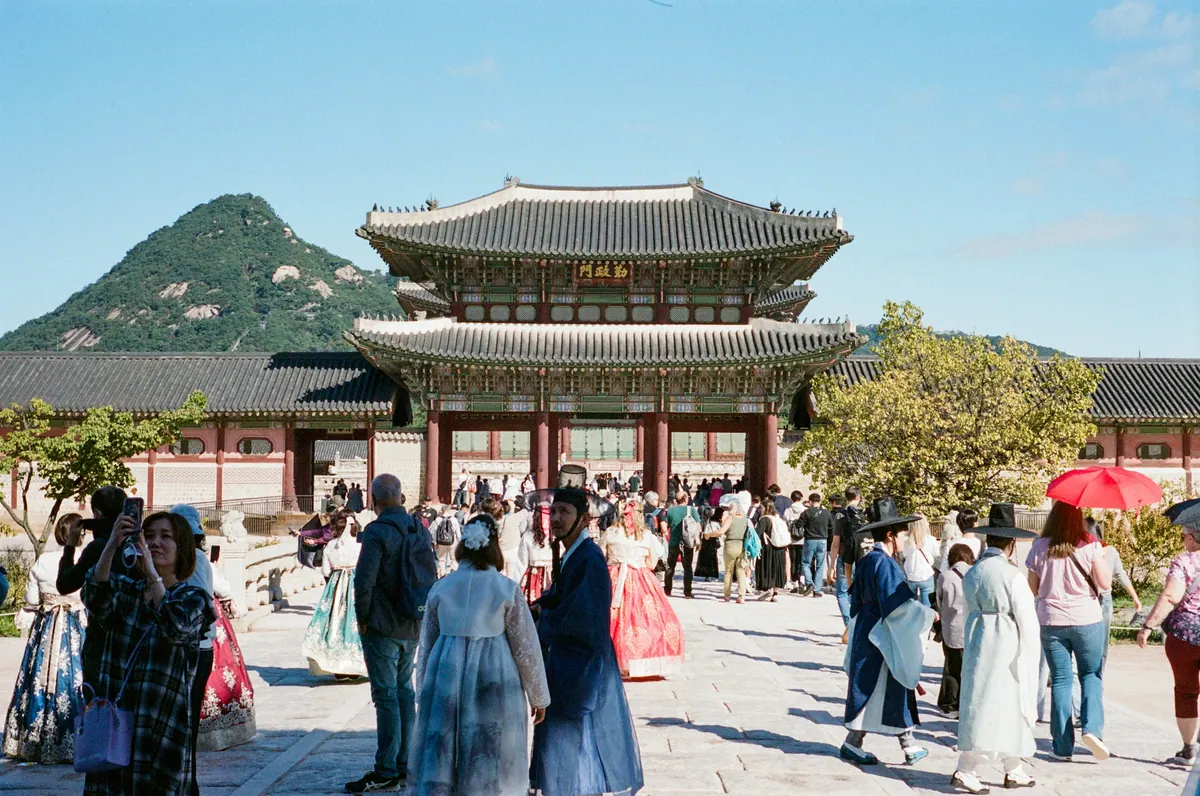
Myeongdong and City Hall: the central, easy default
Myeongdong and nearby City Hall work well for first-time visitors who want central sightseeing, abundant dining, lots of hotels, and practical access to Namsan, palaces, markets, and shopping streets. The area can feel busy and commercial, particularly in the evening, but that can be a benefit after a tiring travel day: you are unlikely to struggle to find food, convenience stores, or a subway. It is not the only good choice, and it may not suit travelers seeking nightlife or a residential atmosphere. It is simply a reliable all-round base when your itinerary spreads across central Seoul.
Jongno and Insadong: best for historic Seoul on your doorstep
Jongno, Insadong, and nearby Euljiro suit travelers who want palace districts, traditional streets, museums, and central food markets close by. You can reach Gyeongbokgung, Bukchon, Changdeokgung, Insadong, and Gwangjang Market with shorter rides or walks than from many southern neighborhoods. The area is less about one single entertainment strip and more about convenient daytime culture with scattered restaurants and cafes. Check your exact hotel’s proximity to a subway station, as the difference between a five-minute walk and a fifteen-minute walk matters more than a broad neighborhood label when temperatures are high or you are carrying bags.
Hongdae and Mapo: airport-rail convenience and late energy
Hongdae is often a smart base if you value a direct all-stop AREX connection at Hongik University Station, cafes, nightlife, and a younger street atmosphere. Hotels near Gongdeok Station offer another direct all-stop AREX stop and connections to Seoul Metro Lines 5 and 6, often with a calmer evening than central Hongdae. Other Mapo addresses do not automatically share that airport-rail access, so check the actual station rather than the district name. These western districts are not next door to every historic attraction, but central sightseeing remains practical when you plan days in blocks.
Get around Seoul with less friction
Use a transit card and read station exits carefully
Seoul’s subway and buses accept reloadable transport cards such as Tmoney, but the payment method depends on the product and machine. The Korea Tourism Organization’s May 2026 visitor guide says foreign-issued cards are not accepted for ordinary Tmoney purchase or top-up at the listed outlets, while new machines on Seoul Subway Lines 1–8 accept foreign cards for single-use tickets and Climate Cards. Keep some Korean won and follow the instructions on the machine you are using rather than assuming one payment method works everywhere. Station exit numbers also matter because the correct exit can avoid a long street-level detour.
Use Korean map apps for walking details
For walking and public-transport navigation, use a Korea-focused map app alongside any global map app you already prefer. Local mapping can be especially helpful for subway exits, bus stops, building entrances, and routes through dense commercial districts. Search using the hotel’s Korean name or address when possible, download relevant language tools, and screenshot the first route from your hotel before stepping outside. Maps are only as useful as your data connection, so solve mobile data before relying on them; our Korea eSIM guide covers the options to compare.
Do not turn every taxi ride into the default
Taxis are useful for tired evenings, door-to-door trips, bad weather, or journeys with luggage. They are not automatically the fastest choice across Seoul, particularly at busy times. A practical rhythm is subway or bus for predictable sightseeing, walking within a neighborhood, and a taxi only when the convenience is worth it. This also gives you a better feel for where districts connect. If you need a taxi, make sure your destination is saved clearly and confirm the pick-up point rather than stopping in a lane where cars cannot safely pull over.
A realistic first three days in Seoul
Day 1: historic Jongno without a rush
Begin with Gyeongbokgung or another palace after confirming the day’s opening information. Continue through Bukchon or Seochon at a resident-respecting pace, then use Insadong for lunch, crafts, tea, or a museum. In Bukchon, tourist visits to the designated Red Zone around Bukchon-ro 11-gil are allowed only between 10:00 and 17:00. Respect the Sunday alleyway rest day and choose Seochon for that part of a Sunday itinerary. If you have energy, finish near Cheonggyecheon or Gwangjang Market rather than crossing the city for an unrelated evening plan. This day gives you a clear historical foundation and helps you learn how far places really feel on foot. For details on these stops, use our ten best things to do in Seoul as a flexible menu.
Day 2: central Seoul, food, and a skyline evening
Use the second day for Gwangjang Market, Dongdaemun Design Plaza, Cheonggyecheon, Myeongdong, and Namsan if the weather is clear. Do not assume all of these demand equal time. Choose a market meal, one shopping or design stop, and one viewpoint or evening walk. If you want an observation attraction or a special nighttime program, this is the day to use a reservation because the rest of the route stays flexible. Central Seoul is dense enough that you can revise the sequence around rain, queues, and opening hours without wasting the whole day.
Day 3: museum, river, and Hongdae
On the third day, visit the National Museum of Korea or another museum that matches your interests, then head toward the Han River or Yeouido for a slower afternoon. End in Hongdae for dinner, street life, music, or a cafe. This creates a satisfying contrast to the first two days: less palace history, more contemporary Seoul and ordinary public life. If you would rather leave the city, replace it with a pre-planned day trip and protect the previous two neighborhood days from overbooking. Check meeting points and identity-document requirements carefully for any tour outside central Seoul.
Food, payment, and small habits that help
Eat by neighborhood rather than by viral checklist
Seoul has far more food options than a first visitor can sensibly chase. Let each neighborhood provide one or two meals: market food in central Seoul, a casual restaurant near your hotel, a cafe break in a walking district, or a group meal in Hongdae. If there is a restaurant you genuinely care about, check its current hours and reservation policy directly. Otherwise, avoid spending an hour crossing town for a dish you can often find in another excellent local setting. Dietary restrictions are easier when you learn a few key Korean phrases and keep translated notes ready.
Carry more than one way to pay
Credit cards are widely accepted at major hotels, department stores, and general shops, according to the Korea Tourism Organization, but it advises checking availability because some merchants do not accept every card. Bring a backup card and a modest amount of Korean won for small purchases and ordinary Tmoney purchase or top-up, and keep secure access to your banking app. Do not depend on a single payment method for your first day, and let your own bank’s fees and terms guide how much cash you withdraw.
Book the base first, then build the itinerary around it
A well-located hotel is the first-time Seoul decision with the biggest effect on your day. Prioritize a real walk to a station, a neighborhood that suits your evening preferences, luggage practicality, and a route from the airport you understand. Then compare the actual room conditions, cancellation rules, and guest feedback on the dates you need. Use our where to stay in Seoul guide to narrow the area, then compare live room conditions through the affiliated options attached to this guide.
The best first Seoul itinerary is not an optimized map full of pins. It is a calm sequence of neighborhoods that lets you see the city’s royal history, everyday food culture, public transport, river life, and modern energy with enough room to notice what you enjoy. Arrive with a few anchors, check time-sensitive details when you are there, and leave one unscheduled block for the place that unexpectedly draws you in.
資料來源與查核
我們參照官方或第一手資料查核實用資訊。預訂或出發前,請直接向相關單位確認時效性資訊。
- Seoul Metropolitan Government — Getting to Seoul from Incheon Airportenglish.seoul.go.kr
- Seoul Metropolitan Government — Public transportationenglish.seoul.go.kr
- Visit Seoul — About Seoul and district highlightsenglish.visitseoul.net
- VISITKOREA — Seoul attractions overviewenglish.visitkorea.or.kr
- AREX — All-stop train stations and live serviceairportrailroad.com
- Incheon International Airport — Official taxi guideairport.kr
- VISITKOREA — May 2026 international visitor transport and payment guideenglish.visitkorea.or.kr
- VISITKOREA — Korean currency and credit-card acceptanceenglish.visitkorea.or.kr
- Seoul Metropolitan Government — Bukchon Special Management Area visitor restrictionsenglish.seoul.go.kr
常見問題
Where should a first-time visitor stay in Seoul?
Myeongdong, City Hall, Jongno, Hongdae, Mapo, and Gongdeok are all practical first-trip bases. Choose according to the sights you value, airport-transfer convenience, station access, and how much nighttime activity you want nearby.
What is the easiest way from Incheon Airport to Seoul?
The Airport Railroad is often easiest for hotels with a simple rail connection, while an airport limousine bus can be easier with luggage if it stops near your hotel. A taxi offers door-to-door convenience but is affected by road traffic.
How many days should I spend in Seoul for a first trip?
Plan at least three full days to see historic Seoul, central markets and viewpoints, plus a museum, river, or Hongdae evening without rushing. Add days for shopping, a slow pace, or a day trip.
Do I need a tour for Seoul?
Most major Seoul neighborhoods are easy to explore independently with public transport and a good map app. Tours are most useful for day trips, specialist context, or activities with limited capacity and fixed logistics.
最後查核:2026年9月 · TipsKorea 編輯部


