
Choose a Seoul neighborhood for the way you want to move through the city, not for a name you recognize. A short walk to the right station and a realistic airport route usually matter more than an extra room feature.
Compare Seoul’s best neighborhoods for first visits, nightlife, historic sights, airport access, families, and longer stays before choosing a hotel.
Key takeaways
Stay central for a first trip if you want short rides to palaces, markets, museums, Myeongdong, and Namsan.
Stay near Hongik University or Gongdeok stations if direct all-stop AREX access and a west-side base matter most.
Stay in Gangnam or Jamsil only when your itinerary naturally favors the south and east of the Han River.
Search by the nearest station and station exit, then check the final walking route with luggage before booking.
There is no single best neighborhood to stay in Seoul. The right one depends on how you want your days and evenings to feel: close to palaces and markets, beside airport rail, surrounded by cafes and nightlife, or near the business, concert, and shopping districts south of the Han River. The useful news is that Seoul’s transport network makes several areas workable. The more important news is that a hotel described as “central” can still be a long walk from the right station or a noisy block away from the kind of evening you want. This guide narrows the choice before you compare individual rooms.
For a first visit, prioritize time saved over the idea of finding the city’s most fashionable address. A hotel that is a short, uncomplicated walk from a station and a direct airport route often improves a trip more than a larger room in a distant neighborhood. Then layer in your preferences: historic Seoul, food markets, nightlife, family-friendly logistics, shopping, concerts, or a quieter residential atmosphere. Use the sections below to pick two or three areas worth searching, not to force every traveler into the same answer.
How to choose a Seoul neighborhood before you search hotels
Plan around movement, not straight-line distance
Seoul looks compact in a list of famous places, but rivers, hills, multilane roads, and huge stations make straight-line distance misleading. A hotel can be geographically close to an attraction yet inconvenient if it requires an awkward transfer or a steep walk. Start with the stations you expect to use most. Historic Seoul is easiest from the Jongno and City Hall side of the network; the all-stop AREX directly serves Hongik University, Gongdeok, and Seoul Station; southern plans favor Gangnam, Jamsil, or nearby lines. Once you identify a possible property, check its route from the airport and the real walk from the closest station at night.
Decide how much late-night energy you actually want
A lively neighborhood can be perfect for dinner, cafes, and people-watching while being a poor fit for light sleepers. Hongdae’s core, parts of Myeongdong, and main shopping or bar streets can remain busy after you return from sightseeing. A hotel one or two blocks away may offer the same transport access with a calmer night. Read recent property-specific reviews for sound, windows, elevators, and room placement rather than assuming that a whole district is either quiet or loud. If you enjoy nightlife, prioritize a location you can walk back from safely without treating a late taxi as your only option.
Let your airport arrival influence the first two nights
The simplest airport transfer is not always the shortest route on paper. The Airport Railroad is convenient for several west-side and central connections, while an airport limousine bus can be easier when it stops near your hotel and you have luggage. Late arrivals, young children, mobility needs, and a large suitcase all change the calculation. Save the final station, bus stop, and hotel address before boarding. For a full comparison of airport options, see our Incheon Airport to Seoul guide, then choose the neighborhood that makes the first hour of your trip feel manageable.
Central Seoul: best for first visits and historic sights
Myeongdong: the practical first-time default
Myeongdong is a reliable choice for first-time visitors who want a dense concentration of hotels, restaurants, shopping, convenience stores, and easy access to central sightseeing. It works particularly well for a short trip because you can combine Myeongdong with Namsan, City Hall, Euljiro, markets, and palace areas without committing to long cross-city journeys. The trade-off is a busy, commercial atmosphere rather than a quiet local neighborhood. If you choose it, look beyond the main shopping street for a property that balances access with a calmer approach to the station. Myeongdong is also a sensible place to begin if several people in your party have different interests.
City Hall and Euljiro: central with strong transport logic
City Hall and Euljiro suit travelers who want central hotels but prefer to be a little closer to office districts, museums, Cheonggyecheon, and subway interchange points. City Hall connects major subway lines, while Euljiro puts you within reach of Myeongdong, Jongno, and Dongdaemun. The feel changes block by block: some streets are business-oriented and quiet at night, others have restaurants, bars, or newer cafe activity. This can be an excellent compromise for couples, repeat visitors, and travelers who want to move efficiently without sleeping in the busiest tourist core. Confirm the closest station exit because wide boulevards and underground passages can add time.
Jongno and Insadong: historic Seoul outside the lobby
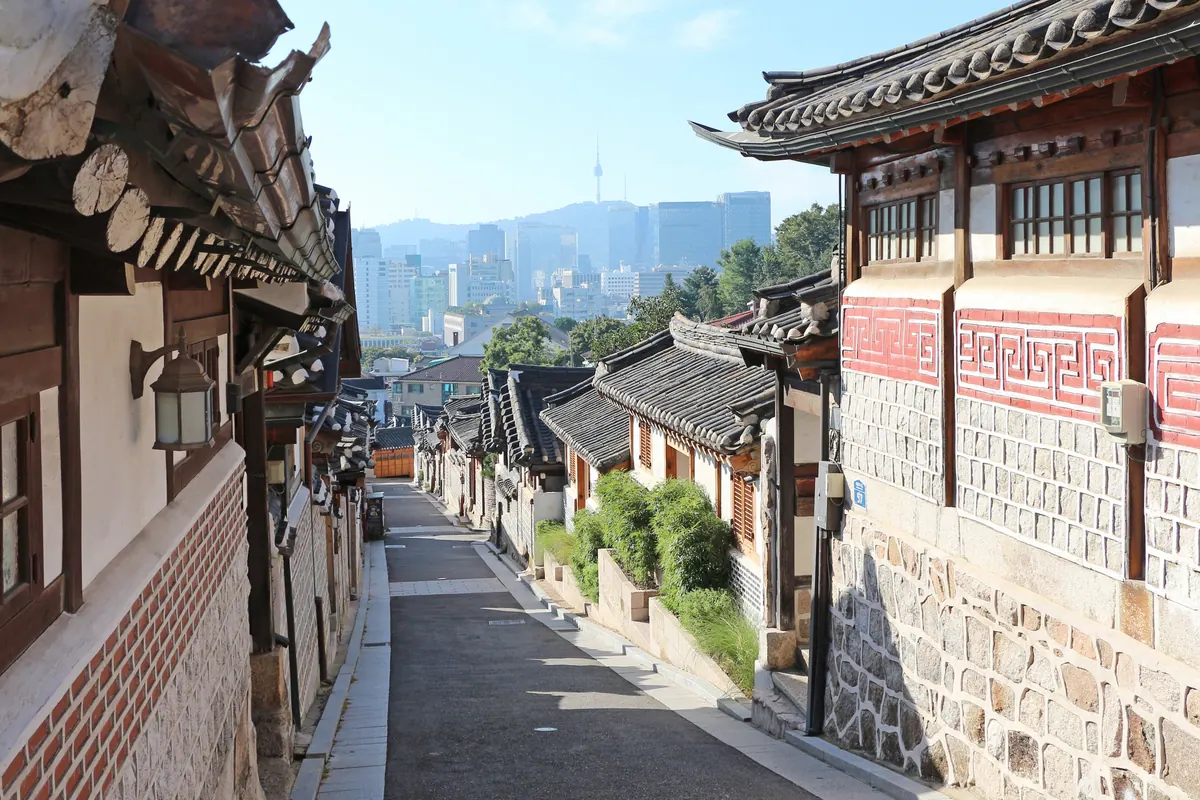
Jongno and Insadong are the best fit when palaces, Bukchon, traditional streets, museums, and Gwangjang Market are the heart of your Seoul plan. The area lets you begin an early palace morning without a long ride and return for a rest before an evening market or tea-house stop. It is less uniformly hotel-heavy than Myeongdong, so search carefully for the property style and station access you need. Some locations feel delightfully atmospheric but are farther from a large subway hub or have smaller streets for vehicles. For a history-first itinerary, that trade-off can be worth it; for a late airport arrival, it may be less convenient.
West Seoul: airport rail, cafes, and creative energy
Hongdae: best for nightlife, cafes, and a social trip
Hongdae revolves around the university district near Hongik University and offers a large selection of cafes, restaurants, shopping, music, and evening activity. It is an attractive base for friends, solo travelers, and visitors who want their hotel area to feel like an outing after dinner. Hongik University Station is on the all-stop AREX as well as Seoul Subway Line 2 and the Gyeongui–Jungang Line, which can simplify airport arrival and departure. The busiest streets can be loud and crowded, so choose a quieter pocket, check the luggage walk, or compare hotels near Gongdeok Station if you want another direct AREX stop with a calmer evening.
Mapo and Gongdeok: calmer, well-connected alternatives
Mapo and Gongdeok are strong choices for travelers who value transport connections, practical restaurants, and a less performative version of Seoul nightlife. Gongdeok in particular is a useful interchange area and can simplify travel between the airport railroad, central districts, and other subway lines. It may not deliver the instant visual buzz of Myeongdong or Hongdae, but that can be exactly the point after long walking days. Look for hotels near the station rather than assuming every Mapo address is equally convenient. This area is especially good for couples, business-and-leisure trips, and visitors who want a reliable base without needing to sleep inside a shopping district.
Yeouido: riverfront and business-district convenience
Yeouido is best for travelers with business nearby, events in the area, or a preference for river parks and a more spacious modern district. It is not the obvious first choice for someone trying to walk to palaces each morning, but the subway and river setting can make it appealing for a longer trip. The neighborhood feels different on workdays and weekends, so review dining and evening options close to the specific hotel rather than relying on a general description. Choose Yeouido because it supports your plans, not simply because it sits beside the Han River on a map.
South and east Seoul: choose these for a reason
Gangnam: shopping, business, and south-side plans
Gangnam works well when your itinerary includes business meetings, clinics, shopping districts, restaurants, or nightlife south of the Han River. It is a large area rather than a single block, and a hotel near Gangnam Station has a different feel and transport pattern from one in Apgujeong, Cheongdam, or COEX. Staying here solely because the name is familiar can add daily travel time to historic central Seoul. Staying here because your plans are genuinely south-side can make the trip far easier. Review the nearest subway line, not just the neighborhood label, and use transit apps to test your likely routes before booking.
Jamsil: events, family attractions, and the east side
Jamsil is a logical base for visitors focused on the east side of Seoul, including major sports or concert venues, lakeside walking, large-scale shopping, and family attractions. It can feel more relaxed and spacious than central shopping districts, while still being connected by subway. The trade-off is distance to the palace-and-market route in Jongno, so it is better for travelers who intend to spend real time locally rather than ticking off central sights every morning. Families may find the amenities and room choices appealing, but should still check the exact hotel-to-station route and whether the room layout works for their group.
Do not ignore the Han River when changing hotels
The Han River is not an obstacle, but it is a useful planning boundary. Crossing it is easy by subway when you plan it; doing so repeatedly just because you picked the wrong base can consume more energy than expected. If your trip is four nights or longer and combines central palaces with a specific south-side event, splitting the stay can be sensible. For most short trips, however, one well-connected hotel is simpler. Choose the side of the river that contains the majority of your must-do plans, then treat the other side as one well-organized day rather than a daily commute.
Match the area to your travel style
First-time visitors and short city breaks
Start with Myeongdong, City Hall, Euljiro, or Jongno. These areas keep the palace-and-market core within practical reach and give you plenty of food and transport choices after a long flight. Select Hongdae instead if airport rail and nightlife genuinely matter more than waking near historic Seoul. You can still visit every major area from any of these bases; the difference is how many transfers and late returns your plans require. Our first-time Seoul guide shows how a neighborhood-based itinerary fits together.
Couples, food-focused travelers, and repeat visitors
City Hall, Euljiro, Jongno, Mapo, and parts of Gangnam can all work well when you prefer restaurants, galleries, walks, and a hotel with a calmer identity than a tourist-shopping strip. Think about the evenings you want: a quiet restaurant near a historic district, cafe-hopping in the west, a river walk, or a polished south-side dinner. This group often benefits most from choosing a hotel with a good station connection and leaving the daily itinerary loose. The right base should give you one or two appealing local options without making you feel obliged to eat at the hotel every night.
Families, groups, and travelers with luggage
Families and groups should give extra weight to room configuration, elevator access, laundry, refrigerator space, neighborhood noise, and the airport-to-hotel route. A central hotel with a tiny room or awkward transfer can be a poor value if several people are sharing it. Myeongdong, City Hall, Mapo, Gongdeok, and Jamsil are often worth comparing because they combine practical services with different transport patterns. Use a map to check the walk from the station, then read current reviews specifically for room size and baggage handling rather than relying on category labels such as “family-friendly.”
What to check before booking a Seoul hotel
After choosing two or three neighborhoods, compare the actual properties on four points: station walk, airport transfer, room setup, and booking terms. First, map the route from the closest station exit rather than the station pin. Second, check whether an airport train, subway, bus, or taxi gives you a realistic luggage route. Third, inspect bed layout, bathroom arrangement, windows, and room size using current descriptions and guest photos. Finally, read the cancellation, payment, and check-in conditions for your dates. Those details matter more than a hotel’s broad star category.
For the hotel shortlist itself, compare the same dates through the Booking.com, Agoda, and Trip.com options attached to this guide, then read our best Seoul hotels by budget for a property-style guide. Prices and availability change constantly, so this article intentionally does not present a fixed “best deal.” The best value is the room and location that fit your trip, with conditions you understand before you pay.
資料來源與查核
我們參照官方或第一手資料查核實用資訊。預訂或出發前,請直接向相關單位確認時效性資訊。
- Visit Seoul — About Seoul and district highlightsenglish.visitseoul.net
- Visit Seoul — Myeongdong area informationenglish.visitseoul.net
- Seoul Metropolitan Government — Getting to Seoul from Incheon Airportenglish.seoul.go.kr
- Seoul Metropolitan Government — Public transportationenglish.seoul.go.kr
- AREX — All-stop train stations and live serviceairportrailroad.com
- Visit Seoul — Hongdae area and Airport Railroad accessenglish.visitseoul.net
常見問題
What is the best area to stay in Seoul for first-time visitors?
Myeongdong, City Hall, Euljiro, and Jongno are strong first-time choices because they combine central sightseeing, dining, and useful subway access. Hongdae is an alternative when airport rail and nightlife are a higher priority.
Should I stay in Hongdae or Myeongdong?
Choose Myeongdong for central sightseeing, shopping, and an easy short-trip base. Choose Hongdae for cafes, nightlife, a younger atmosphere, and convenient airport-rail access. Check the specific hotel’s noise level and station walk in either area.
Is Gangnam a good place to stay for tourists?
Gangnam is a good base when your plans include south-side shopping, business, dining, or nightlife. It is less efficient if most of your trip is focused on palaces, markets, and historic central Seoul.
How close should my Seoul hotel be to a subway station?
Aim for a simple, well-lit walk that you would be comfortable making with luggage. The exact station exit and street crossing are often more important than the straight-line distance shown on a booking map.
最後查核:2026年8月 · TipsKorea 編輯部


