
Three days is enough for Seoul's major contrasts if every day is built as a compact geographic cluster. This route moves from the palace district to the Han River and then to contemporary Seoul without treating the subway map as a checklist.
This Seoul 3 day itinerary answers the practical question: what belongs together on the same day?
Seoul is large, but most first-trip highlights sit in a few walkable clusters connected by rail. The common mistake is pairing places that look close on a tourist map but require two transfers and a long station walk. We recommend planning at district scale: arrive by subway, walk between nearby stops, eat in the same area and move only once if the day needs a second cluster.
This plan assumes three full sightseeing days and a base near a useful line. If you still need a neighborhood, compare the trade-offs in where to stay in Seoul. Travelers arriving that morning should use the first day as a half day and push the palace cluster to the next morning; the Incheon Airport to Seoul guide explains why an airport transfer should not be treated as a tiny errand.
How should you use this three-day Seoul plan?
Use the sequence as a route, not an appointment book. Choose one non-negotiable anchor for the morning and another for late afternoon. Everything else is a nearby option. That rule protects the trip from queues, seasonal heat, palace closure days and the perfectly normal desire to stay longer over lunch.
Before day one
Save the Korean names of your hotel and major stops, load a transit card, and download an offline map. Seoul's official tourism map and subway information are more useful than screenshots of a rigid minute-by-minute plan. Check the official page for every ticketed anchor on the evening before you visit. Palace operating days, special exhibitions and river services can change, and a 2026 itinerary should not pretend that a permanent schedule exists.
Bring shoes that can handle stone courtyards and long station corridors. A compact umbrella works for both summer sun and sudden rain. On hot or humid days, move the longest outdoor walk before lunch and place a museum, department store or café in mid-afternoon. In winter, reverse that logic: use the brightest part of the day outdoors and save indoor neighborhoods for evening.
Day 1 — How do you connect royal Seoul without backtracking?
Start at Gwanghwamun Square and approach Gyeongbokgung from the south. This gives the palace a clear urban and historical setting before you enter. The official palace service publishes current admission and access rules, while Visit Seoul notes that closure days must be checked. Do not plan a palace-specific day around an old blog timetable.
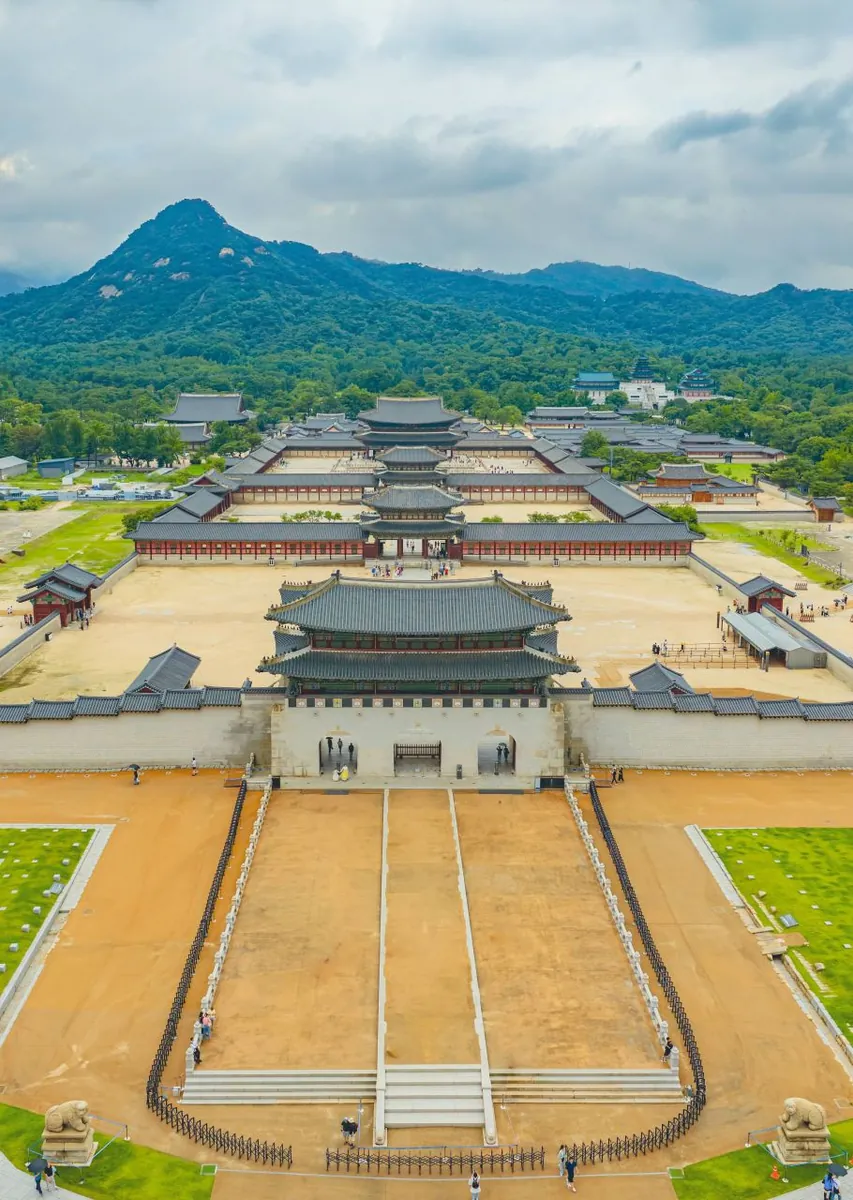
Inside Gyeongbokgung, concentrate on the main ceremonial axis, the quieter residential compounds and the landscape around the pavilions rather than attempting to photograph every building. First-time visitors often underestimate the size of the grounds. Give the palace a real block of time, and treat the National Palace Museum or National Folk Museum as a weather-dependent extension rather than a compulsory third attraction.
After the palace, choose one side. West leads toward Seochon, where smaller lanes, galleries and cafés make a low-key lunch stop. East leads toward Samcheong-dong, Bukchon and Insadong. If you choose Bukchon, remember that it is a residential neighborhood: keep voices low, respect restricted alleys and avoid blocking doorways for photos. Insadong is better when you want crafts, tea and a straightforward pedestrian route.
Continue toward Ikseon-dong or Cheonggyecheon in late afternoon. Both sit naturally south of the palace zone. Ikseon-dong offers compact hanok lanes but becomes congested; Cheonggyecheon offers space and an easy way to walk toward central shopping districts. End in one place—Ikseon-dong, Euljiro or Myeongdong—rather than adding N Seoul Tower solely because it appears on a must-see list. The fuller arrival checklist in first time in Seoul covers cash, connectivity and basic etiquette.
Day 2 — Where do nature, the river and east Seoul fit?
Day two shifts away from the palace core. Start with Seoul Forest if the weather is comfortable, or choose an indoor museum that matches your interests. The point is not that one attraction is universally best; it is to place a calm, spacious first stop before a busier afternoon. Seoul Forest also connects naturally to Seongsu, where cafés, shops and converted industrial spaces fill several blocks.
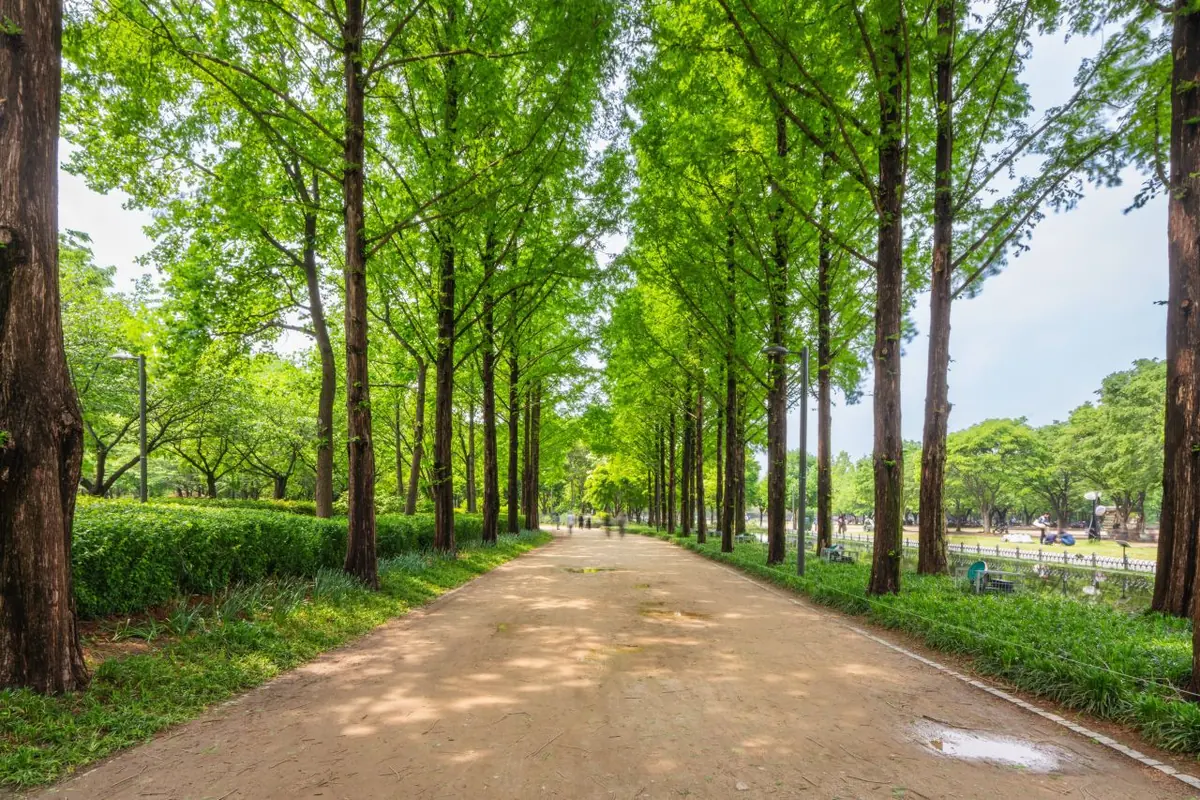
Eat in Seongsu, then decide whether the day is about the Han River or a major attraction. For the river, select one park and one activity: walk, cycle, picnic or watch sunset. Do not spend an hour crossing the city just to collect a second river park. Weather, water transport and seasonal facilities should be confirmed on the official city or venue page on the day.
For an attraction-led afternoon, Lotte World, Seoul Sky, COEX and the museums around Olympic Park are separate commitments, not neighboring checkboxes. Families or theme-park fans can give most of the day to Jamsil. Architecture and design travelers can choose Dongdaemun Design Plaza on the return toward central Seoul. Shoppers may prefer COEX, but its southern location makes it a poor add-on to a packed palace day.
Dinner is easiest near the final anchor. This sounds obvious, yet many itineraries schedule a famous restaurant across the river just as rush hour begins. Use a place category instead: a barbecue meal near Jamsil, noodles in Seongsu, or a market meal near Dongdaemun. The top things to do in Seoul can help you choose one east-side anchor without turning this day into a ranking exercise.
Day 3 — Which modern Seoul neighborhood should you choose?
Begin in western Seoul with Hongdae, Yeonnam-dong or Mangwon. Hongdae suits music, shopping and late-opening streets; Yeonnam is calmer for a morning walk; Mangwon pairs a neighborhood market with the Han River. They are close enough to combine selectively, but there is no reward for speed-running all three. Pick the atmosphere that fits your group and allow time for an unplanned café or shop.
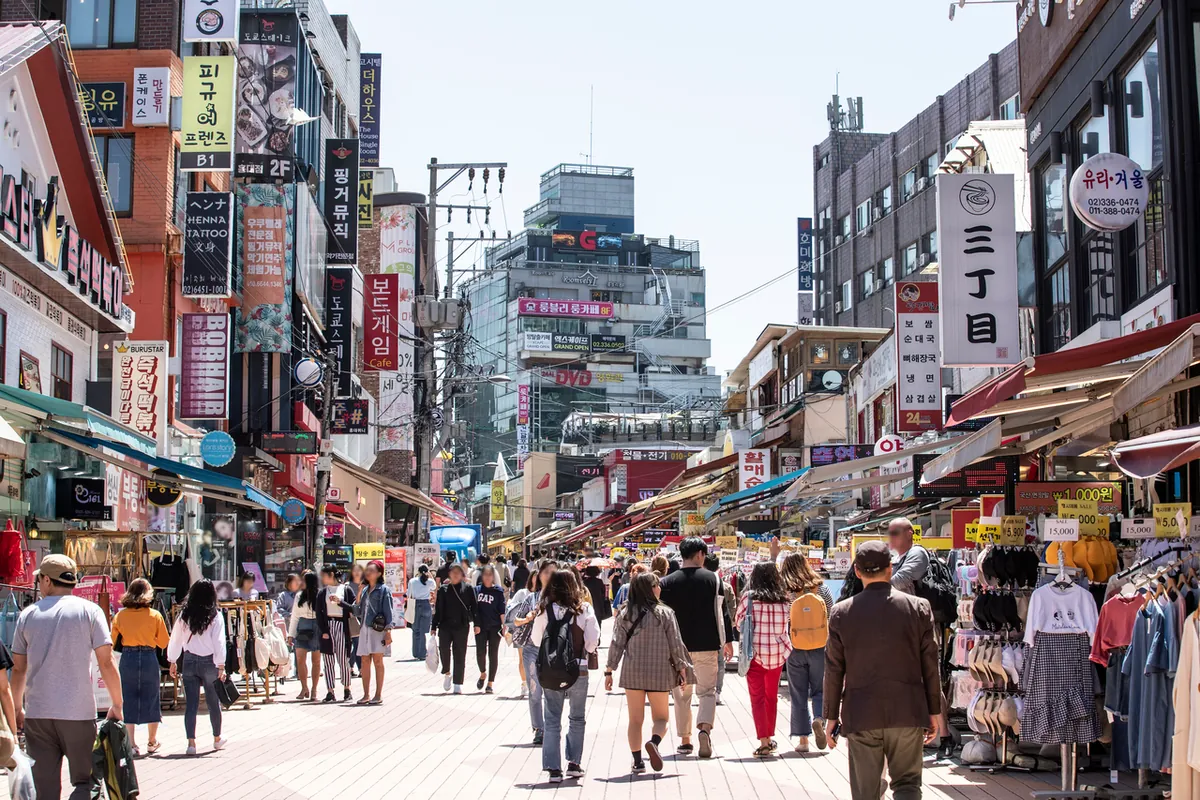
The afternoon choice should reflect your actual interest. Contemporary art and design travelers can remain north of the river and use museums or galleries. Beauty and fashion travelers may cross to Gangnam, Apgujeong or Seongsu if they skipped it on day two. History-focused visitors can use the time for another royal site such as Changdeokgung, but should check whether a separate tour or reservation applies to the area they want to see.
For a final evening, choose a view that does not depend on perfect visibility. A neighborhood rooftop, a riverside walk or a lit central street can be more reliable than a ticketed observatory in haze. If the weather is clear and an observation deck is important, reserve it as the day's anchor and build backward. Keep the final hours near your accommodation if you depart early the next morning.
What should you book, and what should stay flexible?
Book only experiences with a real capacity or time constraint: a performance, a popular observation deck, a guided palace component, a theme park product or a restaurant you would be disappointed to miss. Ordinary neighborhood walks, markets and riverside time work better as flexible blocks. This mix prevents one delay from collapsing the entire itinerary.
Confirm the palace operating day before assigning day one.
Reserve only your highest-priority timed attraction.
Keep a saved indoor alternative in each district.
Check the last practical route back to your hotel before an evening activity.
Use the official subway map and tap in and out correctly with your chosen transit card.
Transport products can be confusing because a pass that looks convenient may not cover the routes you use. Compare ordinary stored value, visitor products and unlimited options in Korea transport cards and passes. For three days centered in Seoul, route convenience matters more than maximizing theoretical discounts.
How can you adapt the route for rain, heat or low energy?
In sustained rain, keep the same geographic plan and replace outdoor pieces locally. On day one, shorten palace grounds and add a nearby museum. On day two, choose a major indoor complex rather than transferring between several small venues. On day three, use covered shopping and exhibition spaces, then return to a neighborhood walk if conditions improve.
For summer heat, start at opening time, take a long indoor break after lunch and resume outdoors toward evening. Carry water but do not assume every heritage compound has a convenient refill point. For cold or windy weather, use layers that can be removed indoors; subway platforms, malls and cafés can feel much warmer than the street.
Jet lag deserves the same respect as weather. If you wake early, use an unticketed walk first rather than arriving at a closed attraction. If energy collapses, remove the evening stop instead of rushing the afternoon. The best three-day itinerary is the one that leaves you able to notice Seoul, not merely prove that you crossed it.
A compact three-day checklist
Day 1 anchor: Gyeongbokgung and one adjacent traditional neighborhood.
Day 2 anchor: one east-Seoul attraction plus one river or park experience.
Day 3 anchor: one western neighborhood plus one interest-led modern district.
Daily buffer: at least one unassigned meal or evening block.
Final check: current venue notice, weather, transit status and the route back to your base.
If you are extending beyond the city, do not squeeze a major excursion into these three days unless it is a genuine priority. The best day trips and tours from Seoul compares what deserves a separate day. Nami Island, the DMZ and mountain routes are not short detours from a central neighborhood loop.
Frequently asked questions
Is three days enough for a first trip to Seoul?
Three full days are enough for a strong introduction: one royal and traditional cluster, one river or east-side cluster, and one contemporary-neighborhood day. It is not enough for every palace, market, museum and day trip, so choose anchors based on interest rather than a universal checklist.
Where is the best base for this itinerary?
A central base around Jongno, Euljiro or Myeongdong reduces friction for day one and keeps useful rail connections. Hongdae is convenient for airport access and nightlife, while Gangnam suits travelers whose priorities sit south of the river. The best base is the one that shortens your first and last journeys each day.
Should I buy an attraction pass?
Only after mapping the attractions you genuinely plan to visit and checking current inclusions, reservation rules and validity. A pass does not make distant stops geographically close. Many travelers save more time by paying individually and keeping the route compact.
Can I add a day trip during a three-day visit?
Yes, but it replaces a Seoul day rather than fitting around one. Make that trade if the DMZ, Suwon, Nami Island or a mountain is among your top reasons for visiting Korea. Keep at least one full day for central Seoul and avoid booking a late-city program after an uncertain return.
Last verified: August 30, 2026 by the TipsKorea editorial team. Palace days, ticketed attractions, transport notices and temporary programs can change; recheck the linked official sources before travel.
Frequently Asked Questions
Is three days enough for a first trip to Seoul?
Yes for a focused introduction built around three geographic clusters. It is not enough for every major attraction plus a day trip, so choose one or two anchors per day.
Where should I stay for this Seoul 3 day itinerary?
Jongno, Euljiro and Myeongdong are efficient central bases. Hongdae works well for airport access and nightlife, while Gangnam is better when south-Seoul stops dominate your plan.
Do I need to reserve every attraction in advance?
No. Reserve only capacity-limited or timed experiences, and confirm palace and venue notices. Neighborhoods, markets and riverside walks are better kept flexible.
Can this itinerary work in bad weather?
Yes. Keep the district order and replace outdoor blocks with nearby museums, malls or exhibitions. Avoid crossing the city solely for a rain substitute.
Last verified: August 2026 · TipsKorea Editorial


