Korean etiquette is easiest when you read the setting instead of memorizing theatrical rules. This guide gives a respectful default for homes, restaurants, transport, sacred places and shared public space, then explains what local instruction can change.
A practical default by setting
| Option | Respectful default | Look for | Avoid |
|---|---|---|---|
| Home or floor room | Pause at the entrance | Shoe shelf, raised floor or host cue | Stepping onto the clean area in outdoor shoes |
| Restaurant | Follow the table's pace | Serving utensils, grill roles and house rules | Planting utensils upright in rice |
| Transit | Let people exit first | Queue marks and priority symbols | Speaker audio, blocking doors or swinging bags |
| Temple or heritage site | Lower noise and follow signs | Restricted rooms and photo rules | Interrupting worship or staging intrusive photos |
These defaults reduce friction, but the exact venue or host controls the situation.
Korean Etiquette for Travelers is less about perfect ceremony than noticing what a shared space asks of you.
Korean Etiquette for Travelers: what matters most?
The most useful rule is contextual: look for a sign, a physical boundary or a cue from the person responsible for the space. Korea includes formal family meals, casual cafés, active temples, crowded trains, rural guesthouses and nightlife districts. The same gesture will not carry the same weight in all of them. A visitor who pays attention usually does better than one performing a checklist learned from television.
Separate manners from law and venue policy. A no-smoking zone, restricted trail, no-drone notice or bathhouse privacy rule is not an optional cultural suggestion. Follow it even when someone nearby does not. Conversely, a traditional custom may be offered as a courtesy rather than demanded. If a host waves away a formal gesture, accepting that cue can itself be polite.
Avoid turning etiquette into a portrait of all Korean people. Age, region, workplace, family and individual preference shape interactions, and everyday practice changes. We recommend a modest default: greet clearly, control your noise and belongings, wait your turn, respect privacy, and ask when an action affects someone else.
How should you greet and address people?
Start polite, then follow the other person's lead
A small nod with annyeonghaseyo is a safe everyday greeting. You do not need a deep ceremonial bow for a hotel desk, shop or casual introduction. If someone offers a handshake, return it gently; in a more formal exchange, using both hands or supporting the active hand signals care. The goal is a clear, respectful greeting, not a performance.
Korean speech marks levels of politeness, so visitors should begin with polite forms rather than copying casual language from entertainment. Gamsahamnida means thank you, joesonghamnida is a formal apology, and sillyehamnida can introduce an interruption or request. A sincere phrase plus calm body language often matters more than exact pronunciation.
Use the name, title or form of address a person gives you. Do not assume that a first name, family name or kinship term from a drama is appropriate for a stranger. In a guided activity or professional setting, a role such as teacher, guide or manager may be more natural than inventing familiarity. When unsure, ask, 'How should I address you?' in English or through interpretation.
When should you take off your shoes?
Remove outdoor shoes when the entrance clearly separates an outdoor zone from a raised or clean indoor floor. Korean homes commonly use this boundary, and it also appears in hanok stays, some guesthouse rooms, floor-seating restaurants and parts of religious sites. KTO's traveler guidance specifically notes that shoes often come off before entering a home.
Pause before stepping up. Look for a shoe cabinet, rows of shoes, slippers, a low step or the host's gesture. Turn shoes neatly toward the exit if that matches the space, and keep them out of the walkway. Wear clean, intact socks because bare feet may not be the intended indoor default. Use bathroom slippers only in the bathroom and leave them there.
Do not remove shoes automatically at every temple building or restaurant. Modern venues may keep shoes on, while one room inside a complex may require removal. Follow signs and staff. Our Korea temple stay guide explains why a living religious site needs more specific preparation than a sightseeing stop.
What are the practical Korean dining manners?
Read the table before reaching
At an ordinary restaurant, wait until everyone has food and take a cue from the host when the meal has a formal tone. Official Seoul etiquette guidance describes allowing the oldest person to begin first in a traditional setting, but many modern meals are relaxed. You do not need to interrogate a group about age; a brief pause lets the organizer set the pace.
Rice, soup and side dishes may arrive together, and some dishes may be shared. Use serving utensils when provided. If none appear, watch how the group handles the dish or ask rather than rummaging for a preferred piece. Keep spoons and chopsticks on the table or their rest when paused. Do not leave either utensil planted upright in a bowl of rice.
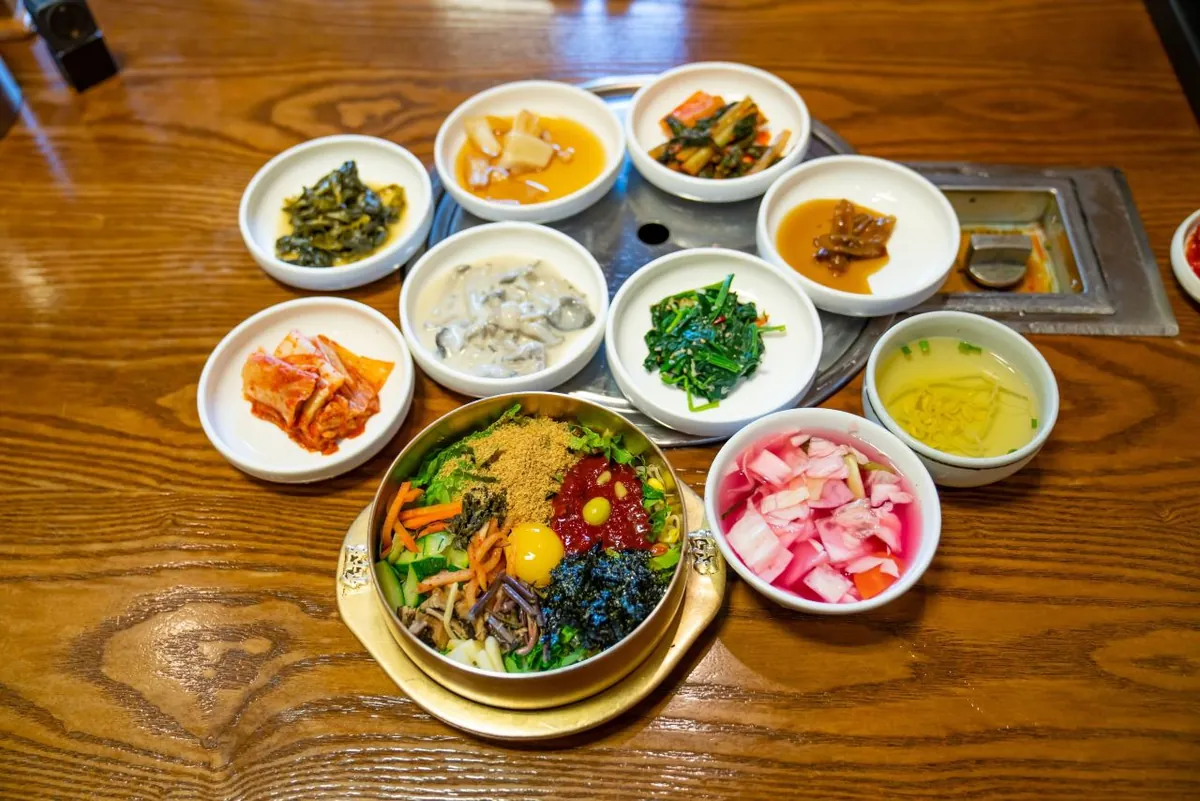
At barbecue, hot pot or another cooked-at-table meal, do not assume you should control the grill. A server or one diner may manage it. Keep raw-meat tongs separate from eating utensils when the restaurant provides them, do not move hot equipment, and make space when staff replace a plate or grill. House instructions are food-safety rules as well as manners.
Sharing never overrides a dietary or medical need. Explain allergies before ordering, ask whether a dish contains the ingredient, and do not rely on visual inspection of broth, sauce or side dishes. A polite refusal is better than risking harm. Our Korea travel essentials guide includes practical preparation for communication, payments and emergencies.
Alcohol is optional. In a formal meal, offering or receiving a drink with two hands may be appreciated, but no visitor needs to drink to demonstrate respect. Say you do not drink, keep a nonalcoholic beverage, or let the host know early. Check the bill for any service charge and follow the business's payment process; do not force a tip on someone who declines it.
How should you behave on buses, subways and trains?
Let passengers get off before boarding, stand clear of the doorway and follow queue markings. Visit Seoul's official transport-etiquette guidance emphasizes this exit-first sequence. Once aboard, move away from the door when space allows. On a bus, Seoul's official instructions generally direct riders to board through the front, tap, press the stop bell before their stop, tap again and leave through the back.
Control luggage as an extension of your body. Wear a bulky backpack in front or place it securely where it will not strike another rider. Do not block gates, wheelchair spaces, aisles or train doors for a photograph or easier exit. A smaller inconvenience for you can preserve access for many riders.
Use earphones and keep calls brief and quiet. Seoul Metropolitan Government guidance specifically asks subway riders not to play videos or music through speakers. Priority symbols identify seats or spaces for passengers such as older adults, disabled riders, pregnant passengers and people traveling with infants. Do not decide that someone looks 'eligible enough'; leave designated space available or yield promptly.
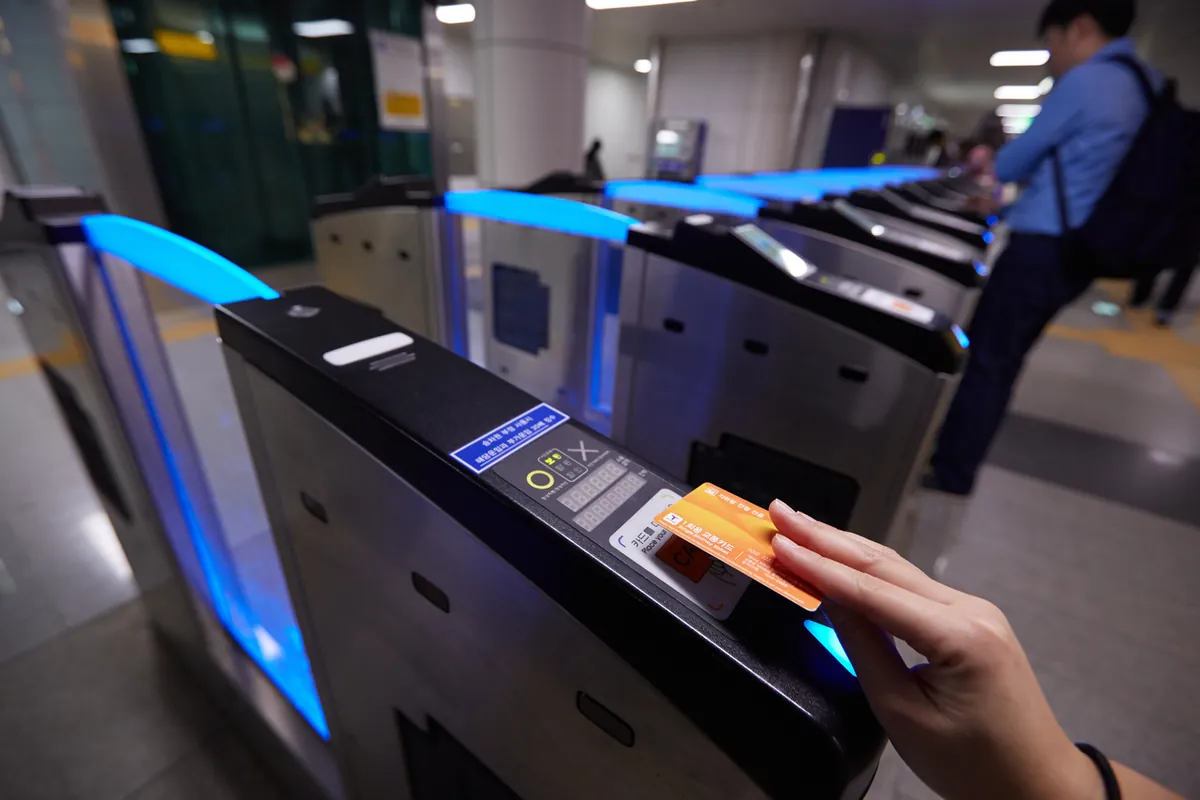
Tap and transfer rules are operational rather than ceremonial, but following them prevents delays for everyone. Prepare the card before reaching the gate and step aside if it fails. For the complete station sequence, exits and transfer planning, use our Seoul subway guide.
What should you know before taking photos?
Public visibility is not blanket consent. Ask before making a person the subject of a photograph, especially a child, worker, worshipper or identifiable resident. Respect no-photo and no-flash signs in museums, performances, palaces and temples. A quiet phone camera can still be prohibited, and a permitted snapshot does not authorize commercial equipment or a staged shoot.
Treat hillside villages, hanok neighborhoods and market alleys as lived and worked spaces. Visit Busan's official Gamcheon Culture Village page asks visitors to maintain silence and cleanliness because the attraction is residential, and it prohibits drones. Stay on the visitor route, do not peer through doors or windows, and do not use a doorstep as a costume set.
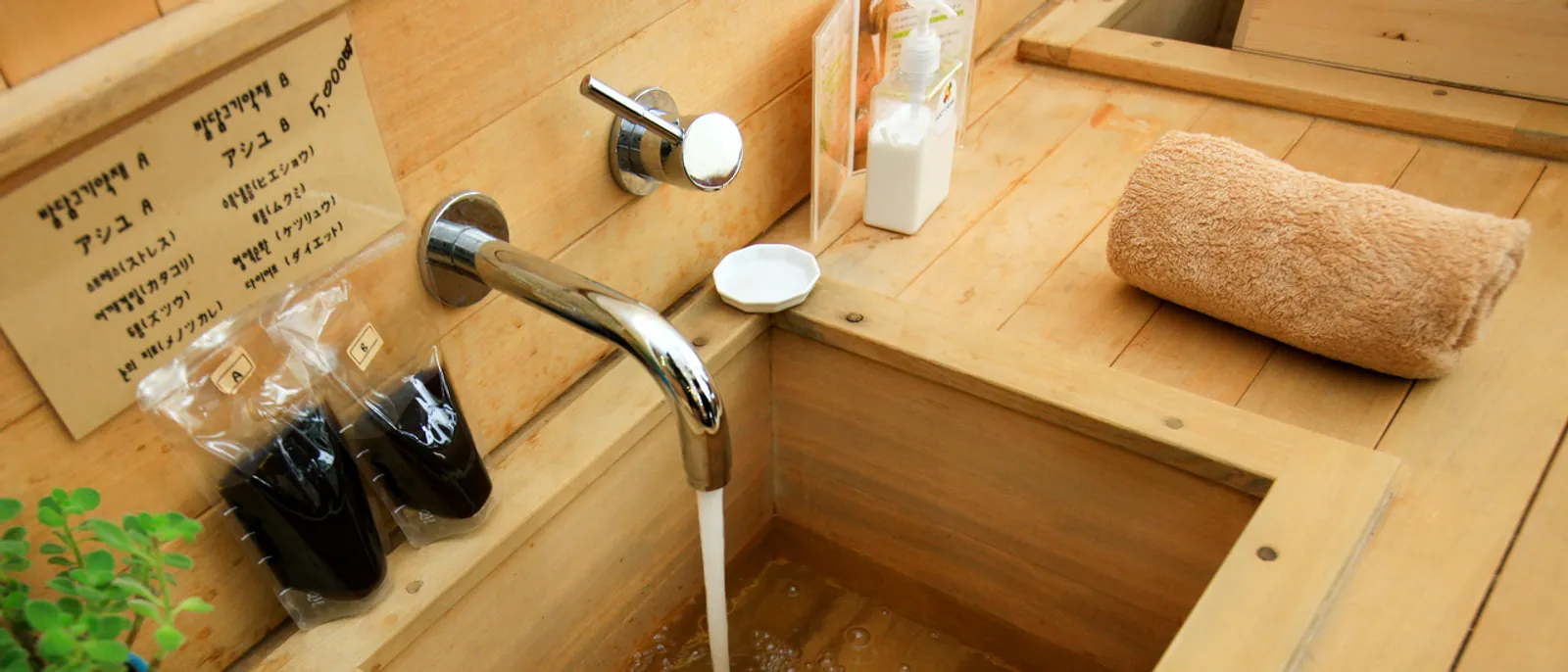
Never photograph or record in a bathhouse changing or wet area. Keep the phone stored until you reach a space where the venue explicitly permits it, and exclude other guests unless they consent. The Seoul jjimjilbang guide covers the entry, washing, clothing and privacy sequence in detail.
How do manners change at temples and heritage sites?
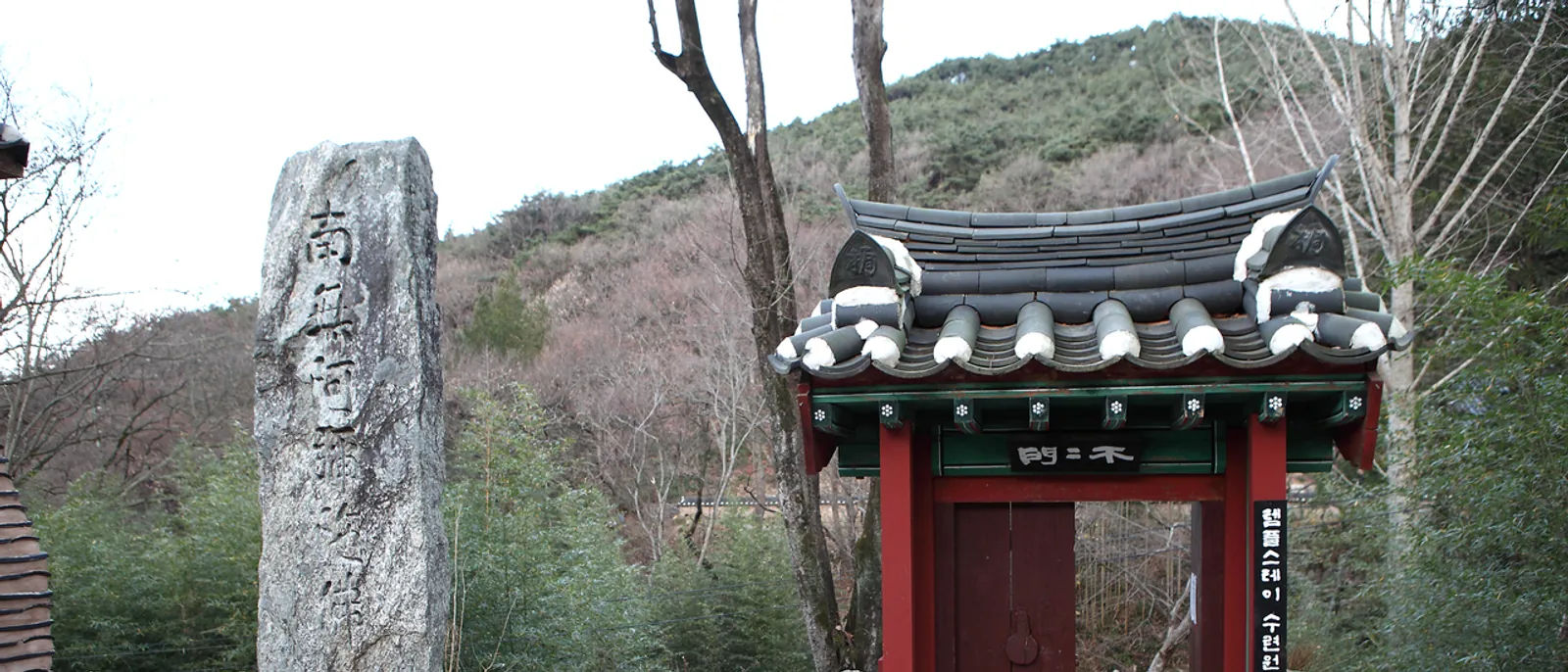
A Buddhist temple is both a visitor destination and a place of worship. Lower your voice near halls, do not interrupt a ceremony, and keep away from areas marked for residents or participants. Remove shoes before entering a building only when signs, the doorway or a coordinator indicate it. Ask before photographing worship, altars, monastics or program participants.
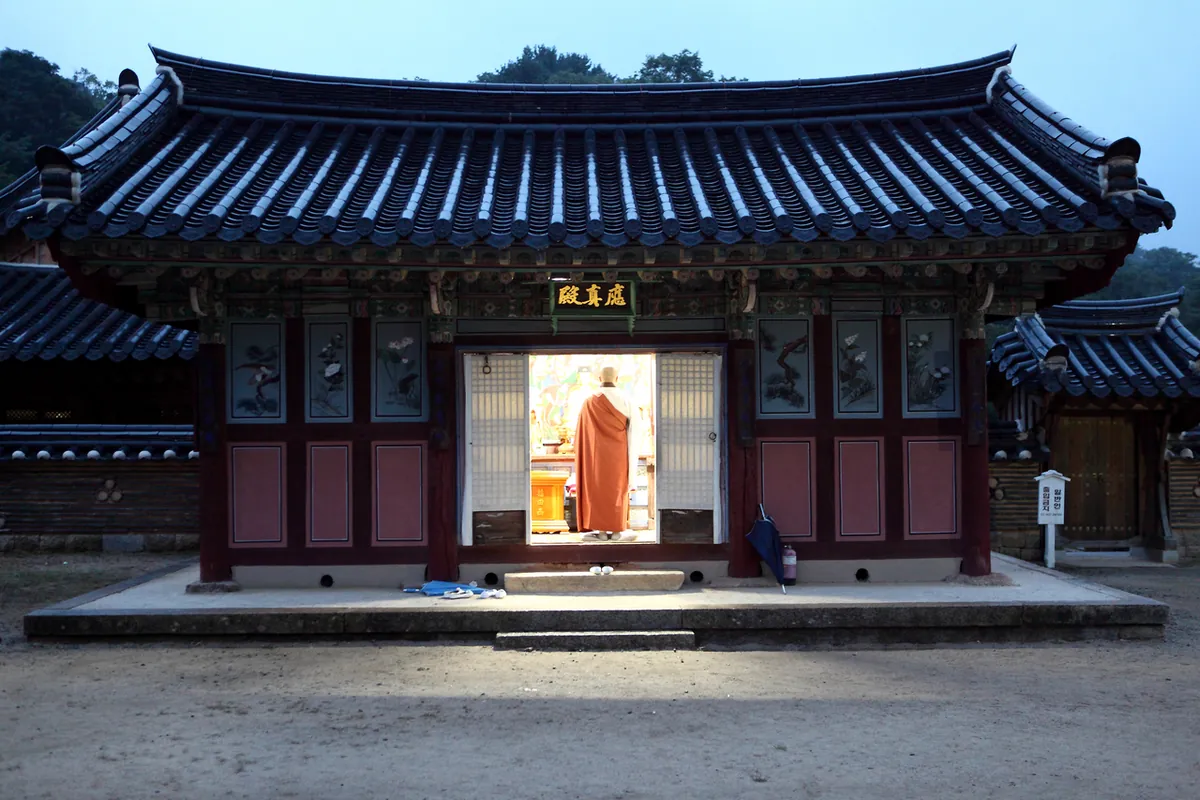
At palaces, museums and heritage sites, the current visitor notice controls clothing, props, tripods, drones, food and commercial photography. Hanbok admission or a popular photo location does not turn every room into a set. Keep equipment out of circulation paths and do not climb, lean on or reposition cultural objects.
Religious participation should be respectful but honest. A visitor can observe without pretending to share a belief. During a guided bow, tea or meditation activity, follow the coordinator and ask for an alternative if a physical or religious constraint matters. Courtesy is not measured by copying every movement perfectly.
How should you use shared public space?
Carry small rubbish until you find the correct bin, and follow sorting labels rather than leaving a cup beside a full container. Seoul's Hangang guidance prohibits littering and excessive noise, and limits cooking, camping and mobility devices to designated contexts. Other parks and cities set their own rules, so read local signs instead of extending one park's policy nationwide.
Smoke only where it is explicitly permitted. Indoor public and commercial spaces and many outdoor zones have restrictions, which can vary by municipality. A cluster of smokers is not reliable proof that a spot is legal. Find a designated area and keep smoke away from entrances, queues and children.
At convenience stores, cafés and public seating, clear the space as instructed and return reusable trays or containers to the marked point. Keep group conversations proportionate to the room, particularly late at night near accommodation and homes. The useful standard is not silence everywhere; it is avoiding an unnecessary burden on people sharing the space.
What if you make an etiquette mistake?
Stop, acknowledge the cue and correct the action. Joesonghamnida means 'I'm sorry,' while gamsahamnida thanks the person who helped. A long defense usually creates more disruption than the original error. If staff ask you to move, lower audio, cover a camera or change shoes, comply first and ask a short question afterward if clarification is still needed.
For a language barrier, show the relevant sign, booking page or address instead of speaking louder. The official VISITKOREA resources include the 1330 Korea Travel Helpline for traveler information and interpretation. Save access details before the trip, but call 112 for police or 119 for fire and medical emergencies when urgent help is required.
Most small mistakes are recoverable. The aim of Korean etiquette for travelers is not anxiety or imitation; it is making homes, tables, vehicles, sacred places and neighborhoods comfortable enough to share.
Last verified: August 31, 2026 by the TipsKorea editorial team. We checked current KTO, Seoul and Busan official guidance; venue signs and staff instructions remain the authority on site.
Frequently Asked Questions
Do tourists need to bow when greeting someone in Korea?
A small nod with annyeonghaseyo is enough for most everyday encounters. Follow the host or organizer in a formal ceremony rather than attempting an elaborate bow.
Do travelers always remove their shoes indoors in Korea?
No. Pause at the entrance and look for a raised floor, shoe shelf, slippers, sign or host cue. Homes and some floor-based spaces require it; many modern venues do not.
What should I avoid doing with chopsticks in Korea?
Do not leave chopsticks planted upright in a rice bowl. Use serving utensils when provided, keep raw-cooking tools separate and follow the table's arrangement.
Is tipping expected at Korean restaurants and hotels?
Tipping is not traditionally customary, but businesses and booked services can differ. Read the bill and terms, follow the stated process and do not insist if staff decline.
Last verified: August 2026 · TipsKorea Editorial