
This guide separates confirmed 2026 information from historical timing, then turns the national color wave into five realistic regional routes. It will require a forecast update when an official 2026 bulletin is released.
Korea autumn foliage 2026 is worth planning now, but no official nationwide forecast was available by August 16.
Is the official Korea autumn foliage 2026 forecast available?
Current status: not yet published
No official nationwide 2026 forecast was available on the official KTO travel site or Korea Forest Service bulletin search when we checked on August 16, 2026. This matters because several travel pages already show exact-looking 2026 peak dates based on averages, models or prior years. Those estimates may be useful for broad booking decisions, but they are not the official 2026 forecast. This guide will need an explicit update when a dated official release appears.
What the official 2025 forecast actually said
Historical reference only: KTO's forecast published September 10, 2025 listed first foliage at Seoraksan on September 30, Jirisan on October 13, Hallasan on October 14 and Bukhansan on October 17. It listed peak foliage at Seoraksan and Jirisan on October 23, Hallasan on October 30, Bukhansan on November 4 and Naejangsan on November 11. KTO also warned that actual dates could change with weather. None of those dates should be relabeled as 2026.
How we will recognize a real update
A valid update needs a publishing organization, publication date, named locations and a clear distinction between first color and peak color. It should link to the original KTO, Korea Forest Service or other accountable official bulletin rather than a copied graphic with no provenance. When the 2026 release appears, this page should show the source and verification date beside the new figures, retain the earlier status note for transparency and avoid mixing data from different forecast providers without labeling them.
How should you read a Korea foliage forecast?
First foliage is not peak foliage
A first-foliage date means color change has begun under the forecast's definition; it does not mean an entire mountain is red. Peak foliage is also a regional estimate, not a promise that every trail, valley and tree species will look identical. Higher slopes can change before entrances and towns. Ginkgo may hold gold after some maples have fallen. Read the label attached to every date, then look for local condition reports close to the day you will actually visit.
Weather can move or shorten the display
Temperature patterns influence color development, while strong wind and heavy rain can strip leaves after they change. A forecast created weeks earlier cannot guarantee the scene on one afternoon. Instead of reserving an inflexible cross-country chase, choose a destination with museums, temples, markets or coastal walks that remain worthwhile if the leaves are early, late or damaged. Our Korea travel essentials guide covers layers, rain protection and practical setup for a weather-dependent trip.
Route 1: Should you begin with Seoraksan and the northeast?
Choose this route for mountains, not a quick photo stop
Seoraksan is the classic northeastern anchor and appeared first among the locations named in KTO's 2025 historical forecast. That pattern is a reason to monitor the northeast early in the season, not a basis for announcing a 2026 day. A worthwhile visit requires trail selection, weather awareness and enough time for transport. Check Korea National Park Service notices for closures or restrictions, choose a route matched to the least experienced traveler and turn back when conditions make the plan unsafe.
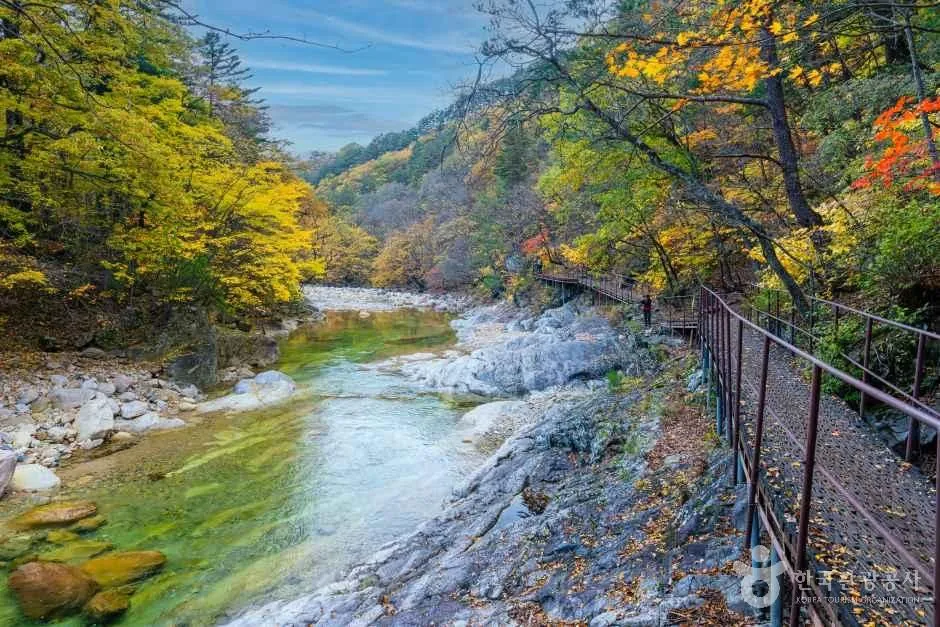
Build a resilient Gangwon route
Use Sokcho or another nearby base for a dedicated park day, then add the east coast rather than commuting repeatedly from Seoul. Gangneung can provide heritage houses, markets, lake walks and coffee beside the sea if mountain visibility is poor. Our two-day Gangneung itinerary is designed for KTX and local transport. Do not combine Seoraksan, central Gangneung and a late Seoul return in one packed day merely because they share a province on the map.
Route 2: Where can you see autumn foliage in Seoul?
Use the city as the flexible option
Seoul is the strongest choice when your dates are fixed because the day can succeed without perfect color. The Seoul Metropolitan Government's current map identifies 110 autumn foliage trails across streets, streams, parks and walking routes, including gentle and waterside options. Start with one neighborhood rather than crossing the city for isolated trees. Deoksugung-gil, Seoul Forest, Namsan and streamside paths offer different access and scenery, so select by mobility, hotel location and the latest local color report.
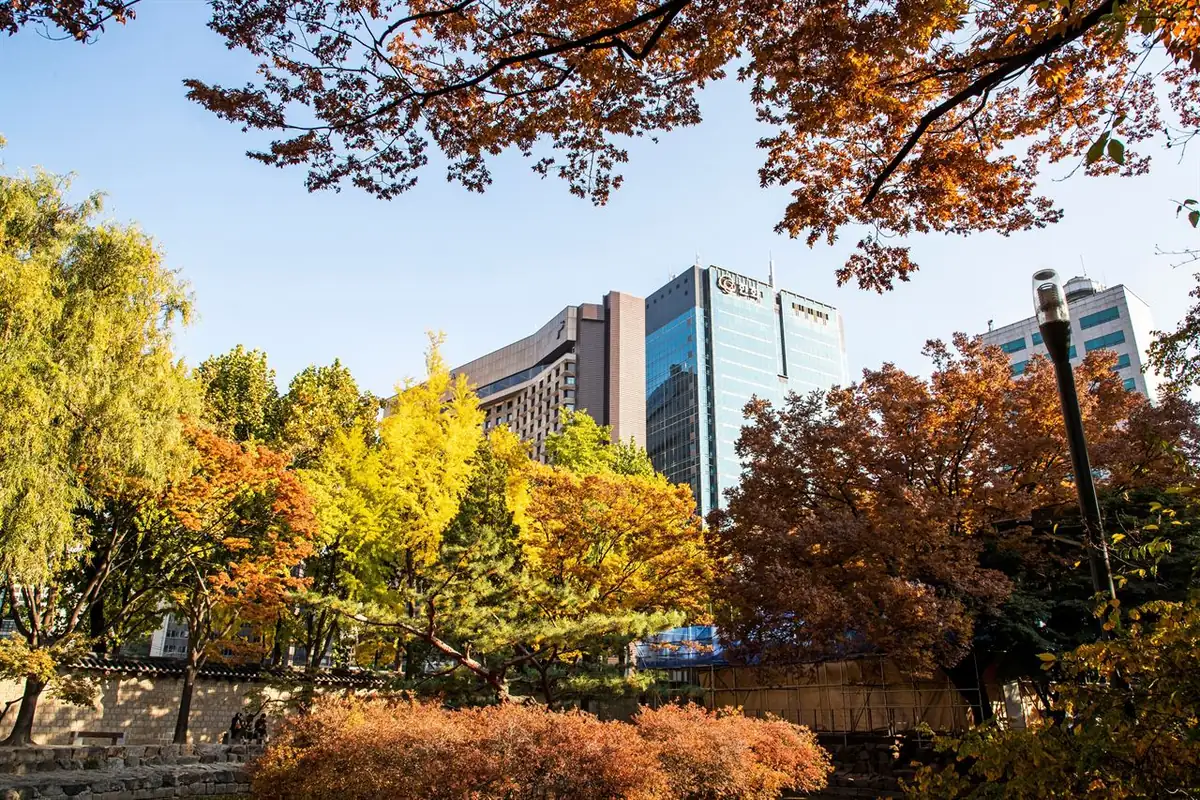
Add Bukhansan only if you want a hike
Bukhansan gives the capital a true mountain option, but it should not be treated like another landscaped park. In the 2025 official historical reference, Bukhansan's first foliage and peak came later than Seoraksan's. That relationship may help explain the usual north-and-elevation pattern, but it does not set 2026 dates. Check park notices, daylight and trail difficulty, wear appropriate footwear and keep an urban trail as the weather-safe alternative.
Keep the wider Seoul itinerary intact
Palaces, museums, neighborhoods and markets remain useful in rain or weak color. Build one foliage block into a balanced first visit instead of allowing the entire trip to depend on a single garden reservation. The first-time Seoul guide helps group nearby sights, while the Seoul day-trip guide explains when a regional excursion is worth the extra travel. This flexibility is Seoul's greatest seasonal advantage.
Route 3: How does Gyeongju fit a southern autumn trip?
Choose cultural landscapes over forecast chasing
Gyeongju combines temple maple, woodland paths, royal tombs and evening palace scenery in a city that remains significant outside peak color. KTO's 2025 destination material named Bulguksa among notable autumn places, but local species and sites will not turn at exactly the same moment. Use Day 1 for the compact central heritage area and Day 2 for Bulguksa and, when transport and weather cooperate, Seokguram. See our two-day Gyeongju itinerary for that sequence.
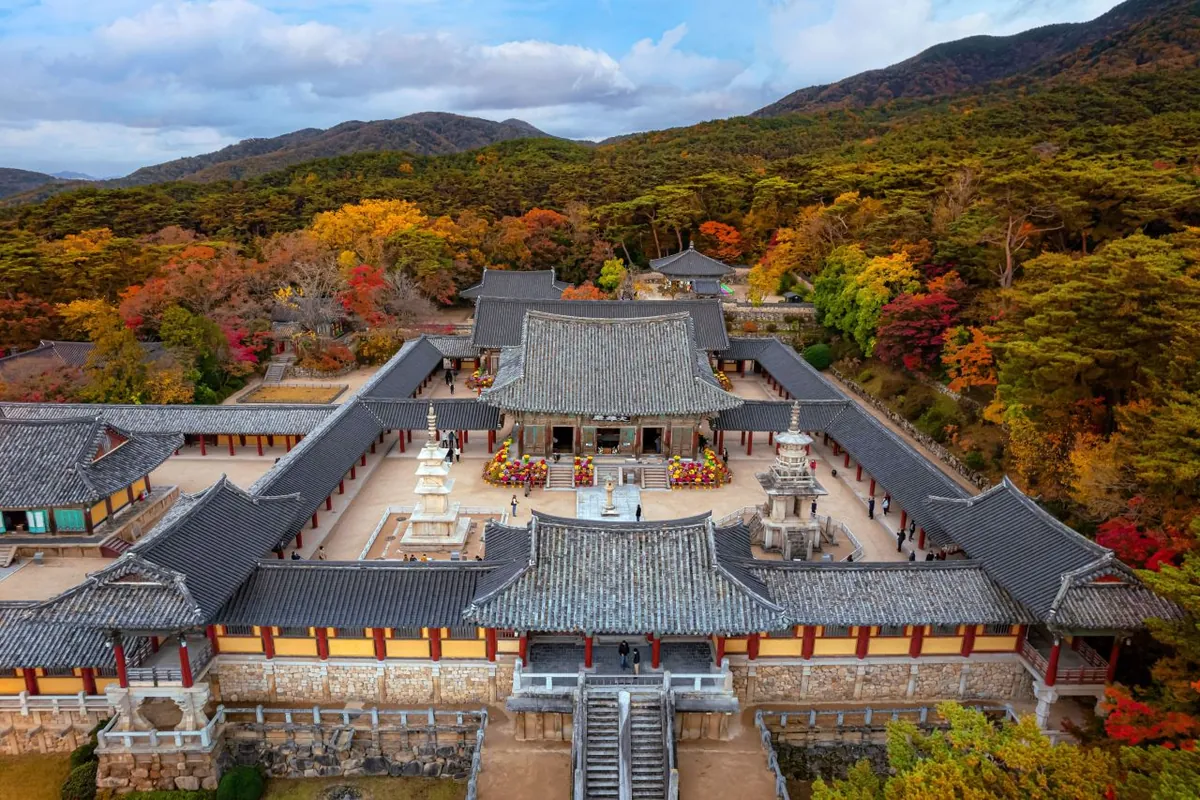
Connect Gyeongju and Busan without rushing
Gyeongju can sit naturally before or after Busan on a rail-led journey, giving you historic landscapes and then the coast. Do not commute back and forth solely to chase leaves. Stay overnight if night views matter, then continue south when your existing route calls for it. The three-day Busan itinerary groups that large city by area. Autumn color should enrich the route, not force daily hotel changes or fragile train connections.
Route 4: Are Naejangsan and Jirisan worth a dedicated trip?
Naejangsan is a destination, not a Seoul add-on
Naejangsan is strongly associated with maple scenery and appeared late in the sequence of KTO's 2025 historical forecast, which listed a November 11 peak that year. That is historical reference only, not a 2026 target date. A visit should account for long-distance transport, crowded approach roads, park movement and the possibility that weather changes the display. Stay nearer the region or use a clearly described tour rather than promising a relaxed mountain day after an improvised journey from central Seoul.
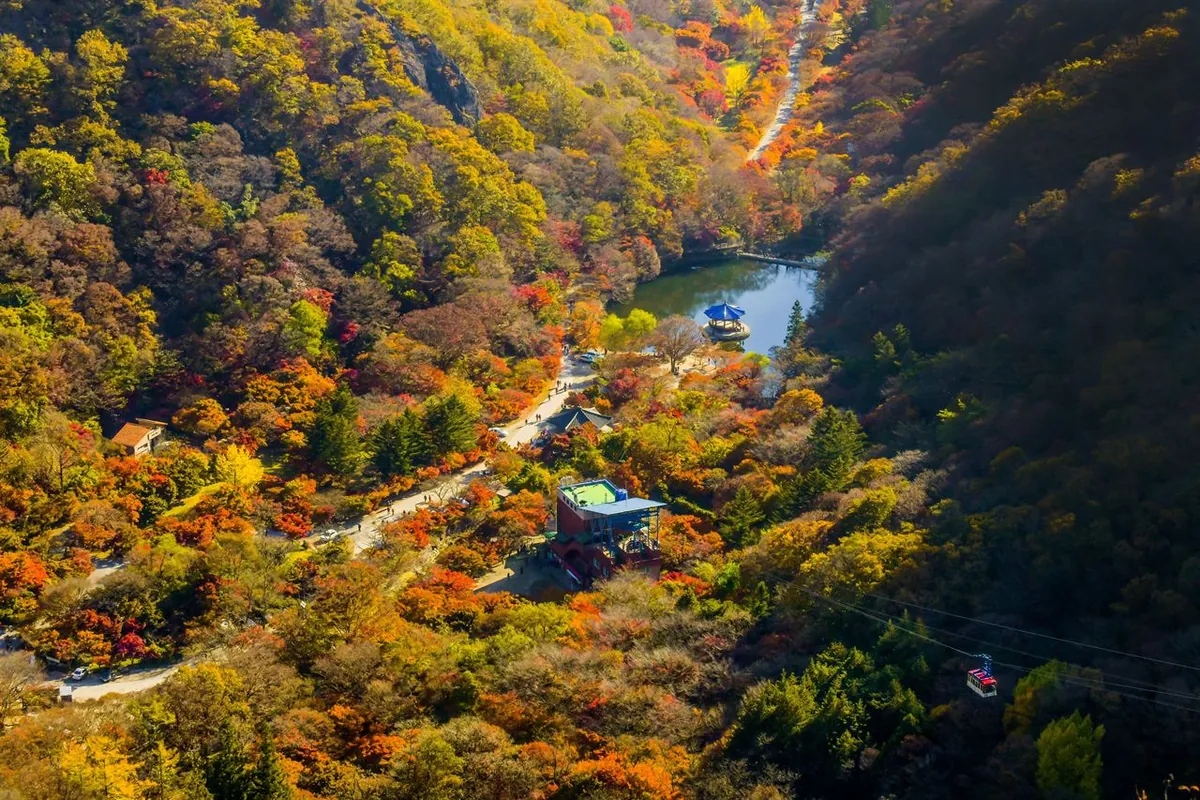
Jirisan needs an exact trail decision
Jirisan covers a vast mountain area, so saying you will visit the park is not yet an itinerary. Pick a specific entrance and route, confirm its access from your base and check current Korea National Park Service notices. The official 2025 historical reference listed both first and peak timing for Jirisan, but conditions differ by elevation and valley. Do not use a nationwide color map as a hiking safety tool. Weather, trail status, daylight and your group's ability take priority.
Route 5: When does Jeju make sense for autumn color?
Treat Hallasan and lowland Jeju separately
Hallasan has elevation-driven conditions that can differ sharply from Jeju's coast, forests and oreum landscapes. KTO's 2025 historical forecast listed Hallasan dates, but they cannot be transferred to 2026 or to every part of the island. A mountain day requires reservation and trail checks where applicable, proper clothing and a willingness to cancel in unsafe weather. A lowland forest, museum or coastal route is not a failed substitute; it is the resilient second version of the day.
Do not cross the island for one patch of color
Jeju travel times make geographic grouping essential, particularly without a rental car. Choose an east, west, Jeju City or Seogwipo day and let seasonal scenery sit inside that zone. Our Jeju without a car itinerary separates routes by realistic bus movement. If autumn leaves are the only reason for adding Jeju to a mainland trip, compare the flight, weather risk and lost transfer time against a closer mountain or city option first.
Which foliage route matches your travel dates?
Before the official forecast
Reserve flexible accommodation in places you genuinely want to visit, then wait before buying a nonrefundable foliage-only tour. Travelers arriving earlier in the season can monitor northeastern mountains; travelers based later can keep Seoul, Gyeongju, southern parks or Jeju on the shortlist. This is a planning framework, not a 2026 calendar. Once the official forecast is published, compare it with your fixed dates and choose the closest route with acceptable transport rather than the location showing the most dramatic color on one map.
After the forecast is released
Check the publication date, then verify local conditions again within a few days of travel. Use official park and municipal notices for closures, reservations and access. If your selected location appears too early or late, adjust the type of foliage experience before changing the whole trip: mountain to city, high elevation to low elevation, or maple destination to a ginkgo-lined urban walk. A flexible transit card and working mobile data make those small changes easier; review our transport-card guide in advance.
How can you avoid crowds and common foliage mistakes?
Do not confuse famous with convenient
The most famous mountain can deliver less enjoyment than a city park when the journey involves a predawn departure, traffic and hours of queuing. Choose according to your walking ability, tolerance for crowds and transport confidence. Visit popular urban paths on a weekday or early in the day when possible, while respecting opening and residential quiet hours. Never step into planted areas, roads or restricted land for a clear photograph. Seasonal popularity does not reduce cultural, religious or ecological rules.
Photograph the place without inventing the date
A current photo can document conditions, but a stock image may have been taken in a different month or year. The KTO Tourism Photo API provides licensed tourism imagery with title, location, photography timing and creator metadata. Use that provenance in the caption and do not imply that an archival image shows today's leaves. On the ground, avoid identifiable close-up portraits without consent and keep drones, tripods and commercial photography within each site's rules.
What should you check before an autumn day trip?
Look for a dated official 2026 forecast from KTO or the Korea Forest Service, and distinguish first foliage from peak foliage.
Check Korea National Park Service or municipal notices for trail closures, reservations, transport changes and weather warnings.
Save one indoor or low-exposure alternative in the same region rather than building a second cross-country itinerary.
Carry layers, water, sun and rain protection, a charged phone and offline copies of tickets and Korean place names.
Recheck the return train or bus and leave a delay margin during busy foliage weekends.
Last verified: August 16, 2026. The official nationwide 2026 foliage forecast had not yet been published; all 2025 dates above are historical reference only and this guide must be updated when an official 2026 release appears.
Frequently Asked Questions
Has the official Korea autumn foliage 2026 forecast been released?
No official nationwide 2026 forecast was available from the checked KTO and Korea Forest Service sources as of August 16, 2026. Exact dates shown elsewhere may be estimates rather than official figures.
When is the best time to see autumn leaves in Korea in 2026?
It cannot yet be stated as an official 2026 date. Color usually varies by latitude, elevation, species and weather, so wait for the official forecast and verify local conditions shortly before travel.
Where should first-time visitors see fall foliage in Korea?
Seoul is the most flexible choice because palaces, parks, streams and museums keep the day worthwhile. Choose Seoraksan or a southern national park only when you want a dedicated mountain journey.
Can I use the 2025 Korea foliage dates to plan 2026?
Use them only to understand the broad historical sequence, never as confirmed 2026 dates. Weather changes annual timing, and conditions vary within the same mountain or city.
Last verified: August 2026 · TipsKorea Editorial


