
Seoraksan is close enough to consider from Seoul but far enough that transport, daylight and trail ambition must be planned together. This guide compares an independent bus day, a guided tour and a Sokcho overnight without treating them as interchangeable trips.
Seoraksan from Seoul is a long day trip; a guided tour or Sokcho overnight is often calmer. Choose by trail, season and transfer tolerance.
Is Seoraksan from Seoul realistic in one day?
Yes, if you define the day carefully. Seoul and Sokcho are linked by intercity and express buses, and Sokcho's official tourism information lists local buses toward Seoraksan. The challenge is not one impossible journey; it is the chain of hotel-to-terminal travel, the road to Sokcho, a local bus or taxi to Sogongwon, park time and the same sequence in reverse. Road conditions and queues can consume the margin that looked generous on paper.
A same-day visit is most realistic for a lower-valley walk, Sinheungsa area, a weather-permitting cable-car visit or one deliberately chosen half-day hike. It is less suitable when your goal is a long summit route, when sunset comes early, or when you would be disappointed by a shortened visit after a transport delay. Korea National Park Service classifies routes by terrain, duration and required experience; the highest-effort routes should not be squeezed into a sightseeing day from Seoul.
We recommend treating Seoul as the starting city and Sokcho as the transport gateway. Do not search only for a place named Seoraksan and assume every result uses the same entrance. The national park spans Outer, Inner and South Seorak across several local jurisdictions. First-time day-trippers normally mean the Outer Seorak side reached through Sokcho and Sogongwon, where the visitor facilities, Sinheungsa, cable-car base and routes toward Biseondae or Ulsanbawi begin.
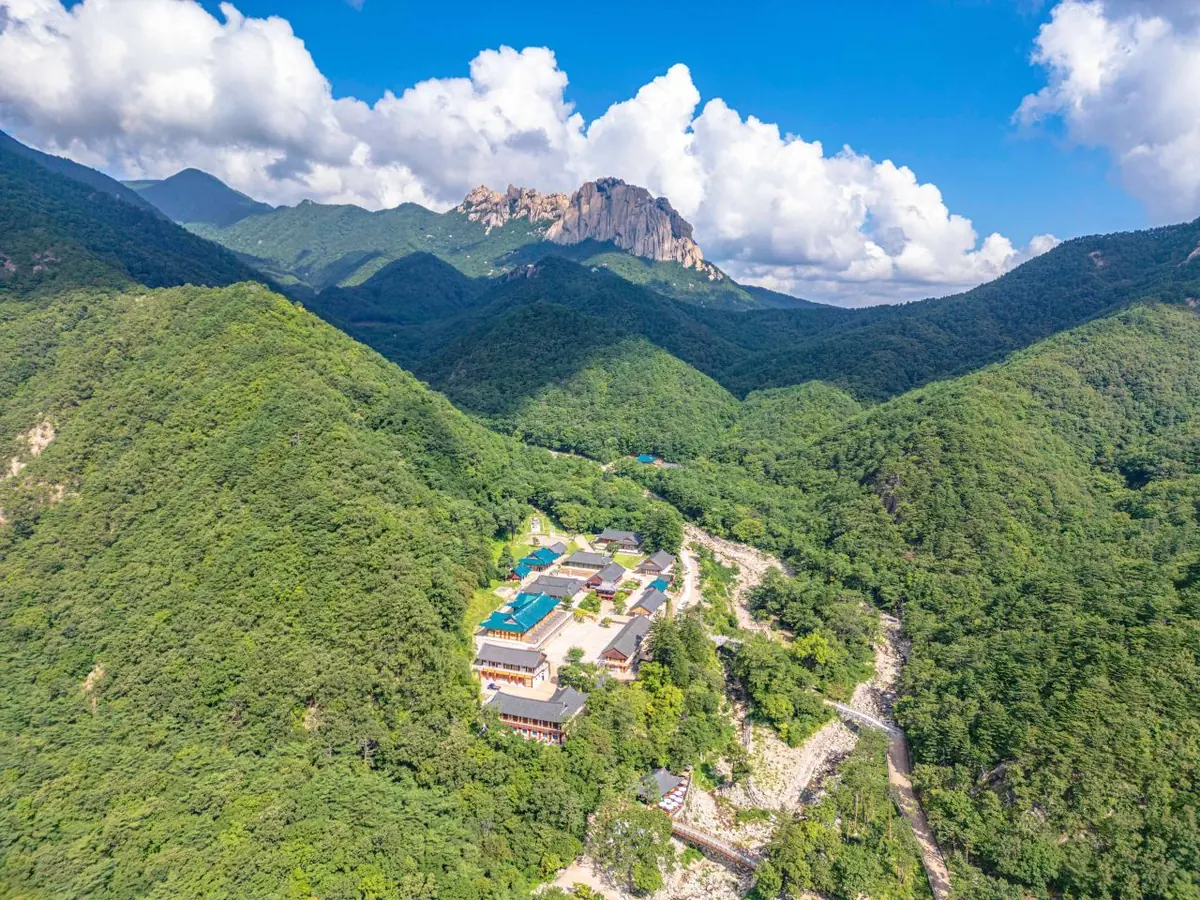
The decision rule
Choose a day trip when seeing the landscape matters more than completing a demanding hike. Choose a tour when transfers are the main source of stress. Choose an overnight when a particular trail is the reason you are going. Our broader Seoul day-trip guide can help you compare this long nature day with closer alternatives.
Bus, guided tour or overnight: which option wins?
Independent bus day: best for flexible travelers
An independent bus day gives you control over which park activity you choose and what you skip. Buy the Seoul-to-Sokcho and return seats around the park plan, not as an afterthought. Depending on the service, your Seoul departure may be from the express-bus complex in Gangnam or from Dong Seoul, and Sokcho has both express and intercity terminals. Read the ticket's terminal name character by character; going to the wrong terminal can erase the advantage of an early reservation.
From Sokcho, continue to the Sogongwon side by the currently published local service or by taxi. Sokcho City lists routes 7 and 7-1 for the Seoraksan direction, but schedules and stopping patterns are operational information, so verify them close to travel. A stored-value transit card is useful for local transport, but it does not replace a reserved seat on the intercity leg. Our Korea transport-card guide explains that boundary.
The strength of this plan is freedom inside the park. The weakness is that every transfer belongs to you. Set a turnaround time before beginning the trail, keep the return ticket and terminal location offline, and do not rely on the final plausible connection. In peak foliage periods, a bus that is technically available may not fit your preferred departure, and road congestion can lengthen a simple-looking route.
Guided tour: best for a low-friction same day
A guided trip removes the terminal change in Sokcho and usually fixes a Seoul pickup and return point. That is valuable for solo travelers who do not want to navigate regional buses, families protecting energy for the park, and visitors with one available day. It can also simplify a combined itinerary if the operator adds another Gangwon stop.
The trade is control. Some tours provide only a short free period, some center the cable car, and others assume a particular walking route. Compare the exact entrance, time available in the park, walking difficulty, language, meal arrangement, cable-car inclusion, minimum group rule and cancellation terms. A listing that says Seoraksan is not enough; the useful question is what you can realistically do between arrival and departure.
Overnight in Sokcho: best for hiking and weather margin
One night changes the trip more than it may appear. You can travel from Seoul the previous afternoon, sleep in Sokcho or near Seorak-dong, begin with daylight and return to Seoul after the hike rather than racing the same road twice in one day. The extra margin matters for Ulsanbawi, autumn crowds, summer heat and any forecast that could shift the best hiking window.
Stay in central Sokcho when you want restaurants, markets and easier access to the bus terminals. Stay nearer Seorak-dong when an early park start is the priority and you accept fewer city options at night. Check the current first local departure or pre-arrange a taxi rather than assuming a mountain hotel automatically provides transport. If you have two nights, Sokcho also becomes a destination instead of a waiting room between buses.
How do you plan the independent bus route?
Step 1: match the Seoul terminal to the ticket
Search the official reservation channel for your date and use the terminal printed on the chosen service. Seoul's terminal names are not interchangeable. Allow enough city travel before departure for a missed metro, a large terminal complex and the boarding cutoff. If you are staying far from the terminal, the earliest departure on the screen may not be the most reliable one you can reach.
Step 2: match the Sokcho terminal to your local transfer
Save both Sokcho terminal locations because your outbound and inbound services may not use the same one. On arrival, check the current local-bus display or take a taxi to the Sogongwon entrance. Do not tell a driver only Seoraksan if you intend Outer Seorak; show the Korean destination for Seoraksan Sogongwon or the exact park entrance.
Step 3: protect the return before you hike
Work backward from the intercity departure. Include the walk out of the park, possible local-bus wait, road congestion and time to find the correct terminal bay. The safest itinerary has an earlier acceptable return and another later possibility, not one final seat that depends on every connection behaving perfectly. Download tickets and essential addresses because mountain reception and battery life should not be single points of failure.
Which Seoraksan experience fits a day trip?
Sogongwon, Sinheungsa and a lower-valley walk
This is the most forgiving first visit. The Sogongwon approach gives you the mountain setting without committing immediately to a steep objective. You can walk through the developed entrance area, visit the Sinheungsa surroundings and continue only as far as conditions and your turnaround time allow. It suits mixed-ability groups and any day when weather makes the exposed high routes unattractive.
Cable car to Gwongeumseong
The cable car is a separate experience from the Ulsanbawi hike. It climbs from the Sogongwon side toward Gwongeumseong and provides elevated views without a long summit ascent. The operator states that tickets are sold on site rather than reserved in advance, round-trip tickets are required, and operation can stop in strong wind or poor weather. Published hours are set according to the day's conditions, so a tour or bus ticket should never depend on a guaranteed cable-car ride.
Biseondae or Ulsanbawi
A walk toward Biseondae follows the valley environment and can be adapted more easily than a summit objective. Ulsanbawi is the iconic granite-ridge hike, but its sustained climbing and stair sections make it a substantial half-day commitment for many visitors. If Ulsanbawi is non-negotiable, choose the earliest sensible start, carry appropriate hiking footwear and strongly consider the overnight plan.
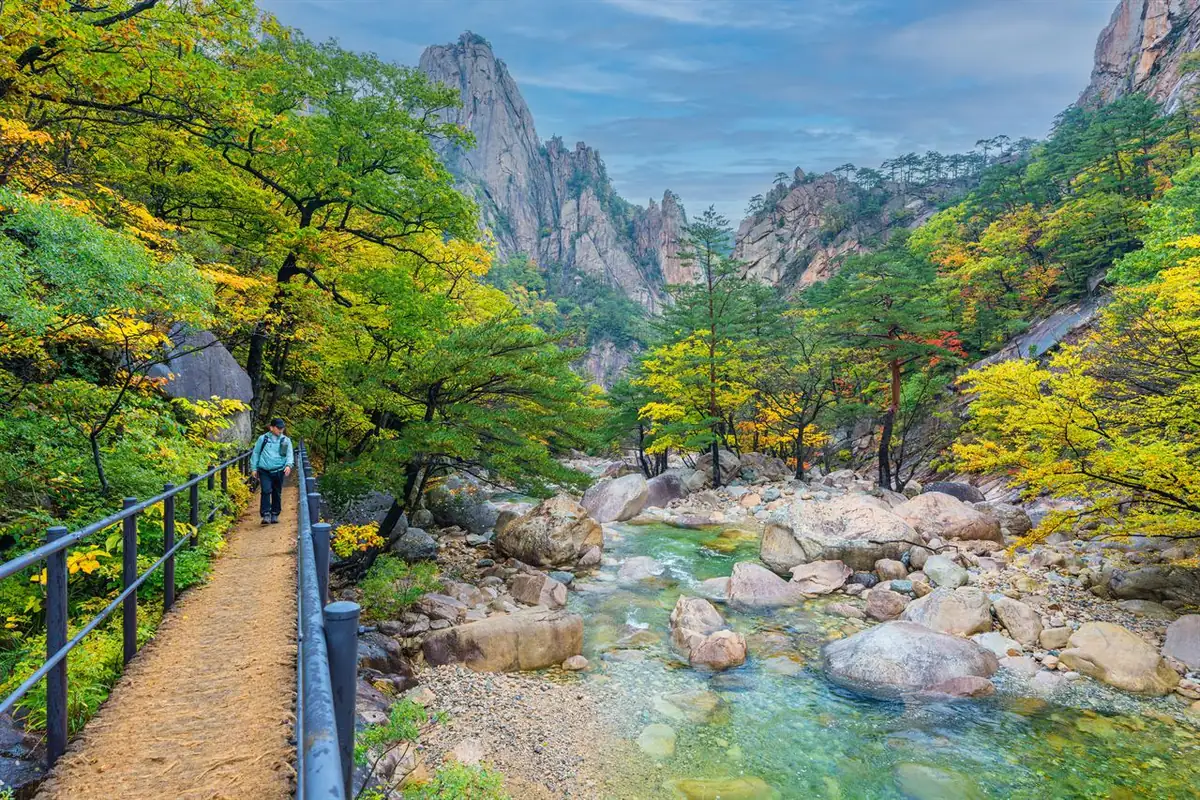
Daecheongbong and long ridge routes are a different category. KNPS describes its hardest class as steep, rocky, long-distance hiking for experienced people, sometimes requiring a shelter plan. Do not attach one of those routes to a same-day Seoul itinerary because a map makes the distance look compact. Use official route classification, entry-time restrictions, shelter rules and live controls to build a separate mountain plan.
How do season and weather change the decision?
Spring
Dry-season wildfire prevention can close selected trails even when the park itself is not entirely inaccessible. KNPS publishes park-specific notices, and the exact period can change. A spring day trip therefore needs a lower-route alternative and a final check immediately before departure. Do not rely on a blog post from a previous year for access status.
Summer
Heat, humidity, heavy rain and slippery rock can turn a planned hike into a shorter valley day. KNPS posted heat-vulnerable trail guidance for Seoraksan in August 2026, reinforcing the need to match the route to current conditions. Carry water, sun protection and a light rain layer, and be ready to turn back before the transport schedule forces the decision.
Autumn
Autumn color brings the strongest demand for buses, tours, rooms and the park approach. Foliage timing varies by altitude and weather, so an overnight is often worth more than trying to hit one forecasted peak day from Seoul. Reserve transport early enough to have choices, but retain a plan that remains worthwhile if color, cloud or crowds differ from expectations. See our Korea autumn foliage guide for the wider seasonal picture.
Winter
Snow and ice can make familiar paths technical, daylight is shorter and wind can stop the cable car. Winter scenery is a reason to visit, not evidence that a normal day plan still applies. Use traction and mountain clothing appropriate to official conditions, select a conservative route and prefer an overnight if the day depends on an early icy ascent.
What should you check the night before and morning of travel?
Open the KNPS Seoraksan page for live trail control, current notices and route-specific entry restrictions.
Check the mountain forecast, not only Seoul or coastal Sokcho weather; wind and precipitation can differ sharply.
If using the cable car, read the operator's same-day status and keep a walking alternative because advance reservations are not offered.
Confirm the Seoul terminal, Sokcho terminal, seat, boarding time and return cancellation conditions on the official booking record.
Save the Korean text for Seoraksan Sogongwon, both terminal addresses and your accommodation offline.
Pack water, food, a charged battery, sun or rain protection, and footwear suited to the route rather than to a city day.
Tell someone your route if hiking independently, remain on designated trails and obey closure signs even when other hikers continue.
A connected phone helps with live notices and the final transfer, but download the essentials before leaving Seoul. Our Korea travel essentials guide covers the small items that matter on a long regional day.
A realistic plan for each trip style
Self-guided day
Leave Seoul early, transfer through Sokcho, confirm the return before entering the park, then choose one main experience: a lower-valley walk, cable car if operating, or a hike that fits the remaining daylight. Eat or buy supplies before the final transfer if your chosen route has limited options. Begin the exit while you still have a comfortable buffer rather than when the navigation app shows the theoretical last minute.
Guided day
Arrive at the pickup point early and bring the equipment required by the advertised walking level. Ask the operator how much independent park time is included and what replaces the cable car or a trail if weather prevents the original plan. A good tour is not the one with the longest attraction list; it is the one whose park time matches your purpose.
One-night trip
Travel to Sokcho on day one and use the evening to confirm conditions, transport and supplies. Start the park day early, complete the chosen route without a same-morning Seoul transfer, then return to Sokcho for a reserved bus when you have finished. If the weather closes your main plan, the overnight still gives you flexibility to change the start time or enjoy Sokcho rather than spending the whole day in transit.
Our bottom line
Take an independent bus day if you are comfortable with regional transport and your park goal is modest. Book a guided tour if one-day simplicity matters most. Stay in Sokcho if Ulsanbawi, seasonal scenery or hiking quality is the priority. For most first-time hikers, the overnight is the strongest experience; for sightseers with limited time, the tour is the cleanest compromise.
Whichever format you choose, build the trip around current park access rather than a fixed online itinerary. Seoraksan is a protected mountain environment, and closures, entry limits, wind and road conditions are operational facts, not inconveniences to plan away. A shorter legal route with a secure return is a better result than chasing a landmark after the safe window has closed.
Last verified: August 30, 2026 by the TipsKorea editorial team. Recheck trail controls, bus inventory, local routes and cable-car status immediately before travel.
Frequently Asked Questions
Can you visit Seoraksan from Seoul in one day?
Yes. A guided tour or an early independent bus can support a one-day visit to Outer Seorak. Choose a limited park goal and leave a substantial buffer for the Sokcho transfer and return.
Is there a direct train from Seoul to Seoraksan?
No direct train reaches the national-park entrance. Most independent visitors take an intercity or express bus to Sokcho, then use the currently operating local bus or a taxi to Sogongwon.
Do I need to reserve the Seoraksan cable car?
The official operator states that advance reservations are not accepted and tickets are sold on site. Service and hours can change with wind, weather and daily operating conditions.
Should I stay in Sokcho or near the park?
Central Sokcho is better for bus-terminal access, meals and evening options. Seorak-dong is better for an early park start, provided you confirm the current local transport or arrange a taxi.
Last verified: August 2026 · TipsKorea Editorial


