
There is no responsible way to promise 2027 bloom dates this early. We use official prior-season context to build a route that remains useful when spring shifts.
Korea Cherry Blossoms 2027: no official forecast was available on August 30, 2026, so this guide builds a flexible south-to-north route without inventing bloom dates.
When will Korea Cherry Blossoms 2027 bloom?
The honest answer: the forecast is not released
As of August 30, 2026, we found no official 2027 nationwide cherry-blossom forecast from the Korea Tourism Organization or a responsible weather source. Exact opening and peak dates should not be inferred this far ahead. Winter temperatures, spring warming, rain and wind all affect development and how long blossoms remain. A travel site that gives precise 2027 dates now is either presenting a model without official confirmation or relabeling an older calendar.
The useful approach is to book a route, not a single promised bloom day. Start farther south, move north and keep each high-priority stop for more than one night. Use refundable hotels and avoid tying every attraction to a timed nonrefundable tour. When an official forecast appears closer to spring, compare it with city and festival notices. Then revise the order only if transport and cancellation terms make the change worthwhile.
What can the 2026 forecast teach us?
Historical context, not a 2027 prediction
KTO's official 2026 forecast listed expected first bloom around March 25 in Jeju and Busan, March 28 in Gyeongju, April 1 in Gangneung, April 3 in Seoul and April 7 in Incheon. It also explained that peak bloom generally follows roughly one week after opening. These dates describe a prior season's forecast. They are useful for understanding the usual south-to-north progression, but they cannot be moved forward one year unchanged.
Even a current-season forecast is not a reservation guarantee. Microclimates differ inside a city, individual trees open at different rates, and spring storms can shorten peak conditions. Festival dates are organizer decisions and can overlap early, peak or late bloom. Use three layers separately: the latest weather or bloom forecast, the responsible city's event notice, and on-the-ground updates from the exact site. Never let a single social photograph establish conditions across an entire region.
What is the best 2027 blossom route?
Start in the south, then move north
A resilient eight- to ten-day route begins around Busan or Jinhae, continues to Gyeongju and finishes in Seoul. That direction follows the broad climatic progression visible in official historical forecasts while leaving room for 2027 to differ. Busan provides coastal parks and easy city alternatives. Jinhae is strongly associated with its Gunhangje festival but requires a specific transport and crowd plan. Gyeongju combines blossoms with tombs and heritage, so the stay works even outside peak bloom.
Seoul is the strongest final base because numerous districts, museums and day trips protect the itinerary if blossom timing shifts. Do not add Jeju, Jinhae, Gyeongju, Seoul and Gangneung to a seven-day race. Every move sacrifices a morning or afternoon and can make you miss good local conditions while pursuing a predicted peak elsewhere. Choose three bases, then use current information to select sites within them.
Where should you see blossoms in Gyeongju?
Build the day around heritage, not only flowers
Gyeongju's Daereungwon area and broader historic center can offer spring color alongside tombs, ponds and archaeological sites. The KTO hero image in this guide shows blossoms in the Daereungwon area, but it records April 2025 and does not prove 2027 timing. Follow official access rules and stay on permitted paths. Flowers are most meaningful when they frame a heritage route, not when visitors step into protected landscaping for a closer photograph.
Use our Gyeongju two-day itinerary for the city's basic geography, then slow the route for spring crowds and photo stops. Two nights protect against one wet or windy day. Travelers based in Busan can consult our Gyeongju day-trip guide, but an overnight stay is more flexible during uncertain bloom. Confirm attraction hours independently of tree conditions.
Is Jinhae worth adding?
Choose it for the event as well as the trees
Jinhae is famous for dense streets and streamside blossom scenes associated with the Gunhangje festival. KTO's official 2026 listing placed that prior edition from March 27 to April 5. Those dates are historical, not a 2027 announcement. Add Jinhae only after the responsible organizer publishes the 2027 festival period, transport controls and access details. A past festival route or one-way street plan may not return unchanged.
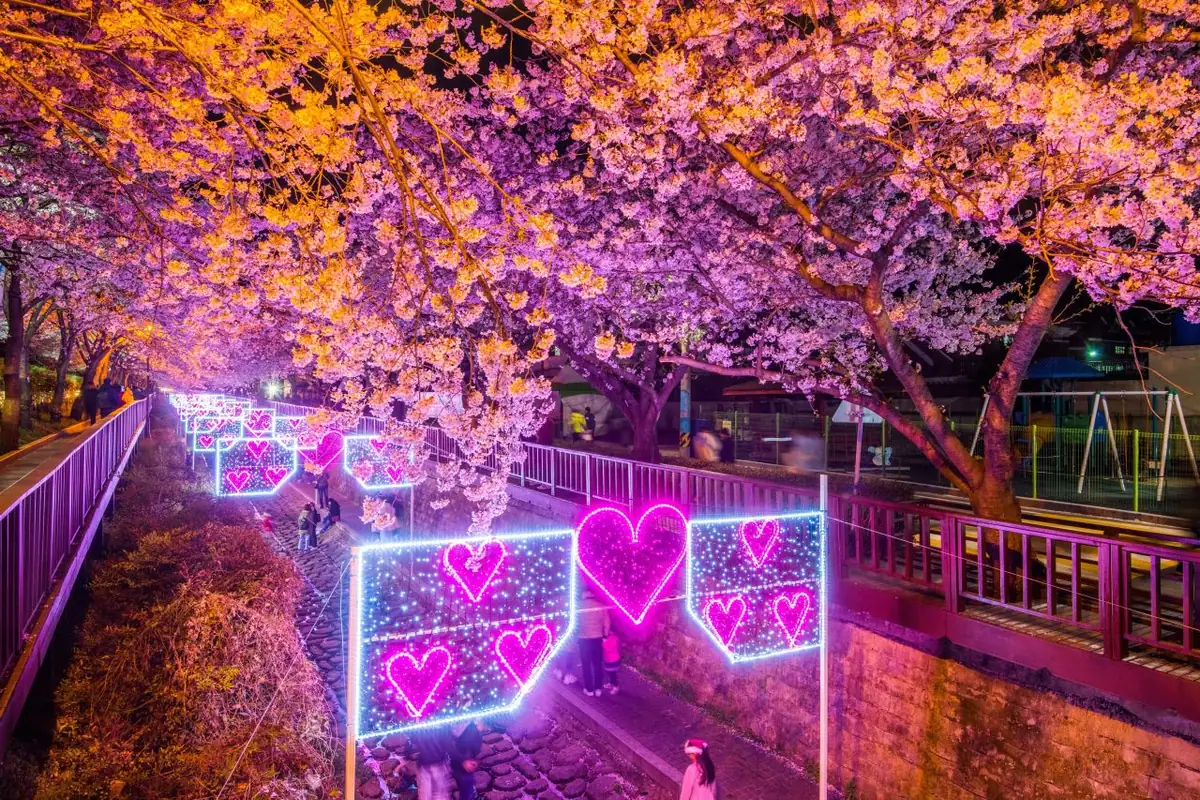
The district can become busy because many visitors converge on a limited number of iconic corridors. Arrive by a confirmed route, choose one or two areas and retain a departure buffer. Do not stand on rail tracks, roads, private property or restricted edges for photographs. Night lighting can be visually attractive, but its hours and installation require current confirmation. If crowds or weather make Jinhae unsuitable, Busan or Gyeongju offers a stronger all-day fallback.
Where should you see blossoms in Seoul?
Seoul has many possible blossom environments, from broad parks and river paths to palace-adjacent streets and neighborhood hills. The correct 2027 choice will depend on live conditions and access. Select a site that fits the rest of your day, not the most viral photograph. A river park can be windy; a neighborhood lane may be narrow; a palace visit follows heritage opening and ticket rules regardless of bloom. Use an official city notice when a festival or road closure changes circulation.
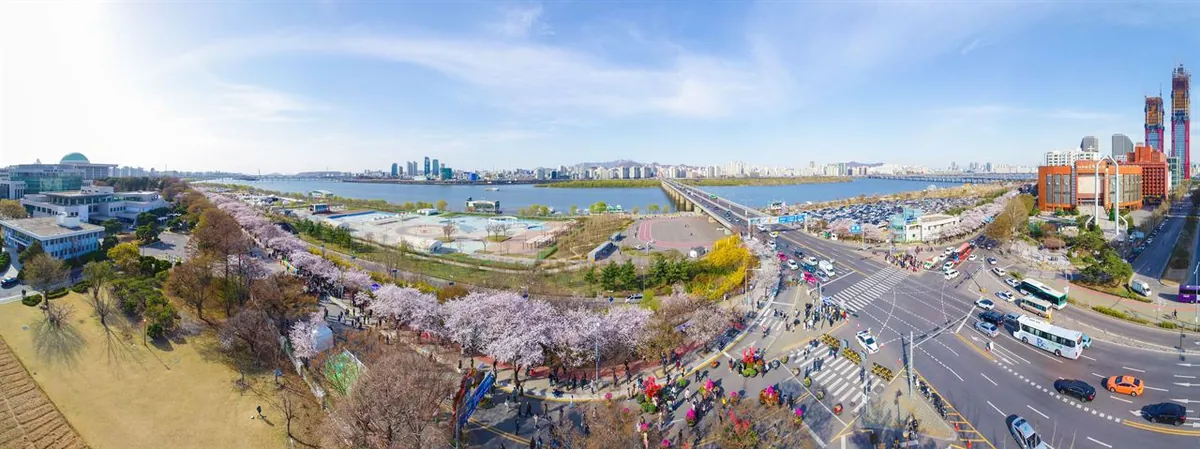
Our first-time Seoul guide groups the capital by neighborhood, which is more useful than crossing the city between individual trees. Keep two candidate sites on different days and decide from the current bloom report and weather. If rain removes blossoms early, switch to museums, markets or indoor cultural spaces rather than pursuing another city on an unplanned long transfer.
Should you include Gangneung or Jeju?
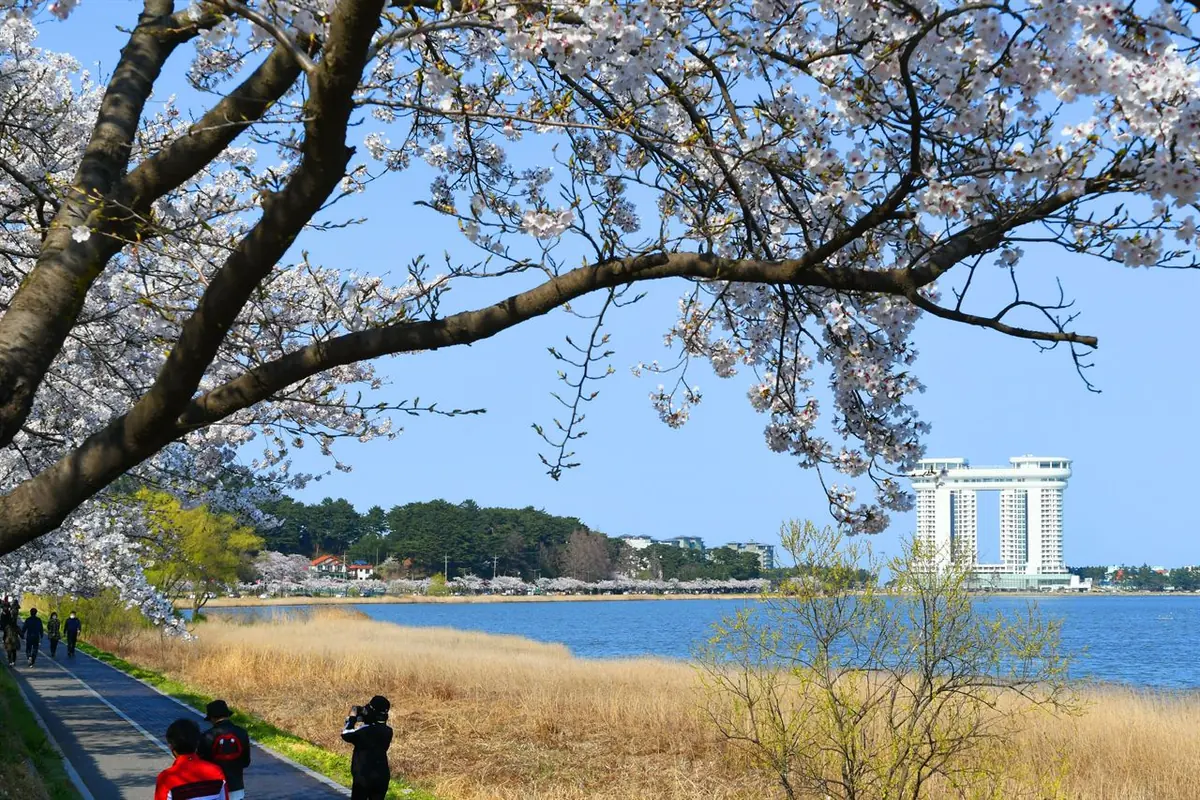
Gangneung can extend the route when the 2027 forecast shows a later east-coast window and you already want beaches, coffee culture or nearby nature. Our Gangneung two-day itinerary gives the city value outside blossom conditions. Add it after Seoul or as an alternative to Jinhae, not as a mandatory fourth base. Confirm any lake or festival program through Gangneung's official tourism channels.
Jeju often appears early in historical bloom forecasts, but it adds a flight and weather-sensitive island logistics. Include it only when Jeju itself is a priority for several days. A one-night blossom chase wastes the island's scale and creates a fragile connection. The same rule applies to every destination: blossoms should improve a good itinerary, not be the sole reason the location has value.
How should you book hotels and transport?
Use flexibility where timing matters
Book refundable or changeable accommodation in the three chosen bases, then record each deadline. A flexible rate has value only if you remember when it becomes nonrefundable. Reserve popular intercity trains once travel dates are stable, but compare change fees before moving the route for a new forecast. Do not cancel a workable journey because one model shifts by a day; the uncertainty band may be wider than the change.
Keep luggage light enough for rail transfers and avoid changing hotels inside the same city for one blossom site. Our Seoul to Busan train guide covers the main intercity corridor, while urban legs need current local routing. Spring weekends and festivals can affect demand, but we do not claim an exact sell-out date before official inventory and event dates are known.
How should you photograph blossoms responsibly?
Stay on paths, keep branches attached and never shake a tree to create falling petals. Do not spread blankets across protected roots or block a commuter path with a tripod. Ask before photographing identifiable people, especially children or couples at close range. Drones require current legal permission and may be prohibited in parks, heritage areas or crowded events. A phone camera used from a public route is usually less disruptive than a large setup.
Early morning can reduce conflict at popular sites, but it does not grant access before official opening. Night photography should follow lighting and closing notices. The media in this guide are KTO archive images from Gyeongju, Jinhae, Seoul and Gangneung; they demonstrate settings only. They are not current bloom reports or promises that the same decorative lights will appear.
What weather can shorten the season?
Warm spells can accelerate opening, while cool conditions may slow it. Strong rain or wind can remove petals quickly once trees are open. Check Korea Meteorological Administration forecasts and local safety warnings, not only a blossom graphic. Dress for variable spring temperatures and carry compact rain protection. A clear afternoon after rain may be more useful than insisting on a wet predicted peak morning.
Build non-blossom value into every day: heritage in Gyeongju, markets and coast in Busan, museums and neighborhoods in Seoul. That makes the trip successful at bud stage, full bloom or falling petals. Our Korea travel essentials guide covers mobile data and payments needed to make live changes without depending on hotel Wi-Fi.
What should you verify before the trip?
The first official 2027 forecast and its publication date.
The responsible city or organizer's 2027 festival dates and access notice.
Live bloom reports for the exact park, street or heritage site.
Weather, wind and rain during the two days before your visit.
Hotel and rail change deadlines before revising the route.
Opening hours, road controls and photography rules independent of blossom status.
The trustworthy 2027 strategy is flexible and geographically coherent: choose valuable destinations, move broadly south to north and let current evidence refine the days. Precise dates will become available closer to spring. Until then, a route with buffers is more useful than a confident-looking calendar with no official source.
Last verified: August 30, 2026. No official 2027 nationwide forecast or major festival calendar was available in the sources reviewed; the 2026 dates above are explicitly historical context.
Frequently Asked Questions
When will cherry blossoms bloom in Korea in 2027?
No official nationwide 2027 forecast was available on August 30, 2026. Use a current forecast closer to spring and verify live conditions for the exact site.
Can I use the 2026 blossom dates for 2027?
No. The 2026 KTO dates show a broad south-to-north pattern but are historical context, not a 2027 prediction. Weather can shift opening and peak timing.
What is the best Korea cherry blossom route?
A flexible route through Busan or Jinhae, Gyeongju and Seoul limits backtracking and follows the broad climatic progression. Use no more than three bases in eight to ten days.
When is Jinhae Gunhangje 2027?
The responsible organizer had not announced the 2027 festival dates in the sources reviewed. The March 27–April 5 dates in this guide refer only to the official 2026 edition.
Last verified: August 2026 · TipsKorea Editorial


